PuniCodex

Extended Lore

Ọbalúayé

Etymology · Phonology · Orthography · Cultural Legacy · Primary Sources

Tier 2 Ọbalúayé.com
Ọbalúayé — Disease, Healing, Earth
01

Quick Facts

Essential information about Ọbalúayé, Disease, Healing, Earth

Scholarly TransliterationỌbalúayé
Unicode RestorationỌbalúayé
Reconstructed Pronunciation/ɔ̀.bà.lú.à.jé/
PantheonYoruba
DomainDisease, Healing, Earth
MeaningFather of the world
ClassificationTier 2
Primary DomainỌbalúayé.com
Sacred SymbolsCrutches, Burlap or sackcloth, Two dogs, Earth-coloured beads
02

Etymology & Word Family

From original script to Unicode restoration

Scholarly Transliteration Ọbalúayé Ọbalúayé — "Father of the world"
Unicode Restoration Ọbalúayé Restored stress, length, and script
Modern ASCII babaluaye Plain-ASCII fallback

Ọbalúayé is Tier 2: the acute accents on ú and é preserve high tones, while grave accents would mark low tones. The dot below ọ distinguishes open [ɔ] from close [o].

03

Unicode Character Breakdown

Character-by-character philological analysis

CharacterUnicodeNameBlockPhonetic Role
U+1ECCLatin Capital Letter O with Dot BelowUnknownInitial b becomes Ọ
bU+0062Latin Small Letter BBasic LatinShifted consonant
aU+0061Latin Small Letter ABasic LatinShifted vowel
lU+006CLatin Small Letter LBasic LatinShifted consonant
úU+00FALatin Small Letter U with AcuteLatin-1 SupplementAcute on u
aU+0061Latin Small Letter ABasic LatinShifted vowel
yU+0079Latin Small Letter YBasic LatinShifted consonant
éU+00E9Latin Small Letter E with AcuteLatin-1 SupplementAcute on e
N/ADropped characterYoruba orthographyNot written

The Tier 2 classification reflects which ancient features stress, length, or script are preserved in this restoration.

04

Cultural Significance

From ancient cult to modern Unicode

Ancient Domain

Ọbalúayé is the orixá who both strikes and heals. He governs infectious disease — especially smallpox — and the earth that receives the body after death. His name means 'king whose scourge is the world,' and his presence is feared because illness arrives without warning and leaves without explanation. Yet he is also the one who can lift what he has sent, and his devotees often become the most skilled healers.

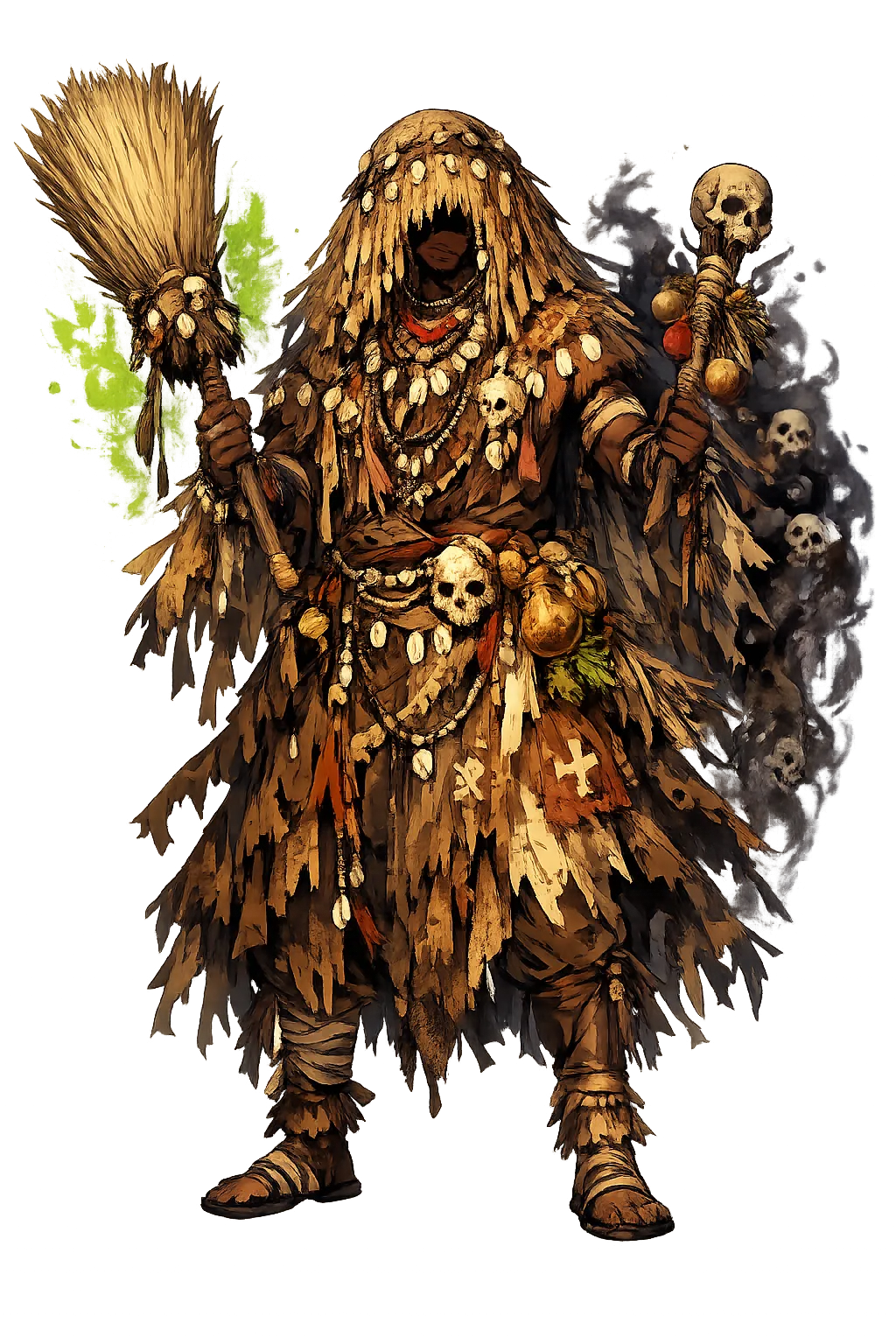
In the diaspora he appears as an old man on crutches, wrapped in burlap, accompanied by dogs. He is poverty, affliction, and survival at once.

Ọbalúayé in Later Traditions

In Brazilian Candomblé, Ọbalúayé became Obaluaiê, syncretised with Saint Lazarus (the beggar covered in sores) and Saint Roch (who shows the plague sore on his thigh). In Cuban Santería he is Babalú Ayé, often identified with Saint Lazarus. The Catholic saints of leprosy and plague mapped neatly onto the Yoruba deity of epidemic disease, and the image of the old man on crutches became a shared icon across the Atlantic.

Modern Legacy

Ọbalúayé's legacy is the theology of illness. In Yoruba and Afro-Atlantic thought, sickness is not mere biological accident; it is a message, a punishment, or a calling. Those who survive smallpox, HIV, or other epidemics often dedicate themselves to him. In the age of global pandemics, his mythology has gained new resonance: the earth can still send plagues, and the boundary between health and sickness remains thinner than modern medicine likes to admit. His image — old, limping, accompanied by dogs — is one of the most moving in Afro-Atlantic art.

Unicode Restoration as Cultural Act

Restoring Ọbalúayé in a domain name is more than orthographic accuracy. It is a statement that the internet should recognize the full range of human writing — not only the ASCII keyboard.

05

Frequently Asked Questions

Common questions about Ọbalúayé, Disease, Healing, Earth, and Unicode restoration

01How do you pronounce Ọbalúayé?

In reconstructed pronunciation, Ọbalúayé is /ɔ̀.bà.lú.à.jé/ — approximately aw-bah-loo-ah-YEH — low on the first three syllables, then high on 'YEH'..

02What does Ọbalúayé mean?

Ọbalúayé means Father of the world in the yoruba tradition.

03What are the symbols of Ọbalúayé?

Ọbalúayé is associated with Crutches (His diaspora attribute, marking lameness and the limit of the human body.), Burlap or sackcloth (Poverty, humility, and the rough texture of illness and recovery.), Two dogs (His messengers and guardians at the boundary of sickness and health.), Earth-coloured beads (Brown, black, and purple beads that link him to soil and burial.).

04Why restore Ọbalúayé in Unicode?

Plain ASCII babaluaye strips the stress, length, and script that make the name specific. Unicode restoration returns the name to its original written dignity.

05What is the most important myth about Ọbalúayé?

Ọbalúayé is called 'Father of the World' not because he nurtures it but because his diseases touch everyone, high and low. In some accounts he was once a proud king who was brought low by sickness and learned compassion only after he himself had suffered. His myth teaches that the healer must know the body from the inside of affliction.

06

Scholarly Sources

The philological foundations of this restoration

Every claim on this page is grounded in established scholarship. The orthographic restorations follow disciplinary convention. The etymological chain follows the best available reference works. This is not invention — it is resurrection through scholarship.

Lexicography & Philology

  • Bascom
  • Idowu

Primary Texts

  • The Ifá divination corpus; ọ̀rọ̀ àṣà and oríkì traditions; Abraham’s Dictionary of Modern Yoruba.

Archaeology & Art History

  • Material evidence — iconography, inscriptions, and temple archaeology — for Ọbalúayé and related cults.
  • Ọbalúayé's material culture includes earth-coloured bead necklaces, crutches, burlap garments, and dog imagery preserved in Candomblé and Santería altars. In West Africa, ritual objects associated with smallpox deities and earth cults appear in ethnographic collections; the deity's association with burial and epidemic illness means his traces are more often oral and performative than monumental.

Religious Studies

  • Idowu, Olódùmarè: God in Yoruba Belief
  • Bascom, Ifa Divination
  • Mason, Four New World Yoruba Rituals
  • Verger, Notes sur le Culte des Orisa et Vodun
  • Murphy, Santería: African Spirits in America
Return

The Surface Awaits

You have traced the name from its earliest attestation to its Unicode restoration. Now return to the myth. The story is where the name lives.

Back to Lore
Ọbalúayé mascot