The Authentic Orthography
Lady of the Sea, Mother of the Gods · The Lady of the Sea · Mother of the Gods
Unicode restoration and ASCII comparison
𐎀𐎘𐎗𐎚
The name in its original Canaanite form. ʾAṯiratu (𐎀𐎘𐎗𐎚) is attested in the source tradition — “‘Lady of the Sea’ — the Ugaritic mother of the gods (rbt ʾaṯrt ym), consort of ʾIlu and intercessor for Baʿlu, KTU”. Its Semitic pharyngeal letters carry the full phonetic and orthographic weight of the source tradition.
athiratu
Reduced to plain athiratu, the name loses everything that made it specific: Semitic pharyngeal letters. What remains is an ASCII string that machines can parse but that no longer speaks with its original voice.
ʾAṯiratu
The Unicode restoration recovers what ASCII flattened. ʾAṯiratu restores Semitic pharyngeal letters, returning the name to its original written dignity. The domain encodes to Punycode, but the browser displays the truth.
ʾAṯiratu.com → xn--airatu-2jd7287c.com
The non-ASCII characters in ʾAṯiratu are encoded while the ASCII remains visible. To the DNS, it is Punycode. To humanity, it is ʾAṯiratu.
How ʾAṯiratu travels from ancient script to the modern URL
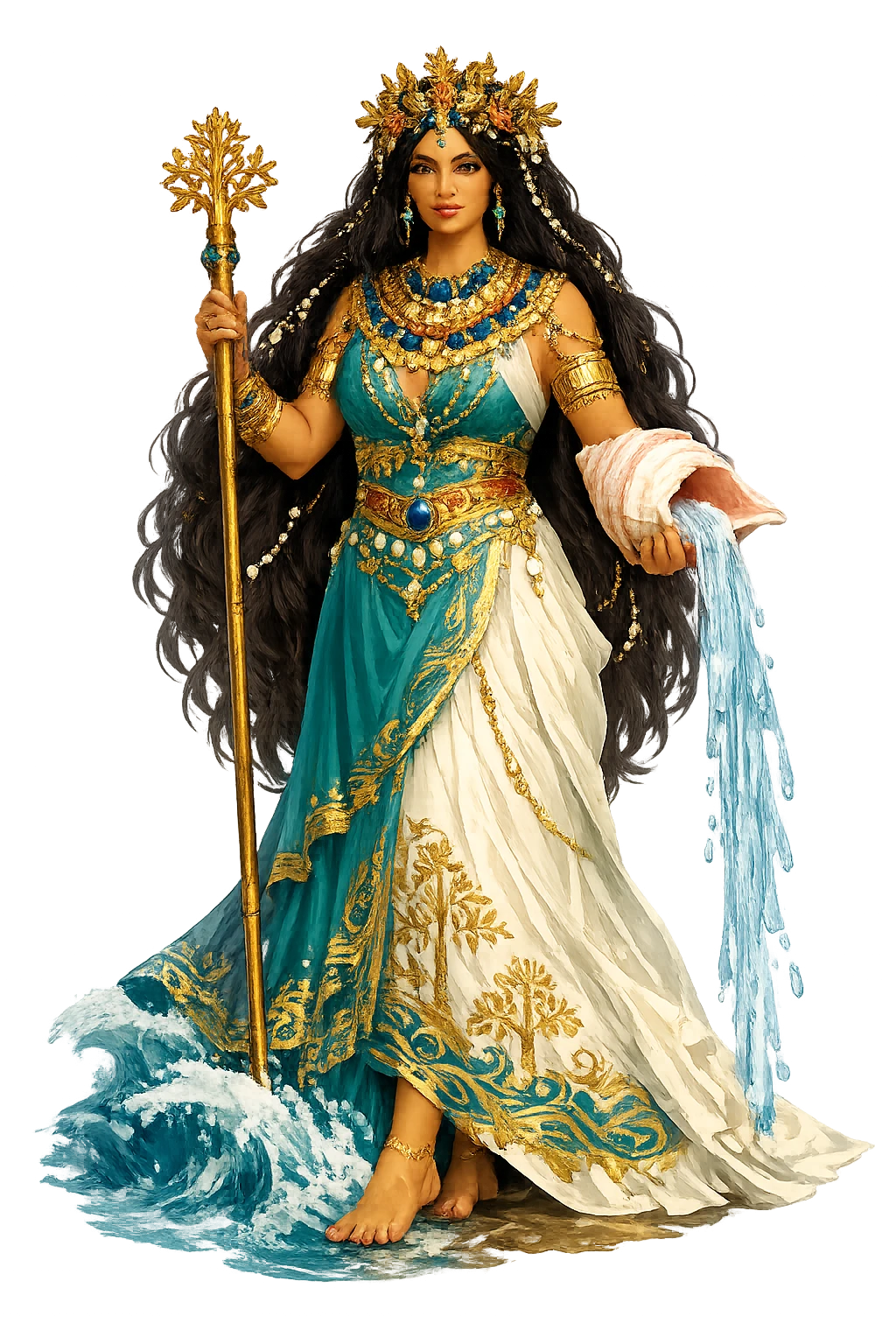
From ʾaṯr, “place, sanctuary” — “Lady of the Place/Sanctuary”; the sea-epithet rbt ʾaṯrt ym, “the Great Lady who walks on the Sea”, gave rise to her Greek-era reading as a sea-goddess.
Mother of the gods (qnyt ʾilm), consort of ʾIlu, intercessor for Baʿlu, patroness of the royal house; “Lady of the Sea”.
The registrable form aṯiratu.com keeps the distinctive ṯ (U+1E6F); the glottal ʾ is not IDNA-valid and is shown in the display form instead.
How ʾAṯiratu was spoken
Creatress of the Gods, Consort of ʾIlu, and the Queen Mother's Voice
ʾAṯiratu is the great mother of the Ugaritic pantheon: qnyt ʾilm, 'Creatress of the Gods', consort of the high god ʾIlu, and the one deity who can walk into his tent and change his mind. Her title rbt ʾaṯrt ym — 'the Great Lady who walks on the Sea' — makes her sovereign of the waters that fed, and feared, the city of Ugarit.
qnyt ʾilm: the whole divine council are 'the seventy sons of ʾAṯiratu' — and she names their kings.
rbt ʾaṯrt ym: she treads the Mediterranean that carried Ugarit's wealth, and her own servant is the divine fisherman.
When Baʿlu needs a palace, it is ʾAṯiratu who rides to ʾIlu's tent and wins the decree (KTU 1.4 III–V).
qnyt ʾilm: the creatress of the gods — the mother whose presence illumines the court.
Stories of ʾAṯiratu
ʾAṯiratu rarely fights; she decides. Her scenes in the Ugaritic tablets show the queen mother at work — approached by the younger gods, saddling her donkey, speaking in the high god's tent, and settling what thunder cannot.
In KTU 1.4 the storm-god Baʿlu has defeated Yammu but has no house — and no standing — among the gods. The queen mother acts. She orders her servant Qōdēšu-wa-ʾAmruru to saddle her donkey, rides to the source of the two rivers, to the tent of ʾIlu, and prostrates herself. ʾIlu sees her coming and is glad; the banquet is spread, the request is made, and the decree is given: let a house be built for Baʿlu like the gods', and let Kôṯāru-wa-Ḫasīsu build it. Without her embassy the storm-god stays homeless.
The tablets call her qnyt ʾilm, 'Creatress of the Gods', and the pantheon itself 'the seventy sons of ʾAṯiratu'. When Baʿlu lies dead in the realm of Môtu, it is to her that ʾIlu turns: let one of your sons be made king. She names ʿAṯtaru the Radiant, who climbs Baʿlu's throne on Mount Ṣāpānu — and cannot fill it: his feet do not reach the footstool, his head does not reach the top, and he steps down. Even the succession is hers to attempt.
In KTU 1.14–1.16 the childless King Keret marches on Udum to win the bride Ḫurriyu, and on the road he stops at the shrine of 'ʾAṯiratu of the Tyrians and the goddess of the Sidonians'. There he vows: if he brings the woman home, he will pay her measure in silver and gold. He wins the bride — and forgets the vow. Sickness follows, the land grieves, and the epic's third tablet turns on the queen mother's unpaid debt. Kings swear to her; she collects.
Her great title rbt ʾaṯrt ym is read 'the Great Lady who walks on the Sea' — and by some scholars, 'she who treads on the sea-dragon'. Her servant Qōdēšu-wa-ʾAmruru is called dgy ʾaṯrt, 'fisherman of ʾAṯiratu', and rows her messages across the deep; and in the Keret Epic the royal heir is promised to 'suck the milk of ʾAṯiratu, the breasts of the Virgin ʿAnatu' — the queen mother's milk is what legitimates a king of Ugarit.
ʾAṯiratu is the theology of the quiet word. The storm-god wins the battles; she wins the audience. Her power is the intercessor's power — the mother who saddles her own donkey, rides the length of the world to the high god's tent, and comes home with the decree in her hand. She asks the question every house and every institution answers daily: when the thunder fails, whose voice does the king still trust?
Enter Extended Lore