Original Script
𐎀𐎘𐎗𐎚
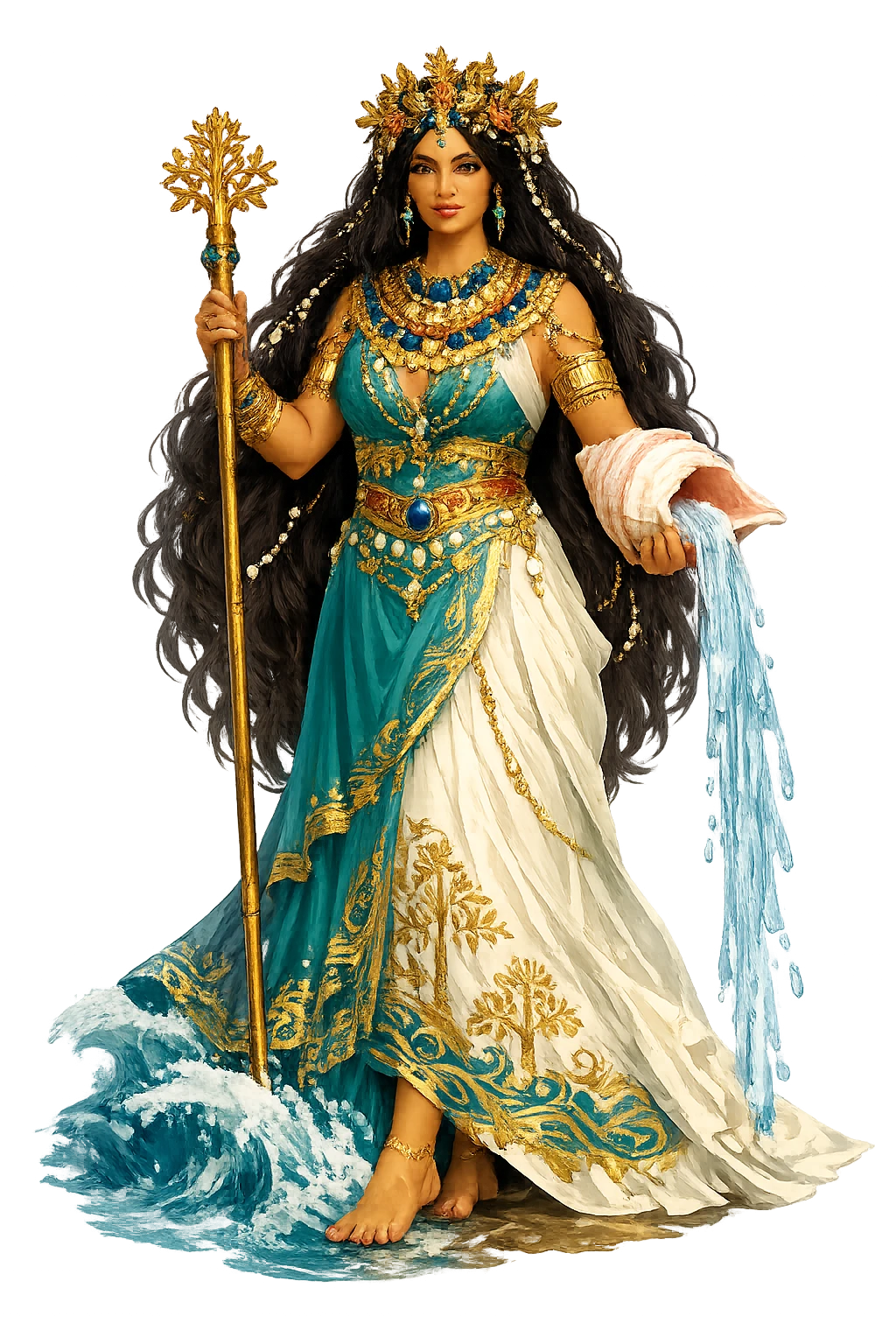
ʾAṯiratu — "‘Lady of the Sea’ — the Ugaritic mother of the gods (rbt ʾaṯrt ym), consort of ʾIlu and intercessor for Baʿlu, KTU"
Unicode Restoration
ʾAṯiratu
Restored stress, length, and script
Modern ASCII
athiratu
Plain-ASCII fallback
Ugaritic writes the name 𐎀𐎘𐎗𐎚 — four signs, a-ṯ-r-t, in alphabetic cuneiform. The second consonant is the letter ṯ: a voiceless interdental fricative /θ/, the 'thin' sound English keeps and most later Semitic languages lost. In Phoenician and Hebrew the sound shifted to š, which is why the same goddess appears as Ašeratu in Phoenician and ʾĂšērāh in the Hebrew Bible. The restoration ʾAṯiratu keeps the Ugaritic consonant exactly where the tablets put it, marks the glottal onset ʾalep, and carries the nominative case-vowel -u; the scholarly Latin convention 'Athirat' inserts an h that no Ugaritic sign writes.