PuniCodex

Extended Lore

𐎀𐎘𐎗𐎚 ʾAṯiratu

Etymology · Phonology · Orthography · Cultural Legacy · Primary Sources

Tier 1 ʾAṯiratu
ʾAṯiratu — Lady of the Sea, Mother of the Gods
01

Quick Facts

Essential information about ʾAṯiratu, Lady of the Sea, Mother of the Gods

Original Script𐎀𐎘𐎗𐎚
Unicode RestorationʾAṯiratu
Reconstructed Pronunciation/ʔaθ.i.ˈraː.tu/
PantheonCanaanite
DomainLady of the Sea, Mother of the Gods
Meaning‘Lady of the Sea’ — the Ugaritic mother of the gods (rbt ʾaṯrt ym), consort of ʾIlu and intercessor for Baʿlu, KTU
ClassificationTier 1
Primary DomainʾAṯiratu
Sacred SymbolsThe sea, The spindle, The saddled donkey
02

Etymology & Word Family

From original script to Unicode restoration

Original Script 𐎀𐎘𐎗𐎚 ʾAṯiratu — "‘Lady of the Sea’ — the Ugaritic mother of the gods (rbt ʾaṯrt ym), consort of ʾIlu and intercessor for Baʿlu, KTU"
Unicode Restoration ʾAṯiratu Restored stress, length, and script
Modern ASCII athiratu Plain-ASCII fallback

Ugaritic writes the name 𐎀𐎘𐎗𐎚 — four signs, a-ṯ-r-t, in alphabetic cuneiform. The second consonant is the letter ṯ: a voiceless interdental fricative /θ/, the 'thin' sound English keeps and most later Semitic languages lost. In Phoenician and Hebrew the sound shifted to š, which is why the same goddess appears as Ašeratu in Phoenician and ʾĂšērāh in the Hebrew Bible. The restoration ʾAṯiratu keeps the Ugaritic consonant exactly where the tablets put it, marks the glottal onset ʾalep, and carries the nominative case-vowel -u; the scholarly Latin convention 'Athirat' inserts an h that no Ugaritic sign writes.

03

Unicode Character Breakdown

Character-by-character philological analysis

CharacterUnicodeNameBlockPhonetic Role
ʾAU+02BECharacter U+02BESpacing Modifier LettersGlottal onset (ʾalep)
U+1E6FLatin Small Letter T with Line BelowUnknownUnderdotted t: /θ/ (Ugaritic ṯ, Greek θ)
N/ADropped characterCanaanite orthographyThe h of the Latin convention, unwritten in Ugaritic
iU+0069Latin Small Letter IBasic LatinSame
rU+0072Latin Small Letter RBasic LatinSame
aU+0061Latin Small Letter ABasic LatinSame
tU+0074Latin Small Letter TBasic LatinSame
uU+0075Latin Small Letter UBasic LatinSame

The Tier 1 classification reflects how much of the original phonology this restoration preserves — stress and vowel length for Greek names, distinctive letters and diacritics for every other tradition.

04

Cultural Significance

From ancient cult to modern Unicode

Ancient Domain

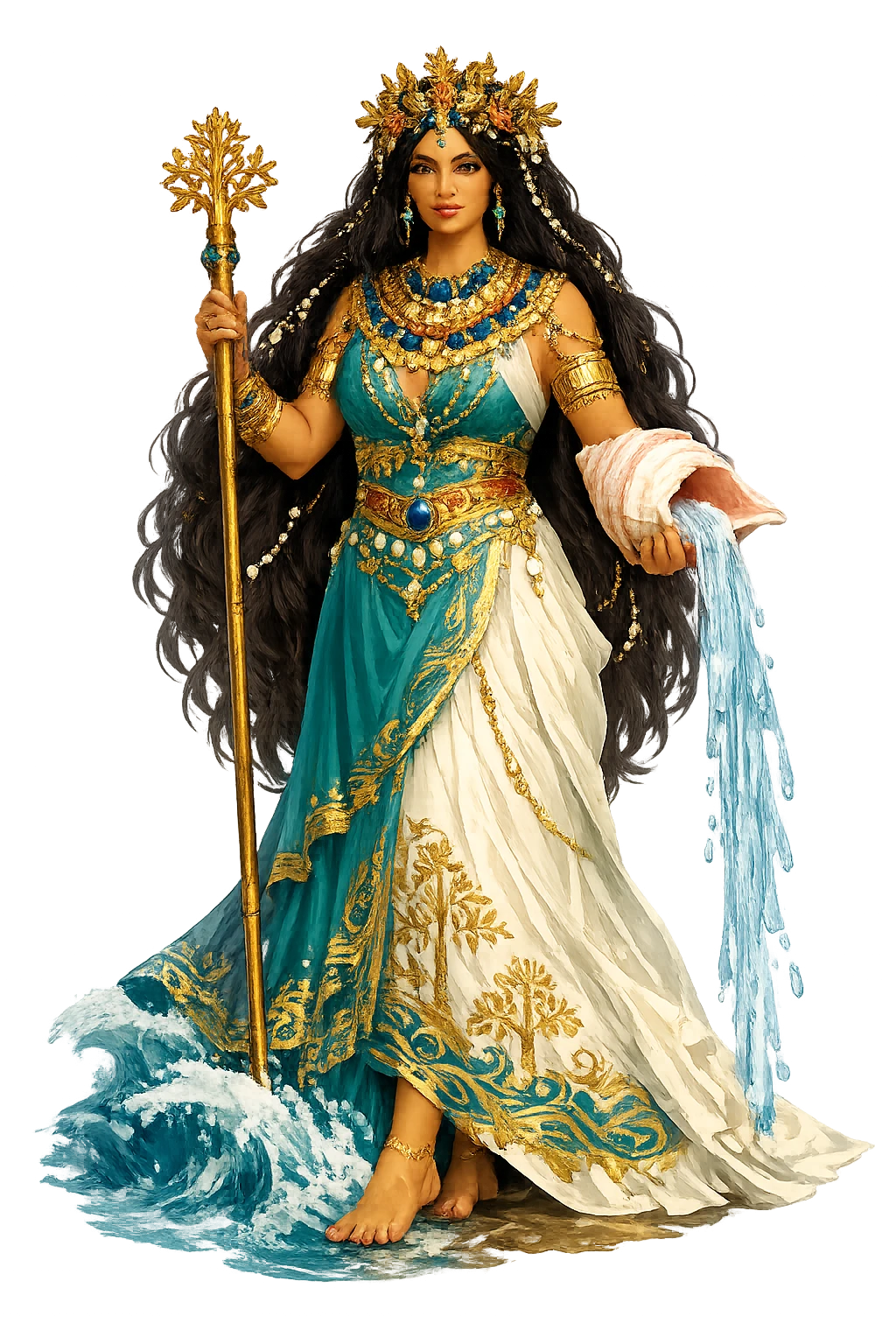
ʾAṯiratu is the great mother of the Ugaritic pantheon: qnyt ʾilm, 'Creatress of the Gods', consort of the high god ʾIlu, and the one deity who can walk into his tent and change his mind. Her title rbt ʾaṯrt ym — 'the Great Lady who walks on the Sea' — makes her sovereign of the waters that fed, and feared, the city of Ugarit.

ʾAṯiratu in Later Traditions

West Semitic speakers carried her under shifted sounds. In Phoenician the interdental ṯ becomes š, and she is ʾAšeratu — the form Philo of Byblos hands to Greek readers as Ἀσερά. In the Hebrew Bible she is ʾĂšērāh, Asherah, the most contested goddess of Israel and Judah: worshipped in the temple itself, cut down by reformers, and slowly flattened by polemic into a wooden pole planted beside the altar. Hittite tablets know her as Ašertu, consort of Elkunirša, and Egyptian religion of the empire age venerates her under the title Qudšu, 'Holiness'. One figure, three scripts, a dozen polemics — the queen mother outlasted every alphabet that renamed her.

Modern Legacy

Her afterlife is an argument the Bible could not win. The Deuteronomists reduced her to the ʾăšērâ, a planted pole, yet the prophets' fury is itself the evidence: four hundred prophets of Asherah eat at Jezebel's table, women bake cakes for the Queen of Heaven, and Josiah must drag her image out of the temple to burn it at the Kidron. Twentieth-century archaeology turned the polemic into attestation — the painted pithoi of Kuntillet ʿAjrud bless a man 'by Yahweh of Samaria and his Asherah', and the Khirbet el-Qom tomb inscription names 'Yahweh and his Asherah' together. Modern scholarship (Day, Hadley, Wiggins) has rebuilt the queen mother from those shards, and feminist theology has reclaimed her as the divine feminine edited out of the Western canon — and read back in.

Unicode Restoration as Cultural Act

Restoring ʾAṯiratu in a domain name is more than orthographic accuracy. It is a statement that the internet should recognize the full range of human writing — not only the ASCII keyboard.

05

Frequently Asked Questions

Common questions about ʾAṯiratu, Lady of the Sea, Mother of the Gods, and Unicode restoration

01How do you pronounce ʾAṯiratu?

In reconstructed pronunciation, ʾAṯiratu is /ʔaθ.i.ˈraː.tu/ — approximately ah-thi-RAH-too — the th is the soft interdental of English 'thin'; the stress and the long ā fall together on the third syllable..

02What does ʾAṯiratu mean?

ʾAṯiratu means ‘Lady of the Sea’ — the Ugaritic mother of the gods (rbt ʾaṯrt ym), consort of ʾIlu and intercessor for Baʿlu, KTU in the canaanite tradition.

03What are the symbols of ʾAṯiratu?

ʾAṯiratu is associated with The sea (ym, the waters she treads and rules — the title rbt ʾaṯrt ym made permanent), The spindle (The queen mother's domestic sovereignty — women's work raised to cosmic office), The saddled donkey (The beast her servant harnesses for the ride to ʾIlu's tent (KTU 1.4 iv) — diplomacy's mount).

04Why restore ʾAṯiratu in Unicode?

Plain ASCII athiratu strips the stress, length, and script that make the name specific. Unicode restoration returns the name to its original written dignity.

05What is the most important myth about ʾAṯiratu?

In KTU 1.4 the storm-god Baʿlu has defeated Yammu but has no house — and no standing — among the gods. The queen mother acts. She orders her servant Qōdēšu-wa-ʾAmruru to saddle her donkey, rides to the source of the two rivers, to the tent of ʾIlu, and prostrates herself. ʾIlu sees her coming and is glad; the banquet is spread, the request is made, and the decree is given: let a house be built for Baʿlu like the gods', and let Kôṯāru-wa-Ḫasīsu build it. Without her embassy the storm-god stays homeless.

06

Scholarly Sources

The philological foundations of this restoration

Every claim on this page is grounded in established scholarship. The orthographic restorations follow disciplinary convention. The etymological chain follows the best available reference works. This is not invention — it is resurrection through scholarship.

Lexicography & Philology

  • KTU
  • Coogan
  • Day

Primary Texts

  • KTU 1.3–1.6 (the Baal Cycle)
  • KTU 1.14–1.16 (the Keret Epic)
  • Smith, The Ugaritic Baal Cycle

Archaeology & Art History

  • Material evidence — iconography, inscriptions, and temple archaeology — for ʾAṯiratu and related cults.
  • The tablets of Ras Shamra are her archive: the palace narrative of KTU 1.4, the succession scene of KTU 1.6, and Keret's vow at her Tyrian shrine were copied in the scribal school of ʾIlimilku in the fourteenth–thirteenth centuries BCE and buried when the city fell c. 1190 BCE. No temple of ʾAṯiratu has been securely identified at Ugarit — the queen mother seems to have shared the acropolis cult of Baʿlu and ʾIlu — but her worship is stamped across the Iron Age Levant: the tree-and-lion iconography of the tenth-century Taanach cult stand, the hundreds of Judean pillar figurines, the painted pithoi of Kuntillet ʿAjrud (c. 800 BCE) with their blessing 'by Yahweh … and his Asherah', and the Khirbet el-Qom tomb inscription — the finds that made the biblical polemic an archaeological fact.

Religious Studies

  • Coogan & Smith, Stories from Ancient Canaan
  • Day, Yahweh and the Gods and Goddesses of Canaan
  • Wyatt, Religious Texts from Ugarit
  • Hadley, The Cult of Asherah in Ancient Israel and Judah
  • Wiggins, A Reassessment of Asherah
Return

The Surface Awaits

You have traced the name from its earliest attestation to its Unicode restoration. Now return to the myth. The story is where the name lives.

Back to Lore
ʾAṯiratu mascot