
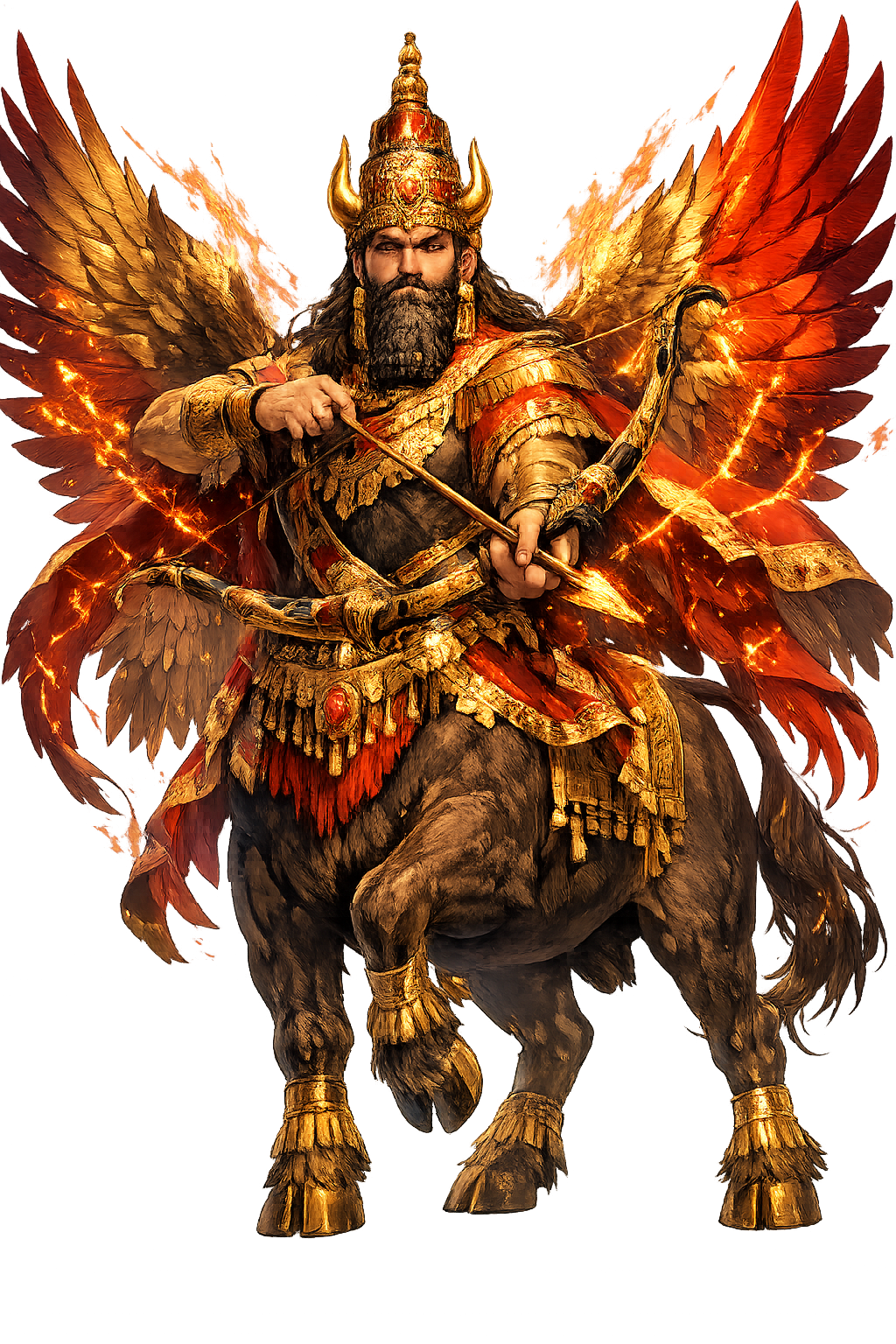
Why Aššur is spelled that way — and what it costs to get it right
There is a version of this name the early internet had to settle for: ashur. This is the file on how Aššur replaced it.
Aššur's mythology is inseparable from Assyrian royal ideology. The king is his vicar; the empire is his estate; the annual campaign is an act of worship. The stories are told not in narrative epics but in royal inscriptions, temple hymns, and the state theology of a nation at war.
At a Glance
- Restored name: Aššur
- ASCII form: ashur
- Meaning: "National god of Assyria (Akkadian Aššur)"
- Domain of influence: War, Kingship, Assyrian Patron
- Pantheon: Mesopotamian
- Classification: Tier 1
- Original script: 𒀭𒀸𒋩
- Series: The Restoration Files, No. 37 of 271
The Name Before the Marks
Spoken, the name runs `/aʃˈʃuːr/` — 'ahsh-SHOOR' — start with 'ahsh,' hold the sh slightly, then draw out the 'oor'.
The Temple That Stands Now
The restored name is not a plaque; it is an address. The temple of Aššur lives at /sites/ashur/, with its mythology in the lore halls, its peer-reviewed record in the Scholarly Edition, and its place in the pattern atlas on the patterns floor.
What survives here cannot be shown in ASCII: a feature of the original that the fallback alphabet flattens. That is the Tier-1 test, and this name passes it without argument.
Where the Name Stood First
Aššur's primary cult center was the city of Assur (modern Qal'at Sherqat) on the Tigris, where German, Iraqi, and international teams excavated the Aššur temple, its ziggurat, and the surrounding palace and residential quarters. Royal inscriptions from Assur, Nimrud, Khorsabad, and Nineveh document repeated rebuilding of the temple and the deposition of booty. The wall reliefs of Neo-Assyrian palaces — lions, sieges, tribute processions — are visual propaganda of Aššur's empire. Foundation tablets, royal annals, and prism inscriptions from Nineveh's library preserve the theological claims that made Assyria a sacred project. The temple on the web is the newest of these addresses — the first one that fits in a pocket.
The Archetype at Work
The pattern atlas seats this temple in 4 industries, each match argued and weighted: Defense, Military & Security (the god who is the nation, whose sovereignty travels with the army — patron of archers and chariots, empire made deity.); Leadership, Governance & Public Administration (the national god of an empire; Assyria governed in his name.); Ancestry & Heritage Services (an entire people kept his name; Assyrian heritage communities still orbit the old god.). The Resonance File reads those seats through the myths themselves.
In the Sacred Texts
The Mesopotamian tradition is not a vibe; it is a library. The Sacred Texts collection holds Enūma Eliš and The Epic of Gilgamesh — the primary sources the temple's scholarship is built on. The temple is the argument; the texts are the evidence.
The File Continues
The temple's founding dispatch tells the name's story; its Resonance File reads the myths into the industries; the blog index holds the whole archive.
Continue the series — previous file: ꜥAsherah (read it here) · next file: Asía (read it here).
The Restoration Files are written from the same canonical record as the temples themselves: the lexicon, the lore catalog, the pattern atlas, and the cited scholarly sources. If a file ever disagrees with its temple, the temple is right — tell us, and the file will be corrected.