
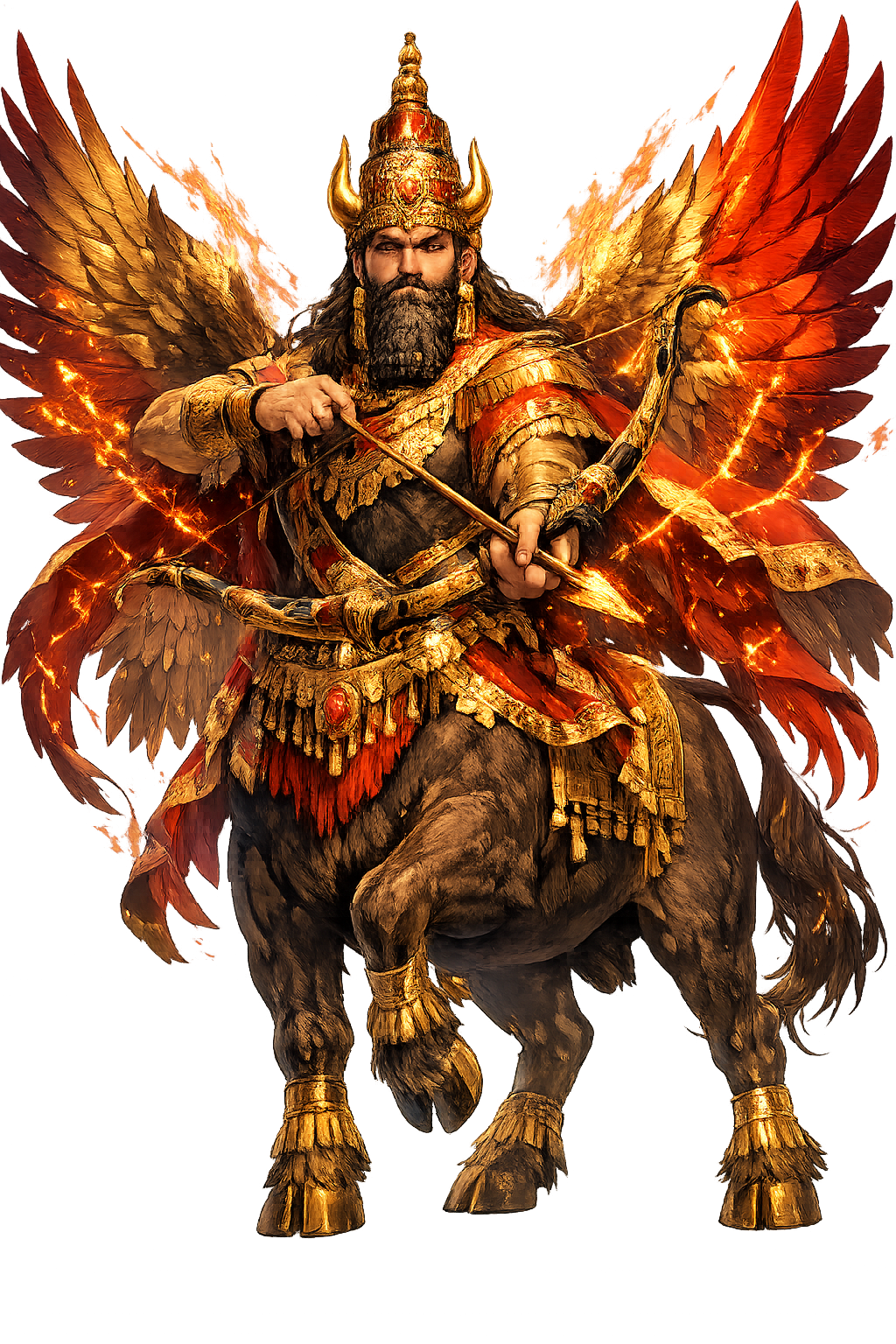
How Aššur got its accent back
The ASCII form ashur is missing something. Aššur restores the marks the source language used to distinguish this name from a thousand others — and those marks change how the name is read, pronounced, and understood. This post explains, with the full scholarly record behind it, what each restored mark preserves: the Cuneiform evidence, the reconstructed sound, the myths the name carries, and the classification logic that separates Tier 1 restorations from Tier 2. By the end, the marks in Aššur will look less like ornaments and more like what they are — recovered evidence, pinned back in its proper place.
At a Glance
- Restored name: Aššur
- ASCII form: ashur
- Meaning: "National god of Assyria (Akkadian Aššur)"
- Domain of influence: War, Kingship, Assyrian Patron
- Pantheon: Mesopotamian
- Classification: Tier 2
- Original script: 𒀭𒀸𒋩 (Cuneiform)
- Live domain: aššur.com
Overview
Aššur (ashur) is the national god of Assyria, catalogued in the lexicon under War, Kingship, Assyrian Patron. The name belongs at once to the god, to his city Assur on the Tigris, to the land that grew around that city, and to the people who called themselves by it; scholarship has long treated the god as the deified city itself rather than an independent nature power.
Unlike Enlīl, whose cosmic kingship was rooted in the air and the Ekur, Aššur's sovereignty travels with the Assyrian army. He is the divine king-maker, the patron of archers and chariots, and the heavenly father who receives the king's report after every campaign; Assyrian royal inscriptions open every victory account with his mandate.
PuniCodex restores the name as Aššur and serves its temple at aššur.com. The restoration's only diacritic is the caron on the geminate sibilant šš — a consonantal mark, not a prosodic one: the name carries neither a stress accent nor a macron, and accordingly stands in Tier 2. The plain ASCII form ashur survives as a fallback imposed by early domain-name infrastructure; the restoration, not the fallback, is the philologically complete form.
The Name
The name is attested in cuneiform as 𒀭𒀸𒋩 — the divine determinative followed by the syllabic spelling aš-šur — and, from the later second millennium, in the logographic writing 𒀭𒊹 (AN.ŠAR₂), borrowed from the primordial god Anšar. The god's name is identical with that of his city and land, and its etymology is correspondingly unresolved: it has been connected with a root meaning 'to lead' ('the leading one') and with the name of a mountain or sanctuary, god and city having been mutually identified from the beginning.
The ASCII form ashur survives only because the early domain-name system could not carry diacritics; it is a technological compromise, not an ancient spelling. The Unicode restoration Aššur recovers the geminate sibilant of the scholarly transliteration directly in the address bar. The name's single diacritic is consonantal — the caron on š — so no prosodic feature (stress or vowel length) is restored, and the name stands in Tier 2.
The letter-by-letter transformation runs:
- a → A — Same
- s → š — S-caron: voiceless postalveolar /ʃ/
- h → š — S-caron: doubled consonant
- u → u — Same
- r → r — Same
The project holds the domain aššur.com (xn--aur-0zaa.com) as the canonical home of this name.
The Original Script
The name is preserved in Sumero-Akkadian cuneiform as 𒀭𒀸𒋩, a script written left-to-right and top-to-bottom and attested for this theonym from the Old Assyrian through the Neo-Assyrian period (c. 2000–600 BCE) in northern Mesopotamia.
The scholarly transliteration is Aššur, giving the normalized reading /ˈaʃ.ʃur/; Neo-Assyrian spelling practice and the later Aramaic and Hebrew transcriptions support a long final vowel (Aššūr) in the first millennium.
Sign by sign:
- 𒀭 — dingir, the divine determinative: marks the name as a theonym and is not pronounced.
- 𒀸 — the sign AŠ, here the syllabic value aš; as a logogram it also writes 'one, unit.'
- 𒋩 — the sign ŠUR, here the syllabic value šur.
Alongside the syllabic spelling stands the logographic writing 𒀭𒊹 (AN.ŠAR₂), borrowed from the primordial god Anšar and read, in Assyrian usage, as Aššur; the equation let theologians present the national god as the oldest of gods. The doubled š of the transliteration records a geminate consonant held longer than a single sibilant. The PuniCodex restoration Aššur reproduces exactly the standard Assyriological citation form: it marks the geminate and, like the dictionaries, commits to no length mark, leaving Middle Assyrian Aššur and Neo-Assyrian Aššūr equally covered. The restoration is registrable as a .com domain; the cuneiform form is not supported in the .com IDN table.
Pronunciation
The reconstructed pronunciation of the name is /aʃˈʃuːr/ — Akkadian/Assyrian Reconstruction.
Phoneme by phoneme:
- Ašš- — Open [a] followed by a geminate voiceless postalveolar fricative [ʃː]; the doubled š of the Assyrian theonym.
- -ūr — Long close back rounded vowel [uː] plus alveolar tap or trill [r]; the final vowel length is inferred from Neo-Assyrian and later Aramaic/Hebrew transcriptions.
For the modern speaker, the closest approximation is: 'ahsh-SHOOR' — start with 'ahsh,' hold the sh slightly, then draw out the 'oor'.
Kindred and historical forms of the name:
- Akkadian — 𒀭𒀸𒋩 (dAššur), the national god written with the divine determinative
- Sumerian — 𒀭𒊹 (AN.ŠAR₂), the later logographic spelling equated with Anšar
- Hebrew — אַשּׁוּר (ʾAššûr), Assyria and its god
- Aramaic — ܐܵܫܘܿܪ (ʾĀšōr), later Assyrian form
The god's name is identical with the city and land of Assyria; from the Middle Assyrian period it is usually spelled Aš-šur. The doubled š indicates a geminate consonant, and the final vowel is commonly reconstructed long in Neo-Assyrian (Aššūr); older or dialectal forms may carry a short /u/. The PuniCodex form Aššur marks the geminate sibilant without committing to vowel length.
Mythology
Aššur's mythology is inseparable from Assyrian royal ideology. The king is his vicar; the empire is his estate; the annual campaign is an act of worship. The stories are told not in narrative epics but in royal inscriptions, temple hymns, and the state theology of a nation at war.
Aššur and the Enuma Eliš (Cosmogony)
Assyrian scribes produced a version of the Babylonian Enuma Eliš in which Aššur, not Marduk, slays Tiāmat and receives the fifty names of kingship. The text transfers cosmic supremacy from Babylon's god to Assyria's god, making Aššur the creator and king of all gods. It is theology as geopolitics, and it worked as long as Assyrian armies were victorious.
The King as Aššur's Steward (Royal Ideology)
Every Assyrian king ruled by Aššur's mandate. Inscriptions open with the formula 'Aššur, the great lord, granted me strength,' and campaigns are waged 'by the might of Aššur.' The king did not make war for personal glory but to extend the god's territory, punish rebels, and collect tribute for the temple at Assur. Defeat was theological crisis; victory was proof that Aššur's order was universal.
Sennacherib's Report (Annals)
Sennacherib's annals describe the campaign against Judah in 701 BCE as carried out with the might of Aššur. The siege of Lachish and the blockade of Jerusalem were framed as acts of divine discipline against a rebellious vassal. Whether the account is historically exact, it shows how tightly war, piety, and royal propaganda were woven around the god.
The House of Aššur at Assur (Temple Cult)
The Aššur temple at Assur was enlarged by Šamšī-Adad I in the eighteenth century BCE and rebuilt repeatedly thereafter, from Erība-Adad I to Sennacherib and Ashurbanipal; beside it rose the great staged tower, dedicated to Aššur in his aspect as Enlil. Sennacherib made the boldest intervention: after 689 BCE he rebuilt the sanctuary as the Ešarra ('House of the Universe') and remodelled its cella Eḫursaĝgalkurkura on the pattern of Babylon's Esagil, so that the Assyrian cult centre physically restated the god's claim to Marduk's cosmic office. Royal inscriptions record the installation of cedar beams, gold doors, and statues captured from foreign lands — each offering a visible sign that the world was being gathered into Aššur's house.
Symbols & Iconography
The iconography associated with Aššur concentrates in a small set of recurring attributes, each a compressed statement about the name:
- Winged sun disc with archer — The Assyrian adaptation of the solar disc, sometimes showing Aššur as a bowman within the winged orb
- Horned crown — The tiered crown of divine kingship, marking him as supreme among the gods
- Bow and arrow — The weapons of the divine warrior-king; Assyrian armies fought under his archery
- Triangle or mountain — The stylized mountain of Assur and the cosmic peak on which his temple stood
- Lightning and storm — His assimilation to Enlīl brought the storm-wind and thunderbolt into his iconography
Archaeology & Evidence
Aššur's primary cult center was the city of Assur (modern Qal'at Sherqat) on the Tigris, where German, Iraqi, and international teams excavated the Aššur temple, its ziggurat, and the surrounding palace and residential quarters. Royal inscriptions from Assur, Nimrud, Khorsabad, and Nineveh document repeated rebuilding of the temple and the deposition of booty. The wall reliefs of Neo-Assyrian palaces — lions, sieges, tribute processions — are visual propaganda of Aššur's empire. Foundation tablets, royal annals, and prism inscriptions from Nineveh's library preserve the theological claims that made Assyria a sacred project.
Realm & Domain
Aššur is the god who is the nation. His name is identical with the city of Assur, the land of Assyria, and the people who called themselves after both. Unlike Enlīl, whose cosmic kingship was rooted in the air and the Ekur, Aššur's sovereignty travels with the Assyrian army. He is the divine king-maker, the patron of archers and chariots, and the heavenly father who receives the king's report after every campaign.
National Patron
Assyria itself is his body; to worship Aššur is to belong to the land and its king.
God of War
The king fights as Aššur's steward; victory in battle is proof of divine favor and cosmic order.
King of Heaven
Identified with Enlīl and Anšar, Aššur becomes the summit of the Mesopotamian pantheon in Assyrian theology.
The Royal Temple
His house at Assur was rebuilt by every major king; tribute, booty, and prisoners flowed into its treasury.
Across Cultures
The Assyrians wrote their god's name with the logogram of the primordial Anšar (𒀭𒊹 AN.ŠAR₂) — 'the totality of heaven,' who stands with Kišar, 'the totality of earth,' at the head of the Enuma Elish genealogy — thereby grafting the young national god onto the oldest stratum of the pantheon. More influentially, Aššur absorbed the identity of Enlīl, the old Sumerian king of the gods: the staged tower at Assur was dedicated to Aššur in his manifestation as Enlil, Enlil's spouse Ninlil became Aššur's consort Mullissu, and Sennacherib rebuilt the Aššur temple as the Ešarra ('House of the Universe'). The identification served imperial policy — if Aššur holds Enlil's cosmic kingship, the Assyrian king legitimately outranks Babylon's Marduk — and the Assyrian recension of the Enuma Elish, which substitutes Aššur for Marduk as Tiāmat's conqueror, carries the logic to its conclusion (see the Enuma Elish section). Some scholars have compared Aššur with the Canaanite high god Ēl, both being paternal supreme gods bound to a people's identity, though the comparison remains heuristic rather than genetic. After the empire's fall the cult lapsed, and Aššur survived as the name of a land and a people rather than as an object of worship.
Kindred figures in the PuniCodex cross-tradition index include [[anat|ꜥAnat]], [[ares|Árēs]], [[athena|Athénā]], [[durga|Durgā]], [[huitzilopochtli|Huitzilopōchtli]], and [[ishtar|Ištar]], each linked through war / battle.
Cultural Legacy
When the Medes and Babylonians sacked Assur in 614 BCE and Nineveh in 612 BCE, the cult died with the state, but the name proved indestructible. The Achaemenids ruled the region as the satrapy of Athura (Old Persian Aθur), the Parthians administered it as Assuristan, and Aramaic-speaking Christians of the Church of the East carried the ethnonym forward; modern Assyrians still call themselves Āthūrāyē or Sūrāyē in their Aramaic tongue, an unbroken — if repeatedly transformed — line of descent from the god's name. The Hebrew Bible preserves the same continuity from the outside, listing Asshur among the sons of Shem (Genesis 10:22) and casting Assyria as 'the rod of my anger' in the prophets (Isaiah 10:5). Modern scholarship repaid the debt by naming itself after him: Assyriology took its title from the Assyrian ruins — above all Nineveh — where cuneiform was first deciphered. In 2003 UNESCO inscribed the god's city, Ashur (Qal'at Sherqat), on the World Heritage List and simultaneously on the List of World Heritage in Danger, where it remains. In the wider imagination 'Assyria' still evokes lion hunts, winged bulls, and relentless armies — a legacy Aššur would have recognized, since his power was always displayed as the might of the state.
The Scholarly Record
The account of Aššur given in this edition rests on the witnesses and reference works listed below. Lexica and etymological dictionaries secure the form and meaning of the name; the literary and religious texts supply the narrative evidence.
- Chicago Assyrian Dictionary (CAD), Aššur.
- George, House Most High: The Temples of Ancient Mesopotamia.
- Black & Green, Gods, Demons and Symbols of Ancient Mesopotamia.
- Pongratz-Leisten, Religion and Ideology in Assyria.
- Frahm, Assyria: The Rise and Fall of the World's First Empire.
- Royal Inscriptions of Mesopotamia, Assyrian Periods (RIMA).
- Enuma Eliš, Assyrian recension.
- Annals of Sennacherib.
- Hebrew Bible, Genesis 10:11; 2 Kings 18–19; Isaiah 36–37.
- Ashurbanipal's Esagila inscription and Aššur temple building texts.
A Meditation
Aššur is the most political of gods because he is a polity. Other deities have temples; Aššur had an empire. Other gods grant kingship; Aššur granted nationhood. The boundary between worship and statecraft was not blurred in Assyria — it was erased by design. The king was priest, the army was congregation, and the annual campaign was pilgrimage.
This makes Aššur uncomfortable to the modern imagination, which likes to separate religion from nationalism. Yet he is also brutally honest: he names the sacral dimension that empires have always claimed, whether they invoke a sun-god, a tribal ancestor, or a modern ideology. Aššur forces us to ask what happens when a people identifies its highest value with its collective power.
To pronounce Aššur — with that doubled, held š — is to feel the pressure of a name that wants to be a place, a people, and a destiny all at once. He is the god who does not travel as a missionary; he travels as an army. And when the army stopped, the name kept marching through history under new banners.
The Unicode Restoration
Aššur is classified as Tier 2: the original preserves at least one philological feature that ASCII cannot encode. The ASCII fallback ashur still resolves everywhere, but it is the restored form that carries the name's full information. Across the 5 characters of the name, the restoration adjusts 2: 2 further adjustments (š, š). That is the whole thesis of this temple: the marks are the message.
The Domain Name
The restored name is live as a working domain: aššur.com, which the DNS carries in punycode form as xn--aur-0zaa.com — an ASCII-compatible encoding that lets a non-ASCII name travel the global network without breaking older infrastructure. The visitor sees Aššur; the machines see the encoding. That duality is the engineering compromise on which the entire restoration rests, and it is why a name written the way its own tradition wrote it in Cuneiform can now be typed into any browser on earth.
Why This Restoration Matters
The marks in Aššur were never lost; they were only waiting for a carrier that could hold them. Now that the carrier exists, the burden flips: every use of ashur is a choice to leave evidence on the table. The PuniCodex temple keeps the restored form in circulation — as a domain, a dataset entry, and a scholarly argument — so that the choice to use it stays easy. Accent by accent, macron by macron, that is how the original names come back: not with a single grand gesture, but with a spelling that finally works everywhere.
Explore Further
This post is one doorway into the temple. The home page carries the full character breakdown and the ambient canvas; the lore page tells the myths in long form; the Scholarly Edition preserves the sources, pronunciation data, and revision history; and the patron wall supports the restoration directly. For the wider map, browse the Lexicon, explore the Pantheon, or return to the PuniCodex blog.
Related Names
Sources
The full scholarly apparatus — every citation, revision, and review — lives in the Scholarly Edition. Key references for this post:
- UNESCO World Heritage Centre, 'Ashur (Qal'at Sherqat)' (inscribed 2003).
- Lambert, 'The God Aššur,' Iraq 45/1 (1983), pp. 82–86.
- George, House Most High: The Temples of Ancient Mesopotamia.
- Chicago Assyrian Dictionary (CAD), s.v. Aššur.
- Akkadisches Handwörterbuch (AHw), s.v. Aššur.
- Lexicon authorities for this entry: CAD, AHw.