The Authentic Orthography
Truth, Righteousness, Fire · The Best Truth · Keeper of the Sacred Fire
Unicode restoration and ASCII comparison
Ašavahišta
The name survives only in scholarly transliteration. Ašavahišta is the standard Zoroastrian romanisation, documented in academic sources — “"Best Truth" — the Amesha Spenta of cosmic order (Aša), guardian of the sacred fire and the moral law”. Its original diacritics and script distinctions preserve distinctions lost in plain ASCII.
The original script for this zoroastrian name has not yet been added to PUNICODEX. The form shown is a scholarly transliteration.
ashavahista
Reduced to plain ashavahista, the name loses everything that made it specific: original diacritics and script distinctions. What remains is an ASCII string that machines can parse but that no longer speaks with its original voice.
Ašavahišta
The Unicode restoration recovers what ASCII flattened. Ašavahišta restores original diacritics and script distinctions, returning the name to its original written dignity. The domain encodes to Punycode, but the browser displays the truth.
Ašavahišta.com → xn--aavahita-5wbf.com
The non-ASCII characters in Ašavahišta are encoded while the ASCII remains visible. To the DNS, it is Punycode. To humanity, it is Ašavahišta.
How Ašavahišta is preserved in writing
A bespoke provenance study for Ašavahišta is being prepared by the PUNICODEX scholarly team.
Contribute scholarly provenance →How Ašavahišta was spoken
Righteousness, the Sacred Fire, and the Moral Order
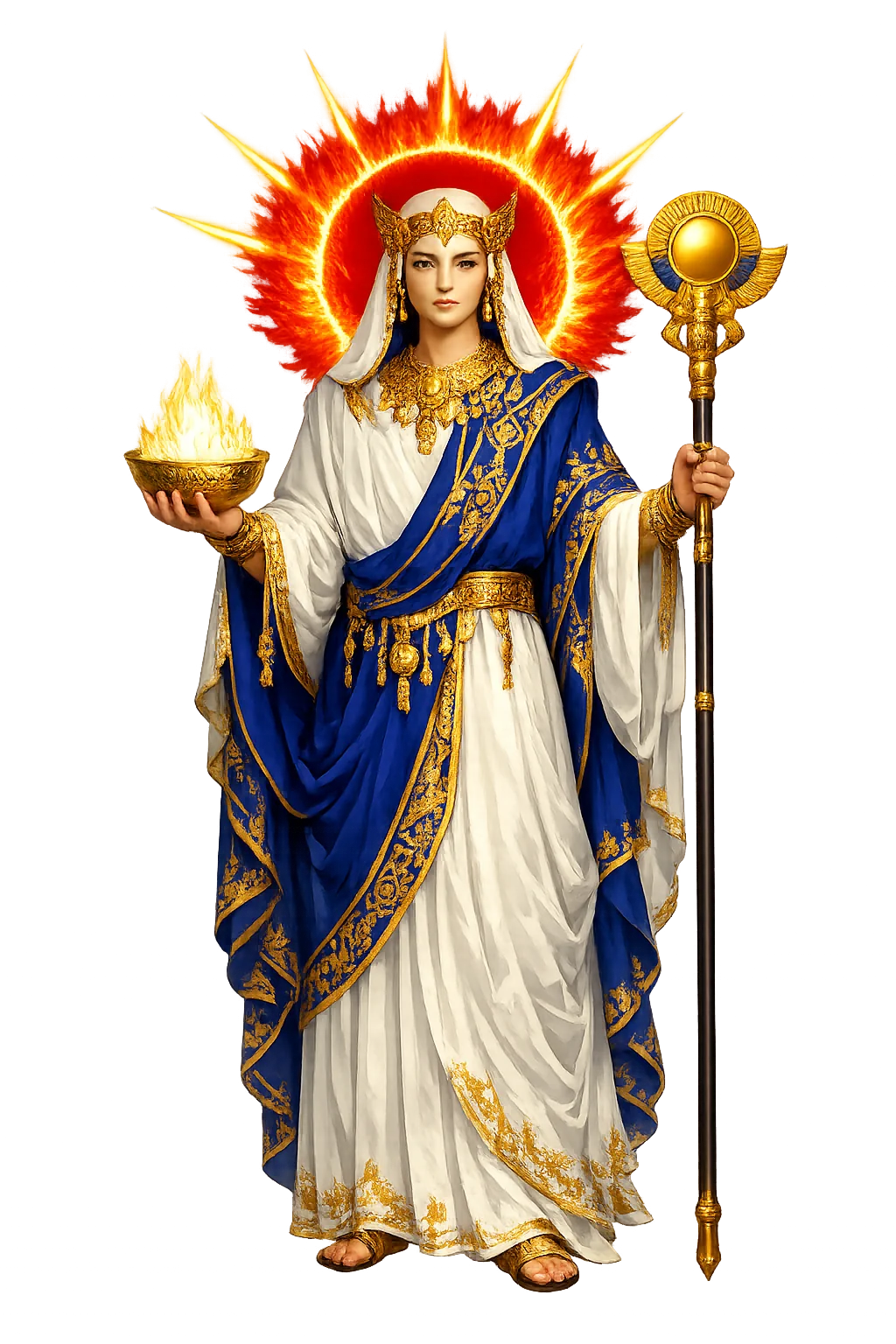
Ašavahišta is the Amesha Spenta of Aša — "Best Righteousness": the Bounteous Immortal who is cosmic order itself, the truth the universe is built to run on, and the sacred fire that tests every soul and every word against it.
His element: the altar-flame of the Avesta, purifier and witness.
Cosmic order as a person — the truth against which all thought, word, and deed is measured.
One of the Amesha Spentas — the Bounteous Immortals who form Ahura Mazda's council.
Fire as the test: the Avestan ordeal that proves the truthful from the deceitful.
Stories of Ašavahišta
Ašavahišta's mythology is the Gathas' own theology: truth not as an idea but as an immortal who must be fed, fought for, and kept alight.
The Avesta's great hymn-names them: Vohu Manah (Good Mind), Aša Vahišta (Best Truth), Xšathra Vairya (Chosen Power), Spenta Ārmaiti (Holy Devotion), Haurvatāt (Wholeness), Amərətāt (Immortality) — the Amesha Spentas, the Bounteous Immortals who are at once Ahura Mazda's powers and persons. Ašavahišta is the second: the Truth the Good Mind thinks, and the Fire that proves it. In the Gathas, Zaraθuštra meets each as a presence, not a principle.
His element is fire — not the destroyer but the tester. The Avesta gives fire to Aša Vahišta as his domain: the altar-flame through which prayers rise, and the ordeal-fire through which innocence is proven. Every Zoroastrian fire-temple keeps his presence: the flame tended for centuries is, in the faith, Ašavahišta made visible — the light that does not lie.
The Gathas' whole drama is his: Aša against Druj — Truth against the Lie, order against deceit. The righteous advance the world by good thought, good word, good deed; the deceitful tear at the fabric. Ašavahišta is not a passive abstraction but the war's front line: every true word spoken is his ground gained, every lie his ground lost. The cosmic fight is fought, daily, in speech.
At the end, the texts say, the world is tested by molten metal: a river of fire through which all must pass — to the righteous, warm milk; to the deceitful, burning. Ašavahišta presides: his fire is the last instrument of the truth he has always been. The eschaton is not destruction but assay — the universe finally read for what it is.
Ašavahišta is the god of the honest ledger. Every institution, every code review, every signature, every exam proctor, every journalist and every judge works in his fire — the test of what is true. He asks the oldest question of any ordered life: is the fire you keep burning for warmth, for show, or for truth — and what, this week, have you fed it?
Enter Extended Lore