The Authentic Orthography
War, Glory, Rage · The Wrath and the Heel
Unicode restoration and ASCII comparison
Ἀχιλλεύς
The name in its original Greek form. Achilleús (Ἀχιλλεύς) is attested in the source tradition — “Possibly 'grief of the people' (from ἄχος + λαός), or a pre-Greek name”. Its aspirated consonants, diphthongs, and acute accents carry the full phonetic and orthographic weight of the source tradition.
achilleus
Reduced to plain achilleus, the name loses everything that made it specific: aspirated consonants, diphthongs, and acute accents. What remains is an ASCII string that machines can parse but that no longer speaks with its original voice.
Achilleús
The Unicode restoration recovers what ASCII flattened. Achilleús restores aspirated consonants, diphthongs, and acute accents, returning the name to its original written dignity. The domain encodes to Punycode, but the browser displays the truth.
Achilleús.com → xn--achilles-u5a.com
The non-ASCII characters in Achilleús are encoded while the ASCII remains visible. To the DNS, it is Punycode. To humanity, it is Achilleús.
How Achilleús is preserved in writing
A bespoke provenance study for Achilleús is being prepared by the PUNICODEX scholarly team.
Contribute scholarly provenance →How Achilleús was spoken
War, Glory, Rage, and the Short Bright Life
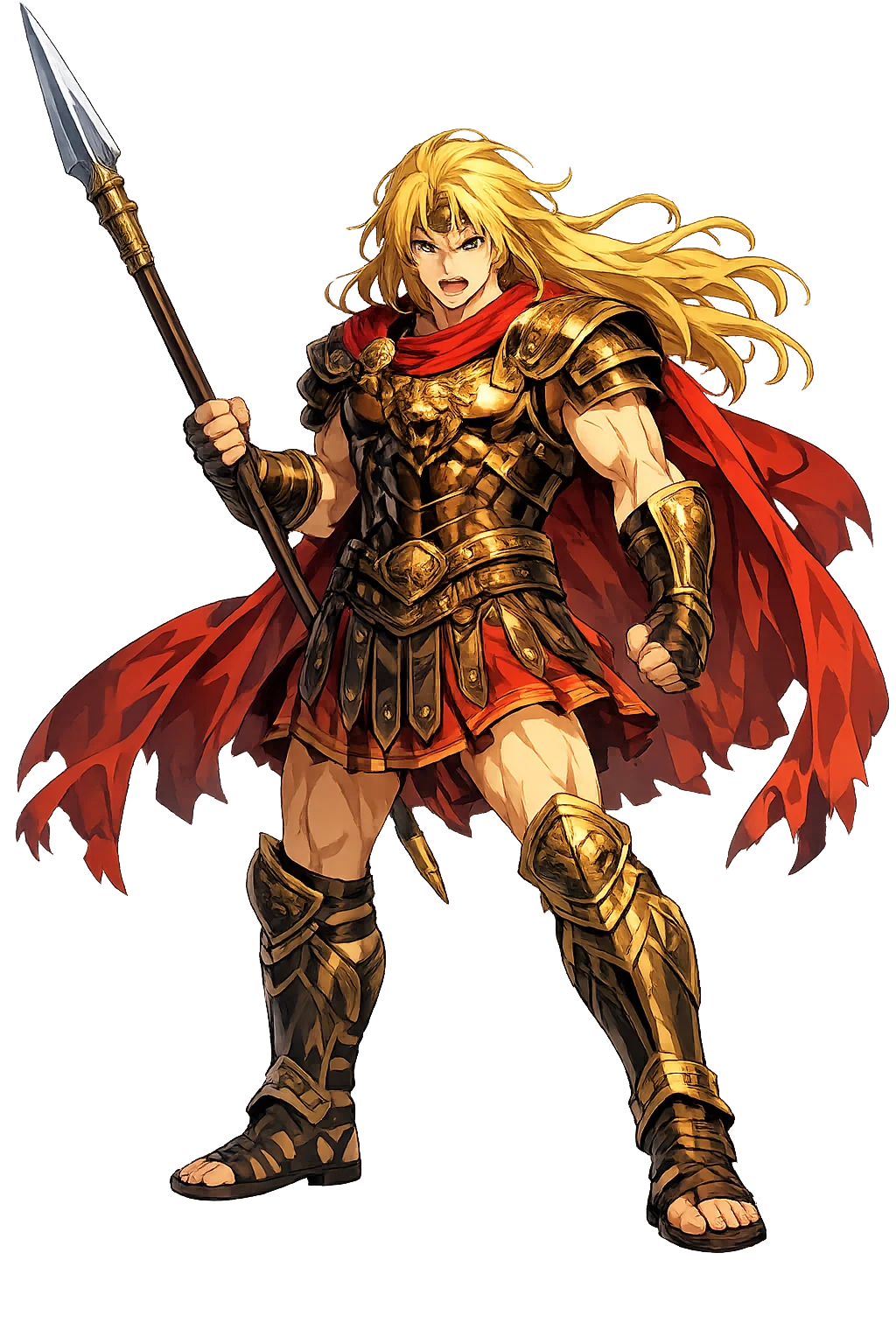
Achilleús is the hero the Iliad is named around: the man who chose a short life with imperishable fame (kleos aphthiton) over a long life in obscurity. His wrath is the poem's first word — mēnin — and his heel is the world's oldest named weakness.
The Iliad opens on his mēnis — a rage that costs the Achaeans thousands of lives and remakes epic poetry.
The single unarmoured point of an otherwise deathless fighter; the West's shorthand for a fatal flaw.
Imperishable fame — the bargain every brand strikes: burn briefly and be remembered forever.
His afterlife island in the Black Sea, where sailors left offerings to the hero for a thousand years.
Stories of Achilleús
Son of the mortal Pēleús and the sea-goddess Thetis, Achilleús stands exactly between god and man: the strongest argument the Greeks ever made that excellence cannot cancel mortality.
His mother Thetis told him he carried two fates: stay at Troy and win glory that never dies, or sail home to a long life forgotten. In Iliad 9 he weighs them aloud — the first hero in Western literature to choose knowingly, and to choose the flame over the ember.
When Hektōr killed Pátroklos, who wore Achilleús' own armour into battle, grief converted the hero's anger from his king to his enemy. He returned to war knowing it sealed his death, killed Hektōr before the walls of Troy, and dragged the body behind his chariot — until Priam's night visit taught him pity again.
Later tradition gives the death the Iliad only foreshadows: an arrow from Paris, guided by Apóllōn, finding the one vulnerable heel. The Roman-era Achilleid of Statius tells how Thetis dipped the infant in the Styx, holding him by that heel — the water made him deathless everywhere her hand did not cover.
Greek sailors of the Black Sea believed Achilleús lived on as a daimōn of Leuke, the White Island, with Helen or Medea as consort. Arrian and Pausanias report the cult; sailors anchored there to leave offerings well into the Roman period — a hero-cult with a real address.
Achilleús is the god of the deadline. He knows the exact price of brilliance and pays it anyway, and his story asks the reader which currency they are spending: years, or light. To hold his name is to hold the oldest question in the Western canon — whether a life is measured by its length or by what survives it.
Enter Extended Lore