
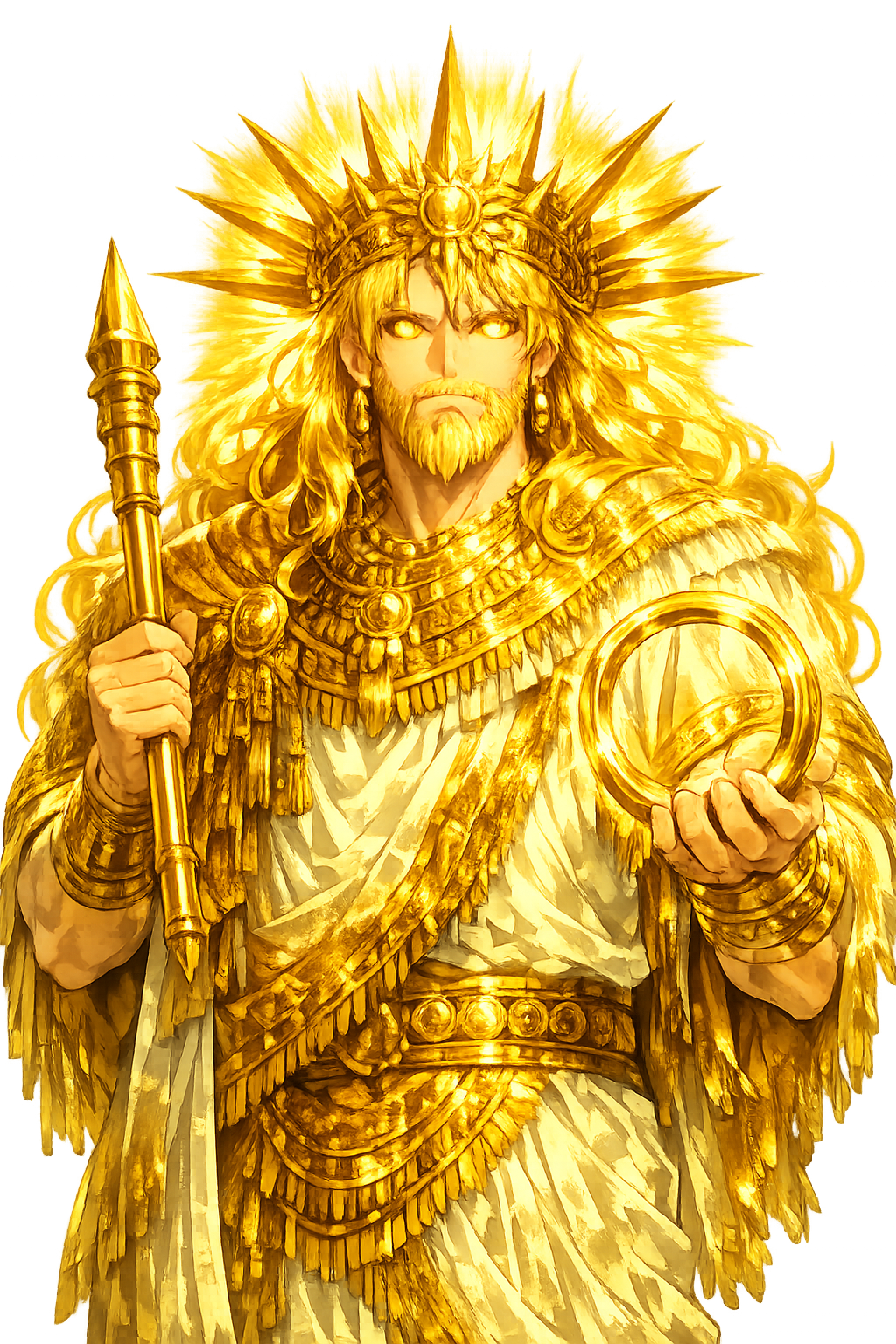
The Cult
Šamaš's temple was a courtroom with a sunrise. The E-babbar — the 'White House' — at Sippar kept his daily cult, with hymns recited as the god climbed the eastern mountains, for his presence was measured in daylight. His true congregation was everyone who needed a witness: contracts, verdicts, and treaties across two millennia swear by him, from Old Babylonian debt notes to the vassal oaths of Esarhaddon's succession treaties, in which he stands among the powers who watch the signature and punish the perjurer.
The diviners made him their patron of record. Every extispicy query — the liver-reading questions put to the gods by Assyrian kings — opens by invoking Šamaš and Adad, lords of judgement, to write the answer in the omen. A ninth-century cult copy from Sippar, the so-called Sun Tablet of Nabu-apla-iddina found by Rassam in 1881 and now in the British Museum, even pictures the god enthroned in his shrine: the nearest thing Mesopotamia left us to a photograph of a service.