
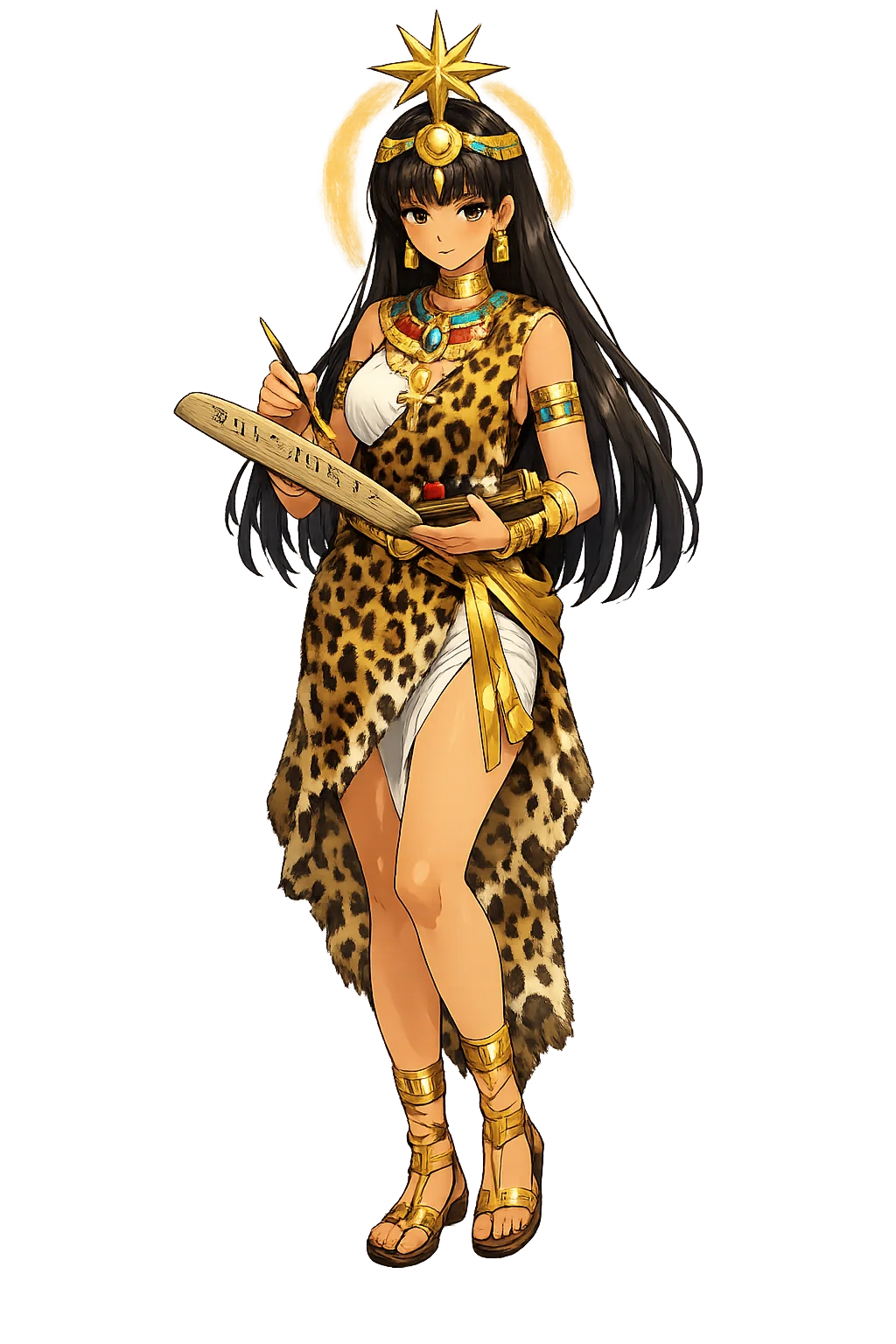
The Cult
Seshat had no mass popular cult and no great temple of her own; her worship was inseparable from the king's building program. In the stretching-the-cord ritual she stood opposite the pharaoh and helped align temples to the cardinal points by sighting the circumpolar stars. Foundation deposits buried beneath pylons and corners — pots, tablets, model tools — record her presence at the inception of sacred architecture. Her appearances cluster in coronation, jubilee, and temple-foundation scenes from the Old Kingdom through the Ptolemaic period. The consistency of the rite across three millennia suggests a priestly office rather than a devotional following: Seshat was the goddess whom kings needed, not the goddess ordinary Egyptians petitioned.