PuniCodex

Extended Lore

ᚱᛁᚴᛁᚾᚾ Reginn

Etymology · Phonology · Orthography · Cultural Legacy · Primary Sources

Tier 2 Reginn
Reginn — Dwarf Smith, Fafnir's Brother
01

Quick Facts

Essential information about Reginn, Dwarf Smith, Fafnir's Brother

Original Scriptᚱᛁᚴᛁᚾᚾ
Unicode RestorationReginn
Reconstructed Pronunciation/ˈreɣ.inː/
PantheonNorse
DomainDwarf Smith, Fafnir's Brother
MeaningThe great one
ClassificationTier 2
Primary DomainReginn
Sacred SymbolsThe sword Gram, The anvil, Andvaranautr, The dragon's blood, The foster-bond
02

Etymology & Word Family

From original script to Unicode restoration

Original Script ᚱᛁᚴᛁᚾᚾ Reginn — "The great one"
Unicode Restoration Reginn Restored stress, length, and script
Modern ASCII reginn Plain-ASCII fallback

Reginn is Tier 2 by the mechanical rule: normalized Old Norse writes the name in six plain ASCII letters — no diacritic, no distinctive letter for the ASCII alphabet to lose. The tier says something about orthography and nothing about the smith; only the capital distinguishes the restored form from the input.

03

Unicode Character Breakdown

Character-by-character philological analysis

CharacterUnicodeNameBlockPhonetic Role
RU+0052Latin Capital Letter RBasic LatinSame, capitalized
eU+0065Latin Small Letter EBasic LatinSame
gU+0067Latin Small Letter GBasic LatinSame
iU+0069Latin Small Letter IBasic LatinSame
nU+006ELatin Small Letter NBasic LatinSame

The Tier 2 classification reflects how much of the original phonology this restoration preserves — stress and vowel length for Greek names, distinctive letters and diacritics for every other tradition.

04

Cultural Significance

From ancient cult to modern Unicode

Ancient Domain

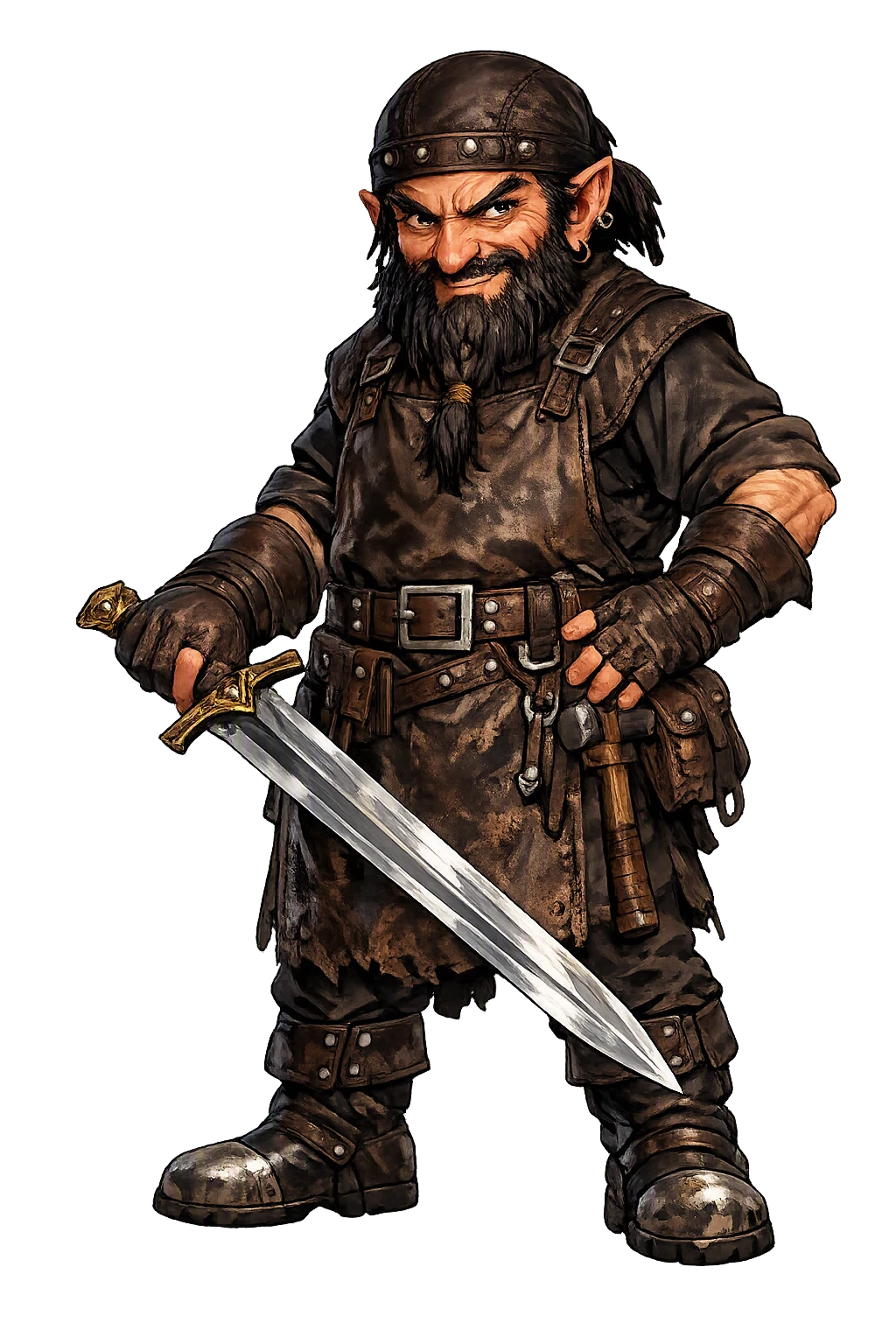
Reginn, son of Hreiðmarr and brother of Fáfnir and Ótr, is the master smith of the Völsung cycle — 'a dwarf in stature', the eddic prose says, 'wise, grim, and skilled in magic'. Cheated of his share of the cursed otter-ransom when his brother Fáfnir murdered their father for the gold, he fostered the young Sigurðr at King Hjálprek's court and reforged from the shards of Sigmundr's blade the sword Gram — the one weapon that could kill the dragon. But the hand that forged the slayer meant to claim the hoard, and when Sigurðr tasted the dragon's blood and understood the speech of birds, the foster-son turned Gram on the foster-father.

Reginn in Later Traditions

Reginn's clearest kin are inside the Germanic corpus itself. The Nibelungenlied's Mime — the smith who fosters Siegfried, forges for him, and schemes to send him against the dragon so the hoard will come free — is the Continental form of the same figure, softened in the High German epic but identical in structure: the fosterer who breeds his own instrument. Old English tradition preserves the smith-counterpart differently, in Weland the smith of Beowulf and Deor, the crippled artificer whose craft serves his revenge — the type to which Reginn belongs, the smith whose skill is inseparable from his grudge. Within the Norse corpus his brothers-in-craft are the dwarf-smiths of the gods: Brokkr and Sindri, who forge Mjölnir and Draupnir and Gullinbursti for stakes no higher than a wager — the clean contrast that shows what Reginn is, a smith whose work serves a feud instead of a boast. Nineteenth-century scholarship folded all of them into the type of the cunning artificer; the modern handbooks, Simek and Lindow among them, keep him where the sources put him: the Völsung cycle's necessary smith, indispensable and damned.

Modern Legacy

Reginn's afterlife runs along two tracks. In the learned tradition he survived as part of the Völsung material — William Morris's Sigurd the Volsung (1876) gives the foster-smith his full cold arc, and Wagner compressed him with Mime into the Nibelung smith of the Ring cycle, where the brother-scheming-for-the-hoard survives almost intact. In the popular tradition the name lives quietly: Richard Wagner's Regin never recovered from Wagner's Mime, but Scandinavian legend and modern retellings of the Sigurðr story keep the foster-father and the reforged sword. Modern scholarship — Lindow, Byock, the Völsunga saga's commentators — treats him as the cycle's study in fosterage betrayed, the figure through whom the tradition asks what a teacher owes a student. He survives too in the comparative study of smith-legends, beside Weland and the Greek Hephaistos, as the northern proof that the master craftsman is never a safe ally.

Unicode Restoration as Cultural Act

Restoring Reginn in a domain name is more than orthographic accuracy. It is a statement that the internet should recognize the full range of human writing — not only the ASCII keyboard.

05

Frequently Asked Questions

Common questions about Reginn, Dwarf Smith, Fafnir's Brother, and Unicode restoration

01How do you pronounce Reginn?

In reconstructed pronunciation, Reginn is /ˈreɣ.inː/ — approximately 'REH-yin' is close — two beats, stress on the first, the medial g softened toward a light 'y'-like fricative ([ɣ], the g of Spanish lago), the final n held a fraction long..

02What does Reginn mean?

Reginn means The great one in the norse tradition.

03What are the symbols of Reginn?

Reginn is associated with The sword Gram (The reforged blade of Sigmundr's shards — craft completing a broken lineage, and the instrument of its maker's death), The anvil (The measure of true forging — two flawed blades broke on it before Gram stood the test), Andvaranautr (The cursed ring of the otter's ransom — the gold that killed Hreiðmarr, turned Fáfnir to a dragon, and armed Reginn's patience), The dragon's blood (The taste that opened bird-speech to Sigurðr — the moment the foster-son learned the foster-father's plan), The foster-bond (The tie Reginn made and meant to break — the deepest oath of the northern world, betrayed for a hoard).

04Why restore Reginn in Unicode?

Plain ASCII reginn strips the stress, length, and script that make the name specific. Unicode restoration returns the name to its original written dignity.

05What is the most important myth about Reginn?

It begins with a skinned otter. Óðinn, Hœnir and Loki came to Andvari's falls, where Reginn's brother Ótr fished in otter shape; Loki killed him with a stone, and that evening the gods carried the skin into Hreiðmarr's house and boasted of the catch. Hreiðmarr and his sons Fáfnir and Reginn seized the gods and demanded weregild: the otter's skin filled with gold, and covered with gold besides. Loki forced the dwarf Andvari to yield his hoard, and when Andvari tried to keep back one ring, Loki took that too — Andvaranautr. Andvari laid the curse: that gold would be the death of two brothers and the strife of eight princes, and no man should enjoy his wealth.The curse kept its accounts. Hreiðmarr refused his sons any share of the ransom; Fáfnir killed his father in his sleep and took all the gold, and Reginn got nothing. Fáfnir went out to Gnitaheiðr, brooded on the hoard in the shape of a dragon, and Reginn — wronged, patient, and very clever — went to find an instrument.

06

Scholarly Sources

The philological foundations of this restoration

Every claim on this page is grounded in established scholarship. The orthographic restorations follow disciplinary convention. The etymological chain follows the best available reference works. This is not invention — it is resurrection through scholarship.

Lexicography & Philology

  • Poetic Edda
  • Cleasby-Vigfusson

Primary Texts

  • Poetic Edda: Reginsmál (prose and stanzas: the fosterage; the gold's history), Fáfnismál (the dragon's warnings; the nuthatches; the killing of Reginn); Völuspá 12 (Reginn in the catalogue of dwarfs), trans. Carolyne Larrington
  • Snorri Sturluson, Prose Edda: Skáldskaparmál (the otter's ransom; Andvari's gold and Andvaranautr; the curse; Fáfnir's parricide and Reginn's exclusion), trans. Anthony Faulkes

Archaeology & Art History

  • Material evidence — iconography, inscriptions, and temple archaeology — for Reginn and related cults.
  • Reginn is a textual figure, but the Völsung cycle is among the most picture-rich narratives in the North, and the smith's scenes were carved. The great Sigurðr iconography of Viking-Age Scandinavia — the carving of the dragon-slaying, the heart-roasting, and the listening to birds — survives on the Swedish runestones at Ramsund (Sö 101) and Gök (Sö 327) in Södermanland, on the Drävle stone (U 1163) in Uppland, and on the Manx crosses at Jurby, Malew and Andreas, where the roasting scene and Sigurðr's thumb in his mouth are unmistakable. The Ramsund carving shows the full cycle's cast: the slain Fáfnir as a serpent-band, Sigurðr at the fire, the horse Grani loaded with the hoard, the birds in the tree — and the headless smith's tools laid beside a headless body, the standard scholarly reading of the truncated figure at the carving's edge as the killed Reginn. In England, the Halton cross in Lancashire and the York Minster grave slab carry related scenes. The manuscript witnesses are the Codex Regius of the Poetic Edda (Reginsmál, Fáfnismál), the codices of Snorri's Edda for Skáldskaparmál's prose account, and the vellum of Völsunga saga (AM 182 4to and the paper tradition) for the fullest prose life.

Religious Studies

  • Völsunga saga, chs. 13–20 (Reginn at Hjálprek's court; the fosterage; the reforging of Gram from Sigmundr's shards; the death of Fáfnir and of Reginn), trans. Jesse L. Byock
  • Cleasby–Vigfusson, An Icelandic-English Dictionary, s.v. regin ('the gods, the powers'; regin- as intensifying prefix); Zoëga, A Concise Dictionary of Old Icelandic, s.v. regin, Reginn
  • de Vries, Altnordisches etymologisches Wörterbuch, s.v. regin, Reginn (the name's connection with regin 'divine powers', as in ragnarök)
  • Simek, Dictionary of Northern Mythology; Lindow, Norse Mythology: A Guide to the Gods, Heroes, Rituals, and Beliefs — s.v. Regin (the smith-fosterer; the Mime parallel; the fosterage motif)
Return

The Surface Awaits

You have traced the name from its earliest attestation to its Unicode restoration. Now return to the myth. The story is where the name lives.

Back to Lore
Reginn mascot