
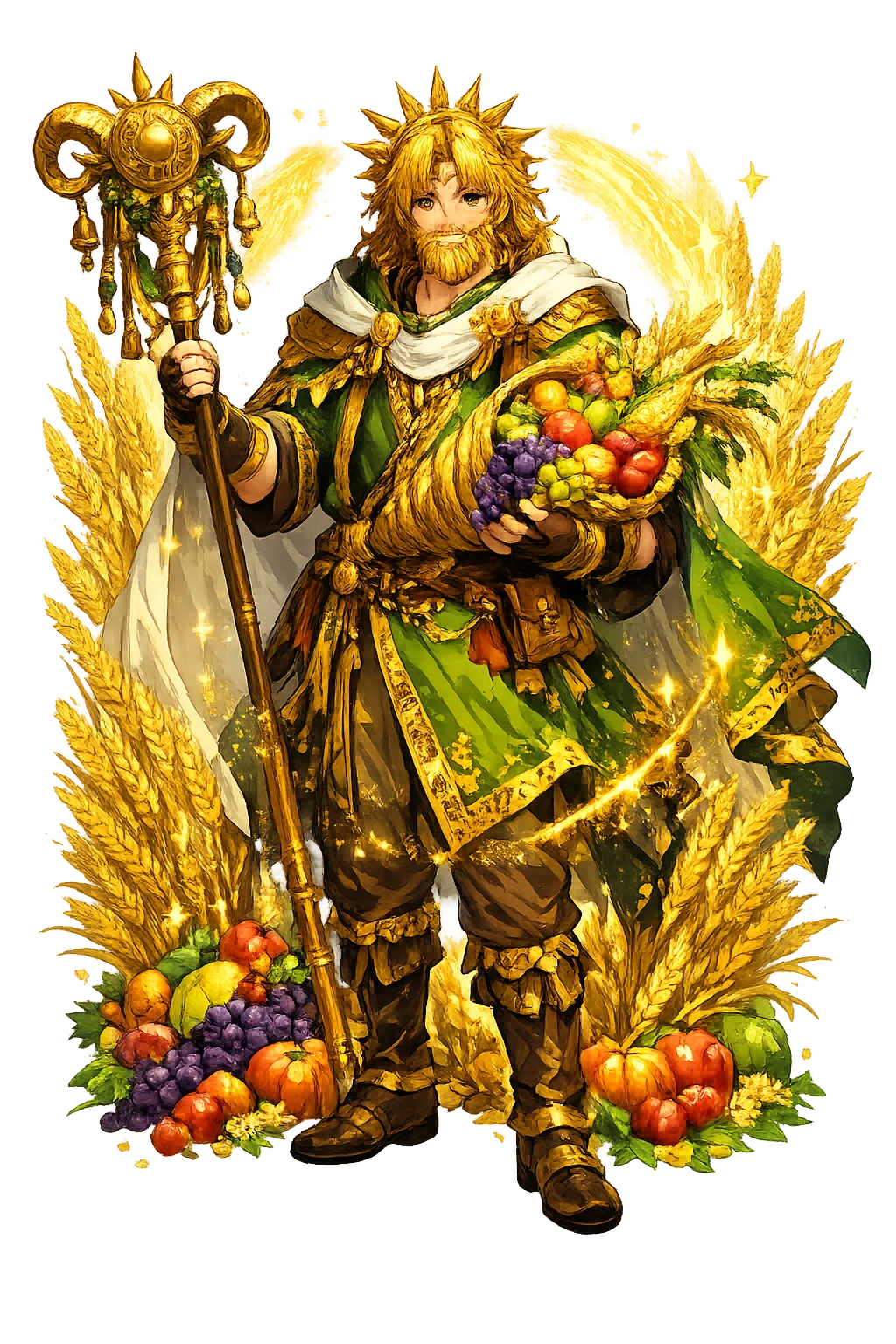
The Cult
Pūṣan's cult existed entirely in fire and formula — which is why it left nothing to excavate. Vedic religion worshipped under the open sky at temporary grass-thatched altars, and Pūṣan received hymn rather than house: two Ṛgvedic hymns are dedicated to him (RV 6.53–54), beside his fixed offices in the wedding and funeral liturgies. His characteristic offering was the humblest in the repertoire — karambha, a gruel of ground grain — and the Śatapatha Brāhmaṇa explains why: his teeth were smashed at Dakṣa's ruined sacrifice, so he alone among the gods cannot chew (ŚB 1.7.3–4). He rides a goat-drawn chariot in the imagination of the hymns — a drover's poor vehicle among the horse-gods, which is precisely the point. No sanctuary, statue, or votive of Pūṣan has ever been found, and none is expected. What stands in place of his temple is his liturgy: recited at the roadside, at the graveside, and above all at the wedding, where his hymn has never stopped being sung.