PuniCodex

Extended Lore

Πόντος Póntos

Etymology · Orthography · Cultural Legacy · Reception · Primary Sources

Tier 2 Póntos.com
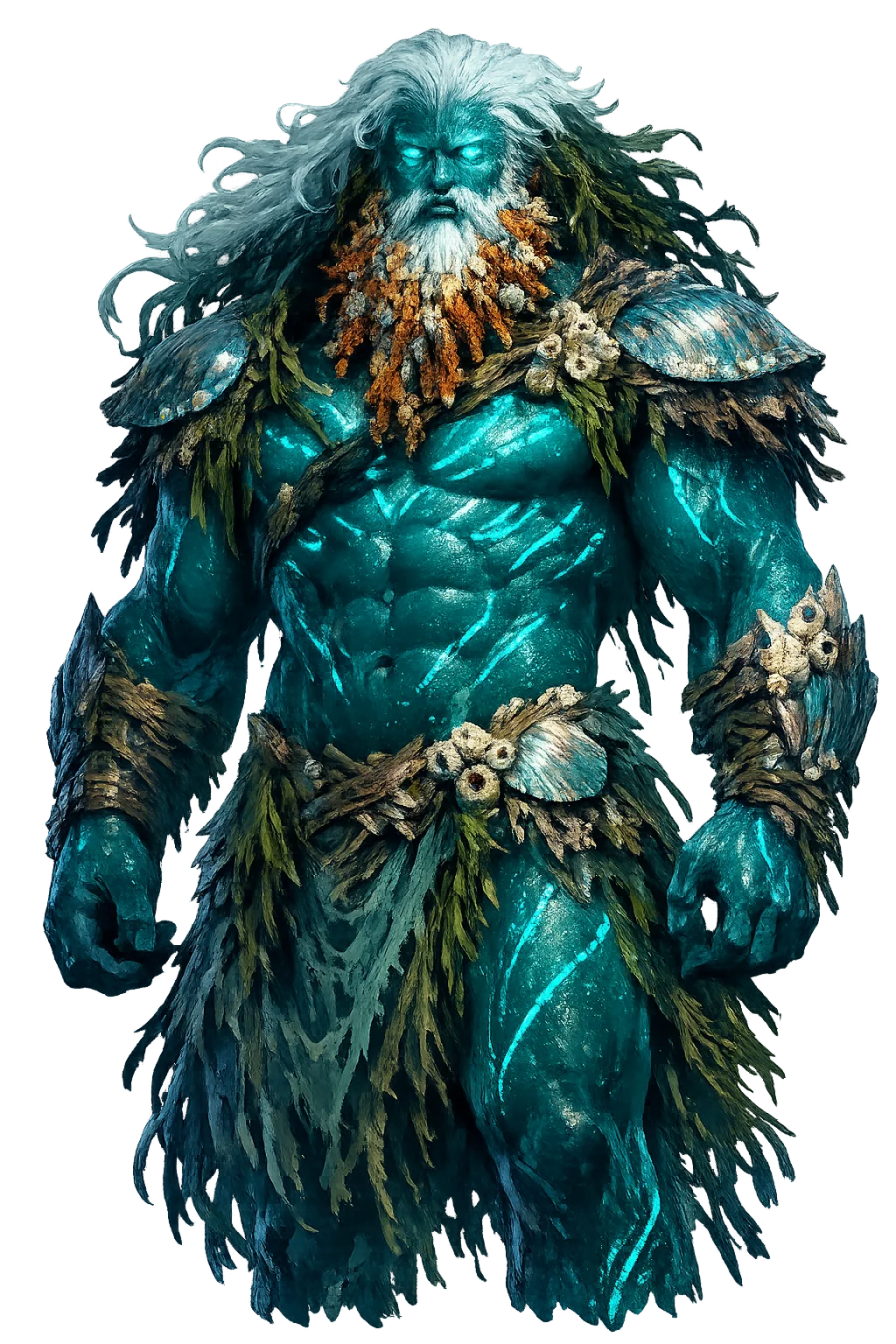
Póntos — The Primordial Sea
01

Quick Facts

Essential information about Póntos, The Primordial Sea

Original ScriptΠόντος
Unicode RestorationPóntos
Reconstructed Pronunciation/pón.tos/
PantheonGreek
DomainThe Primordial Sea
MeaningSea (from πόντος)
ClassificationTier 2
Primary DomainPóntos.com
Sacred SymbolsWaves, Fish and sea creatures, Ship, Shell, Bull from the sea
02

Etymology & Word Family

From original script to Unicode restoration

Proto-indo-european *pont- sea, path
Original Script Πόντος Póntos — "Sea (from πόντος)"
Unicode Restoration Póntos Restored stress, length, and script
Modern ASCII pontos Plain-ASCII fallback

From πόντος "sea", cognate with Latin pons "bridge, path". The primordial sea.

03

Unicode Character Breakdown

Character-by-character philological analysis

CharacterUnicodeNameBlockPhonetic Role
PU+0050Latin Capital Letter PBasic LatinPi
óU+00F3Latin Small Letter O with AcuteLatin-1 SupplementAcute on omicron
nU+006ELatin Small Letter NBasic LatinNu
tU+0074Latin Small Letter TBasic LatinTau
oU+006FLatin Small Letter OBasic LatinOmicron
sU+0073Latin Small Letter SBasic LatinSigma

The Tier 2 classification reflects how much of the original phonology this restoration preserves — stress and vowel length for Greek names, distinctive letters and diacritics for every other tradition.

04

Cultural Significance

From ancient cult to modern memory

Póntos in Later Traditions

The Romans had no distinct equivalent of Póntos; they borrowed the Greek name for the sea and the region. The kingdom of Pontus in northern Anatolia — famous for Mithridates VI, Rome's most stubborn enemy — took its name from the Black Sea, and 'Pontic' remains the ethnonym of the Greek communities of that coast. In later Greek, πόντος simply meant 'sea', and the personification was absorbed into Poseidon-Neptune. The older figure survives mainly in geography: the Pontus of antiquity is still the Black Sea, and the Pontic dialect is still spoken by diaspora communities in Greece itself.

Modern Legacy

Póntos represents the sea as environment rather than deity. The Greeks lived on islands and coasts; the sea was their road, food source, enemy, and horizon. The Euxine Pontos shaped Greek colonization and the whole history of the Black Sea world, and the Pontic Greeks preserve a distinctive culture to this day. When the sea's ancient name shifted from Pontos Axeinos, 'Inhospitable', to Euxeinos, 'Hospitable' (Strabo 7.3.6), the euphemism itself became a monument of colonial optimism. Modern Greek still calls the open sea pontós. Restoring Póntos restores the name of the primordial sea that made Greek civilization a maritime civilization.

In the Earth

Greek colonies around the Pontos Euxeinos preserve sanctuaries and harbor works at Olbia, Sinope, Trapezous, and Pantikapaion (Kerch); the Milesian colony of Olbia produced bone plaques and coinage honoring local river and sea powers. Shipwrecks such as Tektaş Burnu and the Black Sea deep-water surveys associated with Robert Ballard document the trade routes that made the Pontic world a single maritime economy. No sanctuary of Póntos himself is known — the primordial sea was honored in the harbors, not housed in temples — which is itself the archaeological signature of a personification worshipped as environment rather than lord.

05

The Meditation

What Póntos means — beyond the dictionary

Póntos is the sea before it has a mood. He is not angry or calm; he simply is — and that is why his myths are genealogies rather than stories. The Greeks crossed him, fished him, feared him, and wrote him into the family tree of every marvel and monster that lived in his water.

The modern world has mapped the ocean floor and crossed the sea in days, yet the ocean remains alien — most of our planet is not ours and never will be. The name Póntos, first meaning 'path' or 'crossing', records the moment when the Greeks stopped seeing only danger and started seeing a road. The restoration of the name restores that double vision: the sea as barrier and highway, terror and livelihood, the original commons of the ancient world — the one road that was there before every other, carrying colonists, grain, myth, and war between every shore of the Greek horizon.

06

Frequently Asked Questions

Common questions about Póntos, The Primordial Sea, and Unicode restoration

01How do you pronounce Póntos?

In reconstructed pronunciation, Póntos is /pón.tos/ — approximately 'PON-toss' — the first syllable is pitched and short, like the peak of a swell.

02What does Póntos mean?

Póntos means Sea (from πόντος) in the greek tradition.

03What are the symbols of Póntos?

Póntos is associated with Waves (The surface and motion of the sea — Póntos has no face, only water), Fish and sea creatures (The teeming life beneath the surface, his grandchildren and tenants), Ship (The human path across his body — the etymology of his name made visible), Shell (The boundary between sea and land, where the two worlds trade), Bull from the sea (The monstrous or sacrificial bull emerging from the deep — Poseidôn's animal, surfacing in Póntos's water).

04Why restore Póntos in Unicode?

Plain ASCII pontos strips the stress, length, and script that make the name specific. Unicode restoration returns the name to its original written dignity.

05What is the most important myth about Póntos?

“Born of Gaia Without Love” — Póntos has few myths because he is a personification rather than a character — yet his importance is genealogical. He is the primordial sea, the wet element itself, and the source of the sea's entire divine population: the kindly old Nereus, the monstrous Phorcys and Ceto, the wondrous Thaumas, and the hard-hearted Eurybia. The full telling lives on the lore page.

07

Scholarly Sources

The philological foundations of this restoration

Every claim on this page is grounded in established scholarship. The orthographic restorations follow disciplinary convention. The etymological chain follows the best available reference works. This is not invention — it is resurrection through scholarship.

Lexicography & Philology

  • Liddell, H. G., Scott, R., & Jones, H. S. A Greek-English Lexicon. Oxford: Clarendon Press, 9th ed. 1996.
  • Pape, W., & Benseler, G. E. Wörterbuch der griechischen Eigennamen. Braunschweig: Vieweg, 1884.
  • Beekes, R. S. P. Etymological Dictionary of Greek. Leiden: Brill, 2010.

Primary Texts

  • Hesiod, Theogony 131–132, 233–239, 265–269, 375–377
  • Homer, Iliad and Odyssey (pontos as the open sea)
  • Strabo, Geography 7.3.6 (Axeinos to Euxeinos)
  • Apollodorus, Library

Archaeology & Art History

  • Material evidence — iconography, inscriptions, and temple archaeology — for Póntos and related cults.

Religious Studies

  • Boardman, The Greeks Overseas
  • Beekes, Etymological Dictionary of Greek, s.v. πόντος
Return

The Surface Awaits

You have traced the name from its earliest attestation to its Unicode restoration. Now return to the myth. The story is where the name lives.

Back to Lore
Póntos mascot