PuniCodex

Extended Lore

Οὐρανία Ouranía

Etymology · Orthography · Cult · Iconography · Reception · Sources

Tier 1 Ouranía.com
Ouranía — Astronomy
01

Quick Facts

Essential information about Ouranía, Astronomy

Original ScriptΟὐρανία
Unicode RestorationOuranía
Reconstructed Pronunciation/u.ra.ní.aː/
PantheonGreek
DomainAstronomy
MeaningHeavenly
ClassificationTier 1
Primary DomainOuranía.com
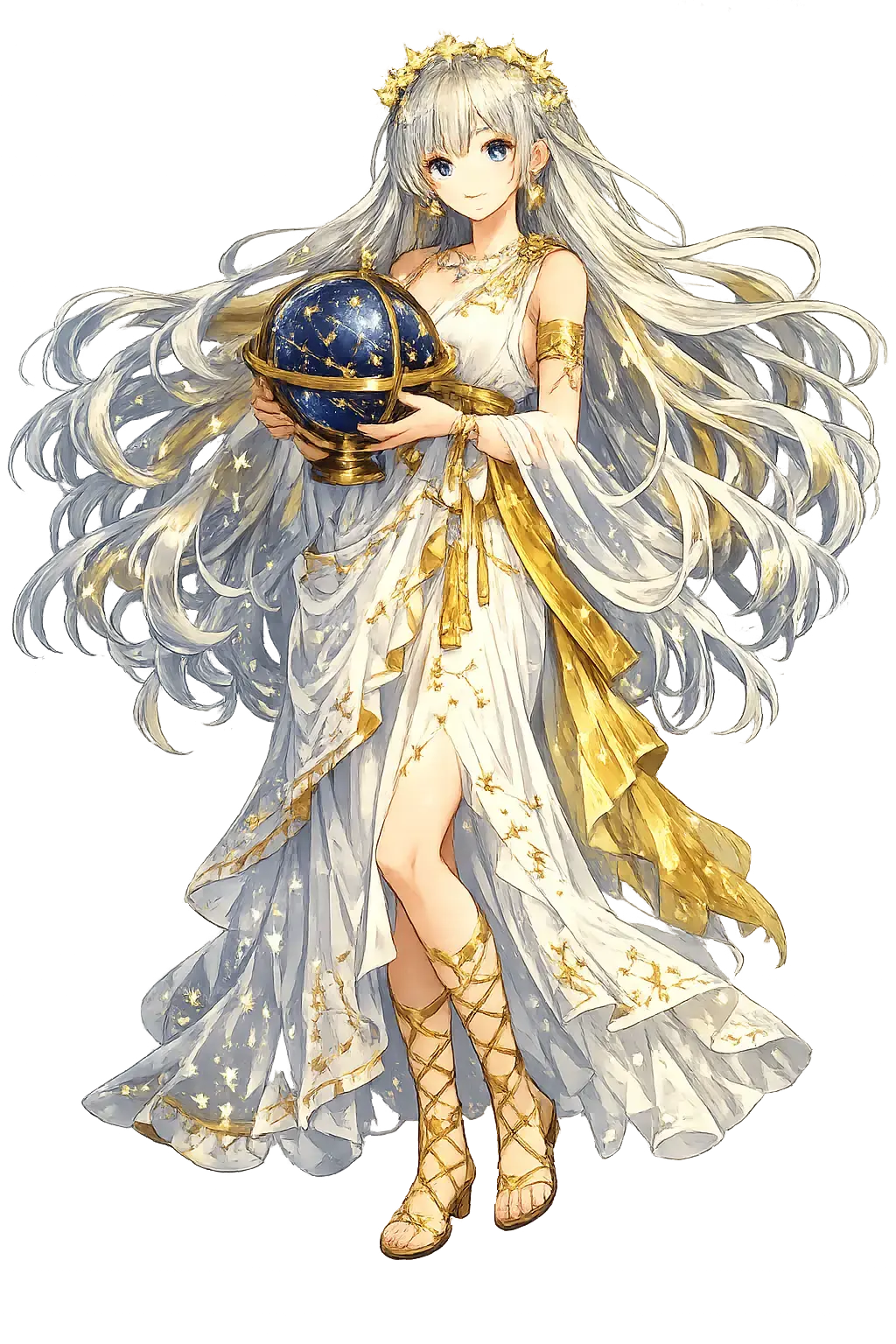
Sacred SymbolsCelestial globe, Pair of compasses, Starry crown, Tablet of risings and settings, The pointing staff
02

Etymology & Word Family

From original script to Unicode restoration

Original Script Οὐρανία Ouranía — "Heavenly"
Unicode Restoration Ouranía Restored stress, length, and script
Modern ASCII ourania Plain-ASCII fallback

The name Ouranía carries the orthographic signature of the greek tradition: Οὐρανία. Unicode restoration recovers what ASCII flattens.

03

Unicode Character Breakdown

Character-by-character philological analysis

CharacterUnicodeNameBlockPhonetic Role
OU+004FLatin Capital Letter OBasic LatinO uppercase
uU+0075Latin Small Letter UBasic Latinu same
rU+0072Latin Small Letter RBasic Latinr same
aU+0061Latin Small Letter ABasic Latina same
nU+006ELatin Small Letter NBasic Latinn same
íU+00EDLatin Small Letter I with AcuteLatin-1 SupplementAcute on i
aU+0061Latin Small Letter ABasic Latina same

The Tier 1 classification reflects how much of the original phonology this restoration preserves — stress and vowel length for Greek names, distinctive letters and diacritics for every other tradition.

04

Cult & Worship

How the sacred was kept — rites, sanctuaries, remains

The Cult

Ouranía had no separate priesthood or temple: she was worshipped as one of the nine Muses, a chorus rather than an individual goddess. Their principal sanctuary lay in the Valley of the Muses beneath Mount Helicon near Thespiae, where Pausanias saw the statues of all nine Muses together with poets and the spring of Hippokrēnē. A second haunt was the northern slopes of Olympus above Pieria, the meadow said to be their birthplace. Festival life centered on Mouseia contests—musical, poetic, and athletic competitions held in the Muses' honor. Modern astronomy has borrowed her name for planetaria and societies, but these are secular revivals, not ancient cult.

In the Earth

Ouranía had no independent temple — the Muses were worshipped as a choir, not as nine separate goddesses. Their great sanctuaries were the Valley of the Muses beneath Mount Helicon near Thespiae, where Pausanias (9.30–31) saw the images of all nine together with statues of poets and the spring of Hippokrēnē struck out by Pegasus' hoof, and the northern slopes of Olympus above Pieria, the meadow of the Theogony's proem, where the altar of Zeus and the Muses was shown. In Roman art Ouranía becomes an individual: mosaics and sarcophagi show her with the celestial globe and compasses, and the type passes straight into Renaissance painting as the personification of Astronomy — globe, compass, starry crown unchanged.

05

Iconography

How Ouranía was imaged across the ages

The Image

In art Ouranía is the Muse of astronomy: she usually holds a celestial globe, points upward, or is accompanied by a compass and star-chart. Late-classical and Hellenistic sculptural groups of the Muses, such as those copied in Roman marble, regularly give her this astronomer's pose. She appears on sarcophagi and mosaics as one of the learned Muses, and in Renaissance painting—most famously in Raphael's Parnassus in the Vatican Stanze—as a contemplative figure among Apollo's court. Manuscript illuminations of astronomy personified repeat the same attributes. Because her identity depends on the group, single statues of Ouranía alone are rare outside the cycle.

06

Reception & Transformation

The name after its own age — transmission, translation, survival

Afterlives

The Muse Ouranía travelled through late-antique and medieval encyclopedias—Martianus Capella's De nuptiis, the Fulgentius Mythologiae, and Byzantine scholia—where her name became fixed in the canonical list of nine Muses. The Renaissance rediscovery of Pausanias and the Homeric Hymns restored her astronomical persona; Raphael placed her in the Parnassus, and she became a standard figure in emblem books. By the early modern period her name was transferred to the muse of astronomy itself: Urania lent her name to learned societies, the Urania tradition of almanacs, and eventually asteroid 30 Urania. The transformation was complete when nineteenth-century observatories named their journals and societies after her, making Urania an emblem of secular scientific progress as well as poetic inspiration. Modern scholarship treats her less as a cult figure than as an index of how Greek culture packaged knowledge as divine inspiration.

Identifications Across Traditions

Rome adopted her without alteration — Urania is simply the Greek name with a Latin spelling — and Roman poets used her as the natural patroness of astronomical verse; Manilius opens his Astronomica under her sign. The medieval and Renaissance worlds completed the identification: as the seven liberal arts were each given a Muse, Astronomy received its own, and 'Urania' became a common noun joining the poetry and the science of the heavens. Dante places her in Paradise; Milton invokes her in the proem to Paradise Lost, begging the 'heavenly Muse' to sing 'of man's first disobedience.' In modern times her name marks observatories, astronomical societies, and even a planetarium program — the ancient Muse has quietly become the public face of astronomy itself, surviving every revolution that was supposed to retire her.

Modern Legacy

Every observatory and astronomical society named Urania is a vote for an old idea: that studying the stars is not mere measurement but a form of contemplation, and that the wonder which named constellations and the mathematics that computed their orbits are one activity. The tradition descends without a break from Hesiod's nine daughters through Plato's heavenly love to Milton's invocation and the Urania of today's observatory domes. Her survival is the survival of the union of art and science — a union the modern university divides into faculties, but the night sky does not. She is the Muse of everyone who has looked up and felt, briefly, that the universe is legible.

07

The Meditation

What Ouranía means — beyond the dictionary

Ouranía teaches an ancient discipline: look up. In an age of downward-glancing screens, her domain is a call to recalibrate. The stars do not need us, yet we have always needed them — for navigation, for calendar, for the sense that our small lives are part of a larger pattern.

To invoke Ouranía is to refuse the split between art and science. The same wonder that named constellations also calculated orbits; the same reverence that composed hymns to the Muses also built the first telescopes. She is the patron of anyone who has ever looked at the night sky and felt, for a moment, that the universe makes sense.

08

Frequently Asked Questions

Common questions about Ouranía, Astronomy, and Unicode restoration

01How do you pronounce Ouranía?

In reconstructed pronunciation, Ouranía is /u.ra.ní.aː/ — approximately 'oo-rah-NEE-ah' — stress the third syllable and let the final 'ah' lengthen slightly.

02What does Ouranía mean?

Ouranía means Heavenly in the greek tradition.

03What are the symbols of Ouranía?

Ouranía is associated with Celestial globe (The starry sphere she turns in her hand — the whole cosmos made small enough to teach.), Pair of compasses (The instrument of exact ratio; her astronomy is geometry, not guesswork.), Starry crown (Her dominion over the fixed stars, worn like the night sky itself.), Tablet of risings and settings (The parapegma of star-calendar entries — her science lived in tables of dates.), The pointing staff (With which she indicates the pole on her globe — the Muse as teacher at the sphere.).

04Why restore Ouranía in Unicode?

Plain ASCII ourania strips the stress, length, and script that make the name specific. Unicode restoration returns the name to its original written dignity.

05What is the most important myth about Ouranía?

“Nine Nights, Nine Days” — the Theogony story that anchors the mythology of Ouranía, told in full on the lore page.

09

Scholarly Sources

The philological foundations of this restoration

Every claim on this page is grounded in established scholarship. The orthographic restorations follow disciplinary convention. The etymological chain follows the best available reference works. This is not invention — it is resurrection through scholarship.

◈

Lexicography & Philology

  • Liddell, H. G., Scott, R., & Jones, H. S. A Greek-English Lexicon. Oxford: Clarendon Press, 9th ed. 1996.
◎

Primary Texts

  • Hesiod
  • Hesiod, Theogony 53–62, 75–79, 915–917
  • Homeric Hymn 25 (to the Muses)
  • Plato, Symposium 180d–e
  • Pausanias 9.29.6–8, 9.30–31
◉

Archaeology & Art History

  • Material evidence — iconography, inscriptions, and temple archaeology — for Ouranía and related cults.
✦

Religious Studies

  • Hyginus, Fabulae praefatio
  • Beekes, Etymological Dictionary of Greek
Return

The Surface Awaits

You have traced the name from its earliest attestation to its Unicode restoration. Now return to the myth. The story is where the name lives.

Back to Lore
Ouranía mascot