The Living Myth
Dreams, Dream-Visions · One of the thousand dream-spirits
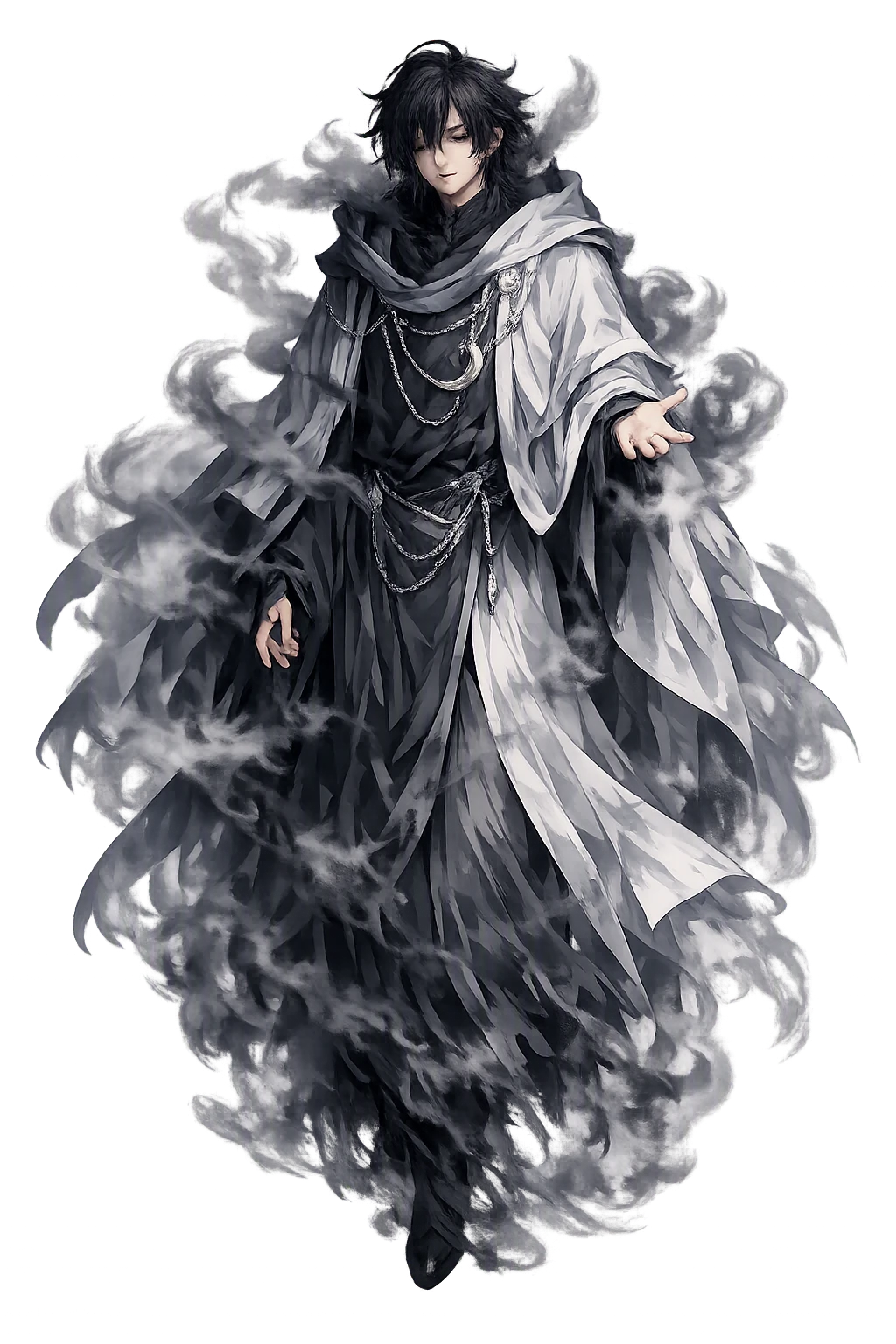
Stories of Óneiros
Óneiros moves through Greek literature as a servant of the gods, a child of Night, and the ambiguous voice that speaks to sleepers.
Hesiod lists Óneiros among the children of Nýx, born without a father: "And Nýx bore hateful Moîra and black Kēr, and Thanatos and Hypnos, and the tribe of Oneiroi." The Oneiroi are therefore siblings of death and sleep, related to fate and the dark. They are not gods of cult but powers of the night.
Odysseus' wife Penelope, weeping over her long-absent husband, is visited in sleep by what seems to be her sister Iphthime, who tells her she has come, sent by a god, to ease her grief. When Penelope wonders why the vision has come at all, the dream explains that there are two gates of dreams: one of horn, through which true dreams pass for mortals, and one of ivory, through which pass deceptive ones, 'bearing words that accomplish nothing' (Odyssey 19.560-569). The passage gives Greek literature one of its most enduring metaphors for the ambiguity of sleep — and pointedly leaves open which gate Penelope's own comforting vision came through.
At the opening of the Iliad's second book, Zeús sends a dream to Agamemnon to lure him into battle. The dream takes the form of Nestor and stands at the king's head, speaking with a voice like the old counselor's. The scene establishes the Oneiroi as divine messengers who can wear the shape of the living.
Ovid gives the Oneiroi a Latin home in the cave of Somnus, where a thousand dreams lie waiting to be sent. Among them is Morpheus, the shape-shifter, who becomes the most famous of the dream-figures in later Western art. The Roman tradition separates and renames the dream-powers, but the Greek Óneiros remains their source.
Personification of Dreams and Dream-Visions
Óneiros is the Greek personification of the dream: the winged figure or figures who pass through the gates of horn and ivory, carrying true messages or false delusions to sleeping mortals. He is one of the many children of Nýx, Night, and in Homer he serves the gods as a messenger who takes human shape in sleep.
Hesiod makes Óneiros one of the children of Nýx, born without a father in the dark before the gods.
In the Odyssey, a dream comes to Penelope in the shape of her sister Iphthime, standing beside her bed to speak (Od. 19.547ff).
In the Odyssey, dreams pass through gates of horn (true) and ivory (false), an image of sleep's ambiguity.
Some dreams are winged with truth, others with deception; Óneiros carries both kinds.
From the original script to the living URL
Ὄνειρος
The name in its original Greek form. Óneiros (Ὄνειρος) is attested in the source tradition — “Dream”. Its diphthongs and acute accents carry the full phonetic and orthographic weight of the source tradition.
oneiros
Reduced to plain oneiros, the name loses everything that made it specific: diphthongs and acute accents. What remains is an ASCII string that machines can parse but that no longer speaks with its original voice.
Óneiros
The Unicode restoration recovers what ASCII flattened. Óneiros restores diphthongs and acute accents, returning the name to its original written dignity. The domain encodes to Punycode, but the browser displays the truth.
Óneiros.com → xn--neiros-9wa.com
The non-ASCII characters in Óneiros are encoded while the ASCII remains visible. To the DNS, it is Punycode. To humanity, it is Óneiros.
Owned, ideal, and ASCII forms of Óneiros
Óneiros
Restores Ὄνειρος. The live temple domain — óneiros.com.
oneiros
Flattens Ὄνειρος. The plain ASCII fallback — what DNS and legacy systems see.
How Óneiros was spoken
How Óneiros travels from ancient script to the modern URL
The lore you have read is the living myth. Extended Lore opens the scholarly vault beneath it: the cult and its material remains, a history of the image, the name after antiquity, a meditation on what the name still means, and the full scholarly apparatus — etymology, orthography, sources.
Enter Extended Lore