
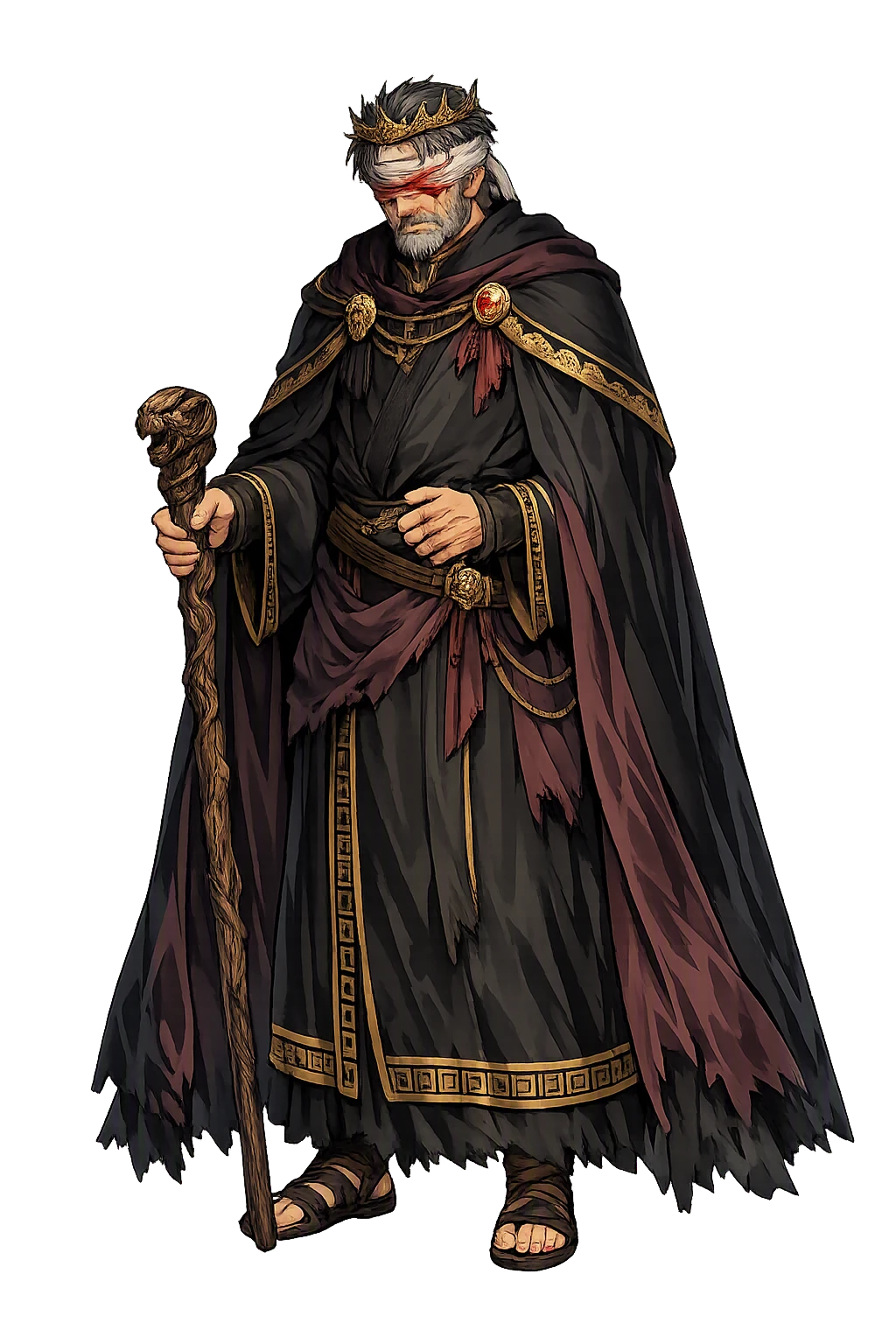
The Cult
Oidipous received the cult of a polluted hero, and it tells us what the Greeks thought pollution could become. At Colonus in Attica, in the grove of the august goddesses he names the Eumenides, he died and was buried; Sophocles' Oidipous at Colonus is in effect the founding charter of the shrine, and Pausanias (1.30) could still see the precinct, its statues, and the hero's tomb. The Thebans claimed his bones back — Pausanias (9.5) records his tomb at Thebes — and tradition made the buried exile a talisman of the city's safety. This was hero-cult in the strict sense: tomb, enclosure, offerings to the dead, not a god's temple; no festival day and no priesthood of Oidipous is recorded anywhere. The grove beside the Academy remained sacred ground. Characteristically, the hero's afterlife was managed by the city that received him in death after both his cities had rejected him in life.