PuniCodex

Extended Lore

Νίκη Níkē

Etymology · Orthography · Cult · Iconography · Reception · Sources

Tier-1 Tier-2 Níkē.com · Nikē.com · níkê.com · νίκη.com
Níkē — Victory
01

Quick Facts

Essential information about Níkē, Victory

Original ScriptΝίκη
Unicode RestorationNíkē
Reconstructed Pronunciation/ní.kɛː/
PantheonGreek
DomainVictory
MeaningVictory, conquest
ClassificationDual-Tier
Primary DomainNíkē.com
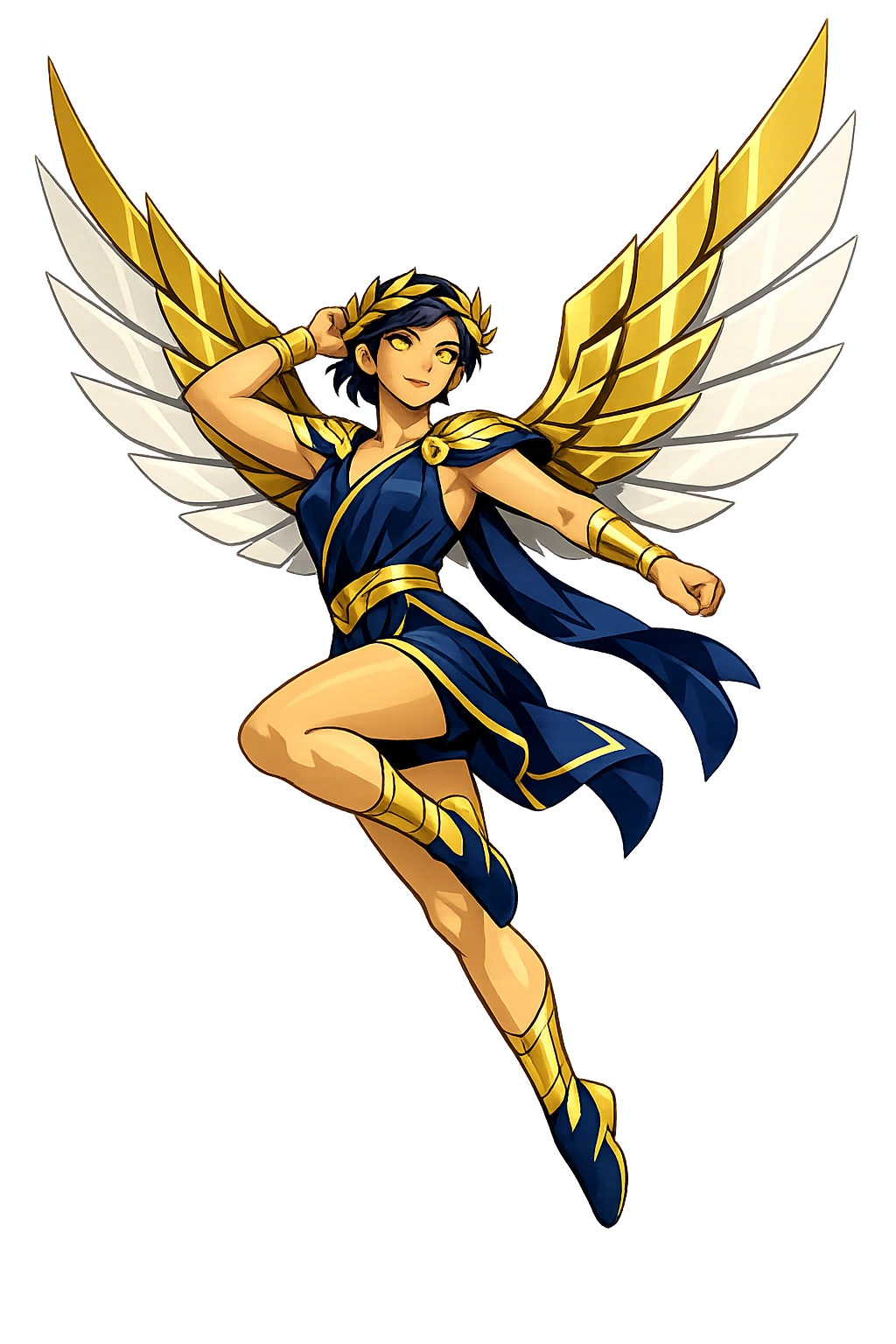
Sacred SymbolsWings, Laurel wreath, Palm branch, Filleted trophy, Flying drapery
02

Etymology & Word Family

From original script to Unicode restoration

Proto-indo-european *neiḱ- to be vigorous, to prevail
Original Script Νίκη Níkē — "Victory, conquest"
Unicode Restoration Níkē Restored stress, length, and script
Modern ASCII nike Plain-ASCII fallback

From νίκη "victory", cognate with Latin vincere, English win.

03

Unicode Character Breakdown

Character-by-character philological analysis

CharacterUnicodeNameBlockPhonetic Role
NU+004ELatin Capital Letter NBasic LatinNu
íU+00EDLatin Small Letter I with AcuteLatin-1 SupplementAcute on iota
kU+006BLatin Small Letter KBasic LatinKappa
ēU+0113Latin Small Letter E with MacronLatin Extended-AEta: long epsilon

The dual-tier nature of Níkē arises because the original carries both stress and vowel length and history has handed down more than one defensible Unicode spelling — each variant is a real, attested restoration, and both live as owned domains.

04

Cult & Worship

How the sacred was kept — rites, sanctuaries, remains

The Cult

Nike's independent cult had one great seat: the sanctuary of Athena Nike on the Acropolis bastion, where her altar stood from archaic times and Callicrates raised the tiny Ionic temple (c. 427–424 BCE) at the spot where the Panathenaic procession first meets the sky — victory made architectural, fused deliberately with the city's own goddess. She needed no festival of her own because every agon was hers: the four crowns of the games, the epinician ode sung at the victor's door, the libation at the finish. Yet independent honors are attested: the Athenians kept a wingless Victory so she could not fly away, and at Olympia the Messenians and Naupactians raised Paionios's great statue from the spoils of Sphacteria (c. 420 BCE) as a votive on the east side of the Altis. Her worship is the archaeology of the winning moment itself.

In the Earth

Athens preserves her finest hour: the Temple of Athena Nike (c. 427–424 BCE) with its celebrated parapet — the sandal-adjusting Níkē among the most reproduced images in Greek art — and the Nike of Paionios at Olympia (c. 420 BCE), still alighting on her pillar. On Samothrace, the great Winged Victory (c. 190 BCE) stands on the prow of a warship in the Louvre, recovered from the sanctuary of the Great Gods in 1863. Roman Victoria dominates countless imperial coins, and the Brescia Victory (382 CE) closes the ancient series in gold and gems. From acropolis to empire, her archaeology is the archaeology of triumph itself.

05

Iconography

How Níkē was imaged across the ages

The Image

The wing is her signature: swift, sudden, already leaving. Nike enters art in the sixth century BCE as a winged bearer of wreaths on vases, and by the classical age her formula is fixed — alighting on one foot, drapery blown back, wreath or palm or fillet in hand, oinochoe and phiale when she pours the victor's libation. Phidias set her in the right hand of the Olympian Zeus. Three surviving masterpieces carry her story: Paionios's Nike at Olympia, swooping onto her pillar above the altar (c. 420 BCE); the parapet reliefs of her Athenian temple, where she bends to unfasten her sandal — victory at rest, still shod for running (c. 410 BCE, Acropolis Museum); and the great Winged Victory of Samothrace (c. 190 BCE, Louvre), wings spread against the wind on a warship's prow. Roman Victoria froze the type; the Brescia Victory (382 CE) carries it into late antiquity in gold and gems.

06

Reception & Transformation

The name after its own age — transmission, translation, survival

Afterlives

Victory proved the most portable of gods. Rome adopted her as Victoria — an altar on the Palatine attributed to Evander, a temple vowed in 294 BCE — and minted her on every triumph; then something remarkable happened: early Christian art needed angels, and borrowed hers. The winged victor hovering with wreath and palm is the direct ancestor of the earliest angels on Roman sarcophagi. The mythographers kept her filed carefully — Cartari's Imagini (1556) sets her beside Fortuna — and the antiquarians of the Grand Tour measured her Athenian home: Stuart and Revett published the little temple in The Antiquities of Athens (1787). The nineteenth century recovered her body: the Samothracian Nike in 1863 (Charles Champoiseau, now on the Louvre's Daru staircase), Paionios's statue in the German excavations at Olympia of 1875–76, the parapet frieze in the Acropolis clearance of the 1880s. Her name meanwhile passed into every European language as the word for winning — Greek νίκη, Latin victoria — and modern Greece still calls its triumphs by hers.

Identifications Across Traditions

The Romans identified Níkē with Victoria, whose name gives English 'victory' and whose cult — an altar on the Palatine attributed to Evander (Virgil, Aeneid 8.337–341), a temple vowed in 294 BCE (Livy 10.33) — made triumph a state sacrament. The winged figure was borrowed back into Christian iconography, where Victoria's stance and wings shaped the earliest angels of the sarcophagi; the Byzantines translated her into the city's protectress. In the modern West she became a secular emblem of achievement — the Brescian Victory (382 CE), the Samothracian Nike herself, the French Revolution's and the Olympic movement's winged figures. The Greek name survives most loudly in a modern sportswear brand, but the older idea survives better: that triumph is a divine, not merely human, event — and that it must be honored precisely because it cannot be kept.

Modern Legacy

Níkē is perhaps the most widely recognized Greek goddess in the modern world: her winged silhouette has crowned Olympic podiums, war memorials, and brand marks on every continent. But her ancient importance ran deeper than symbolism. She embodied the Greek belief that excellence deserves public recognition, that competition produces virtue, and that victory is a divine gift rather than a merely human achievement. The Temple of Athena Nike on the Acropolis remains her masterpiece — a marble argument that winning, rightly understood, is an act of piety. Every medal, trophy, and laurel wreath descends from her cult. Restoring Níkē restores the name of the goddess who crowns the winner.

07

The Meditation

What Níkē means — beyond the dictionary

Níkē is the goddess of the decisive moment. She does not fight; she arrives when the fighting is done. She is not effort but its recognition, not struggle but its resolution. That is why the Greeks made her winged: victory is swift, and it can disappear just as quickly — the wingless statue at Athens is the confession that everyone who wins understands.

Modern culture borrows her image constantly but has forgotten her meaning. We treat victory as a metric, a ranking, a quarterly result. The Greeks treated it as an epiphany — a god standing beside you for one bright instant, gone before you can thank her. To restore Níkē's name is to recover that discipline: excellence should be crowned because it is rare, and it is rare because the goddess flies.

08

Frequently Asked Questions

Common questions about Níkē, Victory, and Unicode restoration

01How do you pronounce Níkē?

In reconstructed pronunciation, Níkē is /ní.kɛː/ — approximately 'NEE-kay' — the first syllable rises in pitch like a shout; the second is long and clear.

02What does Níkē mean?

Níkē means Victory, conquest in the greek tradition.

03What are the symbols of Níkē?

Níkē is associated with Wings (Speed and the swift arrival of victory — and its swift departure, which the Athenians tried to prevent by clipping them.), Laurel wreath (The crown of the victor at the games — the tangible form of her favor.), Palm branch (The sign of the victor, raised in the athlete's right hand on countless victory monuments.), Filleted trophy (The captured arms hung on a stake — a battlefield victory turned into a cult object with her ribbons.), Flying drapery (The wind-filled garment of the Samothracian and Acropolis Nikai — momentum caught at its peak.).

04Why are there different spellings of Níkē?

Each form is a historically attested restoration rather than a mistake: Nikē is the macron-only form (LSJ convention: length only, no acute). PUNICODEX registers the full set so the tradition is preserved under every defensible spelling.

05Why restore Níkē in Unicode?

Plain ASCII nike strips the stress, length, and script that make the name specific. Unicode restoration returns the name to its original written dignity.

06What is the most important myth about Níkē?

“Níkē at Zeus's Side” — the The Titanomachy story that anchors the mythology of Níkē, told in full on the lore page.

09

Scholarly Sources

The philological foundations of this restoration

Every claim on this page is grounded in established scholarship. The orthographic restorations follow disciplinary convention. The etymological chain follows the best available reference works. This is not invention — it is resurrection through scholarship.

◈

Lexicography & Philology

  • Liddell, H. G., Scott, R., & Jones, H. S. A Greek-English Lexicon. Oxford: Clarendon Press, 9th ed. 1996.
  • Pape, W., & Benseler, G. E. Wörterbuch der griechischen Eigennamen. Braunschweig: Vieweg, 1884.
  • Beekes, R. S. P. Etymological Dictionary of Greek. Leiden: Brill, 2010.
◎

Primary Texts

  • Hesiod, Theogony 383–403
  • Pausanias, Description of Greece 1.22.4
  • Pindar, Isthmian 7
  • Virgil, Aeneid 8
◉

Archaeology & Art History

  • Ira Mark, The Sanctuary of Athena Nike in Athens
✦

Religious Studies

  • Comparative studies of greek religion and the place of Níkē within it.
Return

The Surface Awaits

You have traced the name from its earliest attestation to its Unicode restoration. Now return to the myth. The story is where the name lives.

Back to Lore
Níkē mascot