
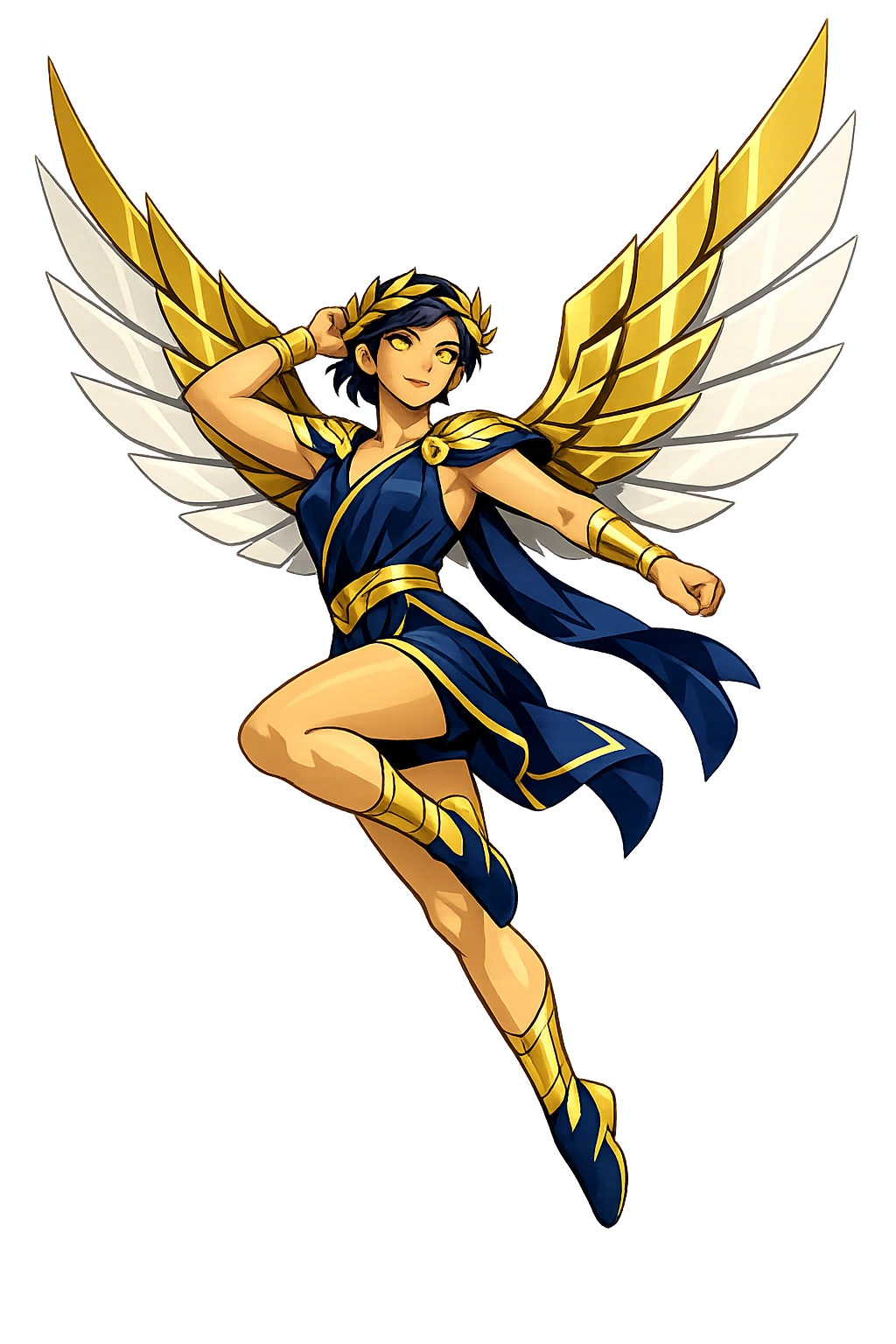
The Cult
Nike's independent cult had one great seat: the sanctuary of Athena Nike on the Acropolis bastion, where her altar stood from archaic times and Callicrates raised the tiny Ionic temple (c. 427–424 BCE) at the spot where the Panathenaic procession first meets the sky — victory made architectural, fused deliberately with the city's own goddess. She needed no festival of her own because every agon was hers: the four crowns of the games, the epinician ode sung at the victor's door, the libation at the finish. Yet independent honors are attested: the Athenians kept a wingless Victory so she could not fly away, and at Olympia the Messenians and Naupactians raised Paionios's great statue from the spoils of Sphacteria (c. 420 BCE) as a votive on the east side of the Altis. Her worship is the archaeology of the winning moment itself.