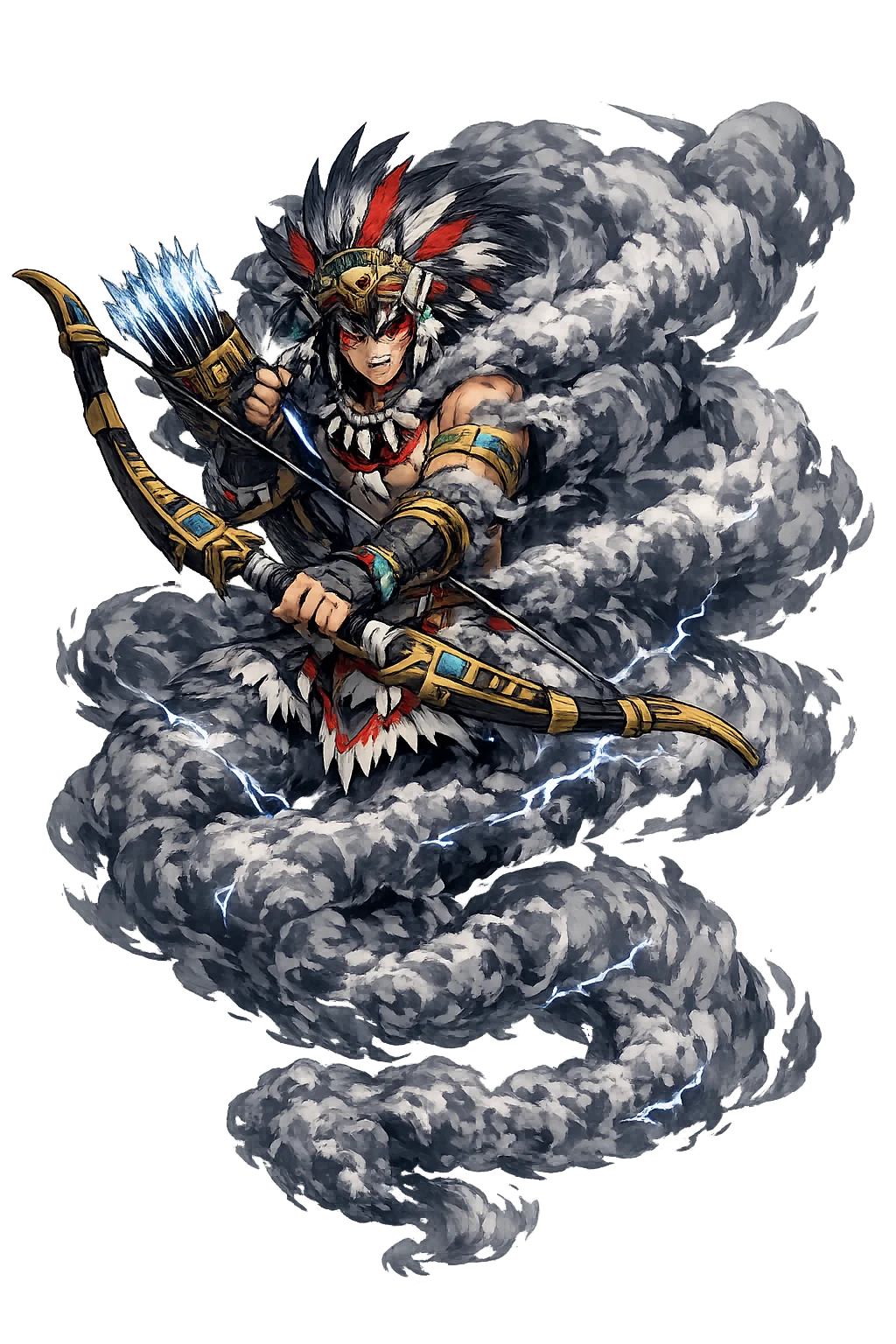
Mixcōātl is the god of the journey that made you. Every settled people remembers, somewhere, the road: the serpent in the night sky that was followed here. He asks the traveler's question, which is also the nation's and the individual's: what star did your ancestors follow — and does it still move, when you look up, the way it moved for them?
The weapons on his altar were the archaeology of gratitude: the city laid its old tools down each year, remembering what fed it first. Every settled people owes a debt to its wilderness; the Aztecs paid theirs honestly, in bows, once a year, to the serpent in the clouds.
The Florentine Codex keeps the festival's strangest detail: the king himself dressed as the hunt-god, net and all, at the year's darkest rite — the empire's ruler periodically reminded, in costume, that his house began as wanderers. Every nation needs that costume somewhere in its closet: the reminder of the road, worn by the people who have forgotten it most.
Look up on a dry winter night from the same deserts his people crossed: the serpent still pours itself across the sky, the oldest road sign in the hemisphere. The empires built on his route are dust in his direction, and the migrants still walking it are his living congregation — the hunt, the road, the star, unchanged.