PuniCodex

Extended Lore

ᛘᛁᚦᚴᛅᚱᚦᛁ Miðgarðr

Etymology · Orthography · Cultural Legacy · Reception · Primary Sources

Tier 1 Miðgarðr.com
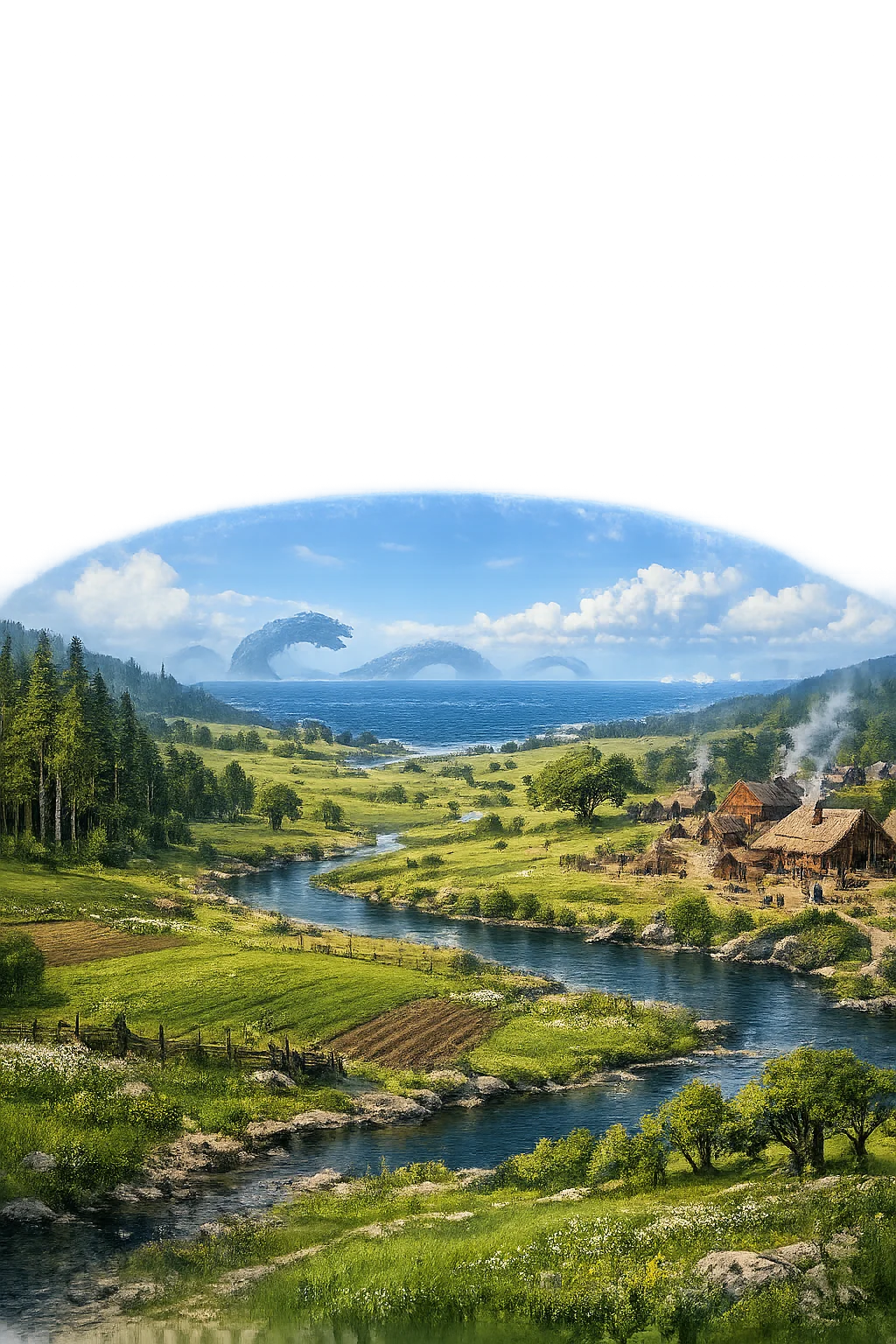
Miðgarðr — Middle Enclosure (Earth)
01

Quick Facts

Essential information about Miðgarðr, Middle Enclosure (Earth)

Original Scriptᛘᛁᚦᚴᛅᚱᚦᛁ
Unicode RestorationMiðgarðr
Reconstructed Pronunciation/ˈmiðˌɡarðr/
PantheonNorse
DomainMiddle Enclosure (Earth)
MeaningMiddle enclosure (from mið + garðr)
ClassificationTier 1
Primary DomainMiðgarðr.com
Sacred SymbolsYggdrasil ash, Midgard serpent (Miðgarðsormr), Rainbow bridge (Bifröst), Hearth fire, Girdling ocean
02

Etymology & Word Family

From original script to Unicode restoration

Proto-indo-european *midi- + *gardaz middle + enclosure
Original Script ᛘᛁᚦᚴᛅᚱᚦᛁ Miðgarðr — "Middle enclosure (from mið + garðr)"
Unicode Restoration Miðgarðr Restored stress, length, and script
Modern ASCII midgardr Plain-ASCII fallback

PGmc *midi- "middle" + *gardaz "enclosure, yard". The world of men.

03

Unicode Character Breakdown

Character-by-character philological analysis

CharacterUnicodeNameBlockPhonetic Role
MU+004DLatin Capital Letter MBasic LatinSame
iU+0069Latin Small Letter IBasic LatinSame
ðU+00F0Latin Small Letter EthLatin-1 SupplementEth: voiced dental fricative
gU+0067Latin Small Letter GBasic LatinSame
aU+0061Latin Small Letter ABasic LatinSame
rU+0072Latin Small Letter RBasic LatinSame
ðU+00F0Latin Small Letter EthLatin-1 SupplementEth: voiced dental fricative
rU+0072Latin Small Letter RBasic LatinSame

The Tier 1 classification reflects how much of the original phonology this restoration preserves — stress and vowel length for Greek names, distinctive letters and diacritics for every other tradition.

04

Cultural Significance

From ancient cult to modern memory

Miðgarðr in Later Traditions

The name is pan-Germanic, and its career outside the North is the record of a shared cosmology. Wulfila's Gothic gospels use midjungards for the inhabited world; the whole Old English verse corpus speaks of middangeard, from Beowulf's elegies to Cynewulf's Christ; and the Old High German Muspilli foresees mittilagart burning at the Judgment — the same enclosure, the same fire. The conception crossed into every branch of Germanic speech, which means it predates the Viking Age by centuries. Its most famous second life is deliberate: J. R. R. Tolkien, philologist before he was novelist, explained in his published letters that Middle-earth is simply the old word translated — 'an old word for the inhabited world' — and built his mythology as a recovery of middangeard rather than an invention beside it. Through him the Germanic middle-yard became the shared fantasy geography of the modern world, most of whose inhabitants do not know they are dreaming in Old English.

Modern Legacy

Miðgarðr's afterlife runs from the Codex Regius to the multiplex. In Old English poetry it was already a native word; through Tolkien's deliberate calque it became the name of the most-read invented world in modern literature, and his publishers' maps fixed 'Middle-earth' in the imagination of hundreds of millions. In modern Icelandic, miðgarður simply means the world. Neopagan and Heathen cosmology keeps the nine-worlds scheme as a living diagram of existence; Scandinavian heritage branding stamps the serpent and the tree on everything from football shirts to government exhibitions; and video games from strategy titles to God of War Ragnarǫk stage their campaigns inside the old enclosure, with the serpent still coiled at the edge. The image at the root of it all — the human world as a protected middle, ringed by wilderness and sea — has outlived the religion that drew it by a thousand years, because it describes something every settled people still recognizes: the fragile garden, and the weather outside the fence.

In the Earth

The material model of a garðr — a fenced enclosure — stands excavated across the Norse world: the chieftain's farm at Borg in Lofoten and the hall at Hofstaðir in Iceland are the built form of the middle-yard. The myth's own scenes survive in stone: the Altuna runestone (U 1161, Uppland, Sweden) carves Þórr's foot braced through the fishing boat's floor as he swings the hammer at the world serpent, and the tenth-century Gosforth Cross in Cumbria fills one face with scenes widely read as Ragnarǫk — bound Loki, Heimdall with the horn, Víðarr opening the wolf's jaws — the enclosure's ending carved into a churchyard monument. The Mästermyr find from Gotland, a smith's complete tool chest buried about the year 1000, and the emporia of Hedeby, Birka, and Kaupang show the inhabited middle world working; and the hammer-amulets worn across the Viking diaspora from the ninth century are the small, personal archaeology of the god whose job was the fence.

05

The Meditation

What Miðgarðr means — beyond the dictionary

A name like Miðgarðr is a map folded into a word. Garðr is the ancestor of English 'yard' and of the -yard in orchard: a bounded space, fenced and worked. To say 'middle-enclosure' is to hold, in one compound, an entire theory of civilization — that the human world is not the whole of reality, only its fenced middle, and that everything outside the fence is older, larger, and waiting. The theory was literal in the Viking age: farms were garðar, the wilderness was útgarðar, and the law itself was the space inside the fence.

The myth adds the darker footnote: the fence is made of a murdered giant, and the thing it keeps out is also the thing that holds it up. No culture that remembered this could believe its own walls were innocent or permanent. In an age of borders and climate thresholds, Miðgarðr reads less like a cosmology than like a diagnosis: the middle is real, the enclosure is necessary, and the sea beyond it was never told to stay outside.

06

Screen & Culture

Where Miðgarðr echoes through film, television, and games — and how

07

Frequently Asked Questions

Common questions about Miðgarðr, Middle Enclosure (Earth), and Unicode restoration

01How do you pronounce Miðgarðr?

In reconstructed pronunciation, Miðgarðr is /ˈmiðˌɡarðr/ — approximately 'MITH-garther' — the first 'th' is voiced like 'this', and the second 'th' in 'garth' is the same; roll the final r lightly.

02What does Miðgarðr mean?

Miðgarðr means Middle enclosure (from mið + garðr) in the norse tradition.

03What are the symbols of Miðgarðr?

Miðgarðr is associated with Yggdrasil ash (The world-tree at whose centre Miðgarðr is girdled), Midgard serpent (Miðgarðsormr) (The encircling sea-dragon biting its own tail around the world of men), Rainbow bridge (Bifröst) (The burning arch that links the middle enclosure to Ásgarðr), Hearth fire (The protected flame at the centre of every human dwelling within the enclosed world), Girdling ocean (The sea that surrounds Miðgarðr, separating it from the outer worlds).

04Why restore Miðgarðr in Unicode?

Plain ASCII midgardr strips the stress, length, and script that make the name specific. Unicode restoration returns the name to its original written dignity.

05What is the most important myth about Miðgarðr?

“The Making of the Middle Earth” — Miðgarðr is the middle enclosure — the world of women and men, fenced from Ymir's eyebrows after the giant's murder and ringed by the sea the Miðgarðsormr patrols. Everything human in the corpus happens inside it: the farm, the hall, the burial mound, and, at the world's end, its undoing. The full telling lives on the lore page.

08

Scholarly Sources

The philological foundations of this restoration

Every claim on this page is grounded in established scholarship. The orthographic restorations follow disciplinary convention. The etymological chain follows the best available reference works. This is not invention — it is resurrection through scholarship.

Lexicography & Philology

  • Cleasby-Vigfusson
  • Zoëga

Primary Texts

  • Poetic Edda: Vafþrúðnismál 40–41 (Miðgarðr made from Ymir's eyebrows); Völuspá 17–18 (Ask and Embla), 57 (the sinking of the earth)
  • Poetic Edda: Hymiskviða 22–30 (fishing for the world serpent)
  • Snorri Sturluson, Prose Edda: Gylfaginning 8–9, 51 (the making of the world, the first humans, and its ending)
  • Wulfila's Gothic gospels (midjungards); the Old English verse corpus (middangeard); the Old High German Muspilli (mittilagart)

Archaeology & Art History

  • Material evidence — iconography, inscriptions, and temple archaeology — for Miðgarðr and related cults.

Religious Studies

  • J. R. R. Tolkien, The Letters of J. R. R. Tolkien, no. 165 (Middle-earth from middangeard)
  • Simek, Dictionary of Northern Mythology, s.v. Midgard; Lindow, Norse Mythology: A Guide, s.v. Midgard
Return

The Surface Awaits

You have traced the name from its earliest attestation to its Unicode restoration. Now return to the myth. The story is where the name lives.

Back to Lore
Miðgarðr mascot