PuniCodex

Extended Lore

Medb

Etymology · Phonology · Orthography · Cultural Legacy · Primary Sources

Tier 2 Medb
Medb — Sovereignty, War, Intoxication
01

Quick Facts

Essential information about Medb, Sovereignty, War, Intoxication

Scholarly TransliterationMedb
Unicode RestorationMedb
Reconstructed Pronunciation/ˈmʲeðv/
PantheonCeltic
DomainSovereignty, War, Intoxication
Meaning'The intoxicating one' (Old Irish medb, cognate with 'mead'), Queen of Connacht who drives the cattle raid of the Táin Bó Cúailnge.
ClassificationTier 2
Primary DomainMedb
Sacred SymbolsThe marriage-bed of Crúachan, The two bulls, The bride-gift terms, The march of the four provinces, Oweynagat, the Cave of the Cats
02

Etymology & Word Family

From original script to Unicode restoration

Scholarly Transliteration Medb Medb — "'The intoxicating one' (Old Irish medb, cognate with 'mead'), Queen of Connacht who drives the cattle raid of the Táin Bó Cúailnge."
Unicode Restoration Medb Restored stress, length, and script
Modern ASCII medb Plain-ASCII fallback

Medb is Tier 2 by the mechanical rule: normalized Old Irish writes the name in plain Latin letters — no diacritic and no distinctive letter for ASCII to lose. The temple form differs from the lowercase entry only by the capital; the queen's standing in the tradition is beside the point. The etymology, by contrast, is one of the most secure in the Celtic corpus: Old Irish medb, 'intoxicating, she who intoxicates', cognate with the noun medb, 'mead', continuing Proto-Indo-European *médhu, 'sweet drink'. The name is the sovereignty drink made personal.

03

Unicode Character Breakdown

Character-by-character philological analysis

CharacterUnicodeNameBlockPhonetic Role
MU+004DLatin Capital Letter MBasic LatinSame, capitalized
eU+0065Latin Small Letter EBasic LatinSame
dU+0064Latin Small Letter DBasic LatinSame
bU+0062Latin Small Letter BBasic LatinSame

The Tier 2 classification reflects how much of the original phonology this restoration preserves — stress and vowel length for Greek names, distinctive letters and diacritics for every other tradition.

04

Cultural Significance

From ancient cult to modern Unicode

Ancient Domain

Medb of Crúachan is the ruling queen of Connacht and the driving will of the Táin Bó Cúailnge: the woman who audited fortunes with her husband in the night and invaded Ulster in the morning, who set the terms of her own marriages — a husband without meanness, without jealousy, without fear — and whom scholarship reads as Ireland's clearest survival of the sovereignty goddess, the land's own power to make and unmake kings.

Medb in Later Traditions

The Welsh corpus preserves no Medb — but it preserves her word: Welsh meddw, 'drunk', is the same adjective, and the Mabinogi gives the Brythonic side of the theme she embodies: [[rhiannon|Rhiannon]] arriving as a mounted marvel no rider can catch, and the footholder Goewin whose office is bound to Math's life, are the Welsh faces of the kingship-and-goddess complex that Mac Cana traced through Irish literature. Medb's deepest kin are lexical and ritual at once. Her name is the same word as the drink by which kings were made: the Irish inauguration knew the banais ríghe, the 'wedding-feast of kingship', in which the goddess of the territory offered the king the cup — or the bed — and scholars since Mac Cana's foundational study of king and goddess have read Medb of Crúachan as that figure euhemerized into a queen. The tradition kept a second Medb to prove the point: Medb Lethderg of Tara, of whom the Book of Leinster records that she slept with nine kings of Ireland and that no king ruled at Tara who had not slept with her. Her closest kin inside the lexicon are the pantheon's other keepers of the land's consent: [[macha|Macha]], whose curse opened Ulster to her army, and [[morrigan|the Mórrígan]], who rides the same war-paths from the Otherworld side.

Modern Legacy

The Táin's modern reception made Medb the most argued-over woman in Irish literature. Lady Gregory's Cuchulain of Muirthemne (1902) carried the epic into English; Thomas Kinsella's translation (1969), with Louis le Brocquy's ink drawings, fixed the Táin as the Irish national epic for the modern reader — and Medb at its centre as its engine, not its ornament. Scholarship split over her nature: Mac Cana read her as the sovereignty goddess of Connacht demoted to a queen, the standing type-case of the king-and-goddess theme; more skeptical voices, notably J. P. Mallory's, have tested the Táin against the Iron Age record and found a tale shaped by its medieval tellers rather than a window on the pagan past. Popular culture settled the argument in its own way: the Anglicized Maeve has become one of the most fashionable Irish girls' names in the English-speaking world, and 'Queen Maeve' — the woman who wrote her own terms, chose her own husbands, and out-argued every man in the tale — stands as a feminist icon far beyond the universities. The cairn on Knocknarea that folklore calls her grave draws climbers every summer; the visitor centre at Rathcroghan interprets her rath; and in Irish itself Meadhbh never left: the living name has meant the same ungovernable queen for twelve hundred years of the written language.

Unicode Restoration as Cultural Act

Restoring Medb in a domain name is more than orthographic accuracy. It is a statement that the internet should recognize the full range of human writing — not only the ASCII keyboard.

05

Frequently Asked Questions

Common questions about Medb, Sovereignty, War, Intoxication, and Unicode restoration

01How do you pronounce Medb?

In reconstructed pronunciation, Medb is /ˈmʲeðv/ — approximately 'MYETHV' — one short syllable: slender m, brief e, the d melted into the soft 'th' of 'this', finishing on 'v'. The modern Irish Meadhbh, anglicized Maeve, has collapsed the middle consonant and sounds simply 'mayv'..

02What does Medb mean?

Medb means 'The intoxicating one' (Old Irish medb, cognate with 'mead'), Queen of Connacht who drives the cattle raid of the Táin Bó Cúailnge. in the celtic tradition.

03What are the symbols of Medb?

Medb is associated with The marriage-bed of Crúachan (The pillow-talk itself: sovereignty as an audit — equality counted coin for coin in the dark), The two bulls (Finnbennach and the Donn of Cúailnge: wealth, prestige, and the one point on which two rulers cannot be equal), The bride-gift terms (No meanness, no jealousy, no fear: the queen's own charter, demanded where a dowry was expected), The march of the four provinces (The raid she willed into being: armies moved by a single insistence that the account be balanced), Oweynagat, the Cave of the Cats (The Otherworld gate beneath her rath — the source in the tales of the things that come up on Samain night).

04Why restore Medb in Unicode?

Plain ASCII medb strips the stress, length, and script that make the name specific. Unicode restoration returns the name to its original written dignity.

05What is the most important myth about Medb?

One night at Crúachan, when the royal bed had been made for Medb and Ailill, they fell into a 'bolster-conversation' — comrac chind cherchailli — and Ailill boasted that the woman married to a wealthy man is well off. Medb answered that she was well off before him: daughter of Eochu Feidlech, high king of Ireland, and the wealthier of the two. To settle it they had every treasure counted — cups, rings, cattle, sheep, horses — and the tally came out exactly even, save one item: the great bull Finnbennach, born in Medb's herd, had scorned to be counted a woman's chattel and walked over into Ailill's, where he stood as the White-Horned of Connacht.That one beast broke the equality Medb would not live without. Her steward Mac Roth found the match: the Donn of Cúailnge, the Brown Bull of Cooley, kept by Dáire mac Fiachna in Ulster. Medb sent for a year's loan of him at princely terms — fifty heifers a year, a stretch of the plain of Aí, her own chariot, and the friendship of her thighs — and Dáire agreed. But the messengers drank and boasted that had the loan been refused they would have taken the bull by force, and Dáire swore that only by force would he ever be taken. The embassy came home empty, and Medb resolved on war.

06

Scholarly Sources

The philological foundations of this restoration

Every claim on this page is grounded in established scholarship. The orthographic restorations follow disciplinary convention. The etymological chain follows the best available reference works. This is not invention — it is resurrection through scholarship.

Lexicography & Philology

  • Táin Bó Cúailnge
  • Irish folklore

Primary Texts

  • The Immram Brain (Voyage of Bran); Tochmarc Étaíne; Cóir Anmann; medieval Irish saga literature.

Archaeology & Art History

  • Material evidence — iconography, inscriptions, and temple archaeology — for Medb and related cults.
  • Medb's mythic address is the best-documented royal landscape in Ireland: Crúachan Aí, the Rathcroghan complex in County Roscommon, a five-kilometre spread of more than two hundred and forty recorded monuments — ring-barrows, mounds, and enclosures — dominated by the great flat-topped Rathcroghan Mound itself. Beneath the complex opens Oweynagat, the Cave of the Cats, the souterrain-fed natural cave the medieval tales call a gate of the Otherworld; within it stand two ogham stones, one reading VRAICCI MAQI MEDVVI, '(the stone of) Fráech, son of Medb' — the name-type's only epigraphic attestation, at the site the tradition assigns to the queen herself. Her death-place, Inis Cloithrinn (Inchcleraun), survives as the largest island of Lough Ree on the Shannon, crowned by the early monastic ruins of Templemurray; her reputed grave is the great unexcavated Neolithic cairn (c. 3200 BCE) on the summit of Knocknarea above Sligo — Miosgán Meadhbha, 'Medb's heap', which local tradition insists she fills standing upright, spear in hand, facing Ulster. The textual witnesses are exact: the oldest substantially complete Táin (Recension I) is in Lebor na hUidre, the Book of the Dun Cow, written at Clonmacnoise around 1106, and the fullest recension in the twelfth-century Book of Leinster; O'Rahilly's editions are the modern bases. J. P. Mallory's In Search of the Irish Dreamtime (2016) is the standard archaeological cross-examination of the whole epic.

Religious Studies

  • Táin Bó Cúailnge, Recension I, ed. and trans. Cecile O'Rahilly — the pillow-talk, the bride-gift speech, the raid, the battle of the bulls
  • Táin Bó Cúailnge from the Book of Leinster, ed. and trans. Cecile O'Rahilly
  • Aided Meidbe (The Death of Medb) — Furbaide Ferbend's vengeance at Inis Cloithrinn
  • Noínden Ulad (The Debility of the Ulstermen) — Macha's curse and the pangs of Ulster
  • Dictionary of the Irish Language (eDIL), s.v. medb — 'mead; intoxicating'
  • Thurneysen, Die irische Helden- und Königsage (1921) — the Táin's recensions and composition
  • Mac Cana, 'Aspects of the Theme of King and Goddess in Irish Literature', Études Celtiques 7 (1955–56); Celtic Mythology (1970) — Medb and the sovereignty goddess
  • Sjoestedt, Gods and Heroes of the Celts (1949) — the queen and the goddess behind her
  • Koch, ed., Celtic Culture: A Historical Encyclopedia, s.v. Medb, Táin Bó Cúailnge, Crúachan
  • MacKillop, Dictionary of Celtic Mythology, s.v. Medb, Maeve
  • McManus, A Guide to Ogam (1991) — the Oweynagat inscription VRAICCI MAQI MEDVVI
  • Mallory, In Search of the Irish Dreamtime (2016) — the Táin against the archaeological record
Return

The Surface Awaits

You have traced the name from its earliest attestation to its Unicode restoration. Now return to the myth. The story is where the name lives.

Back to Lore
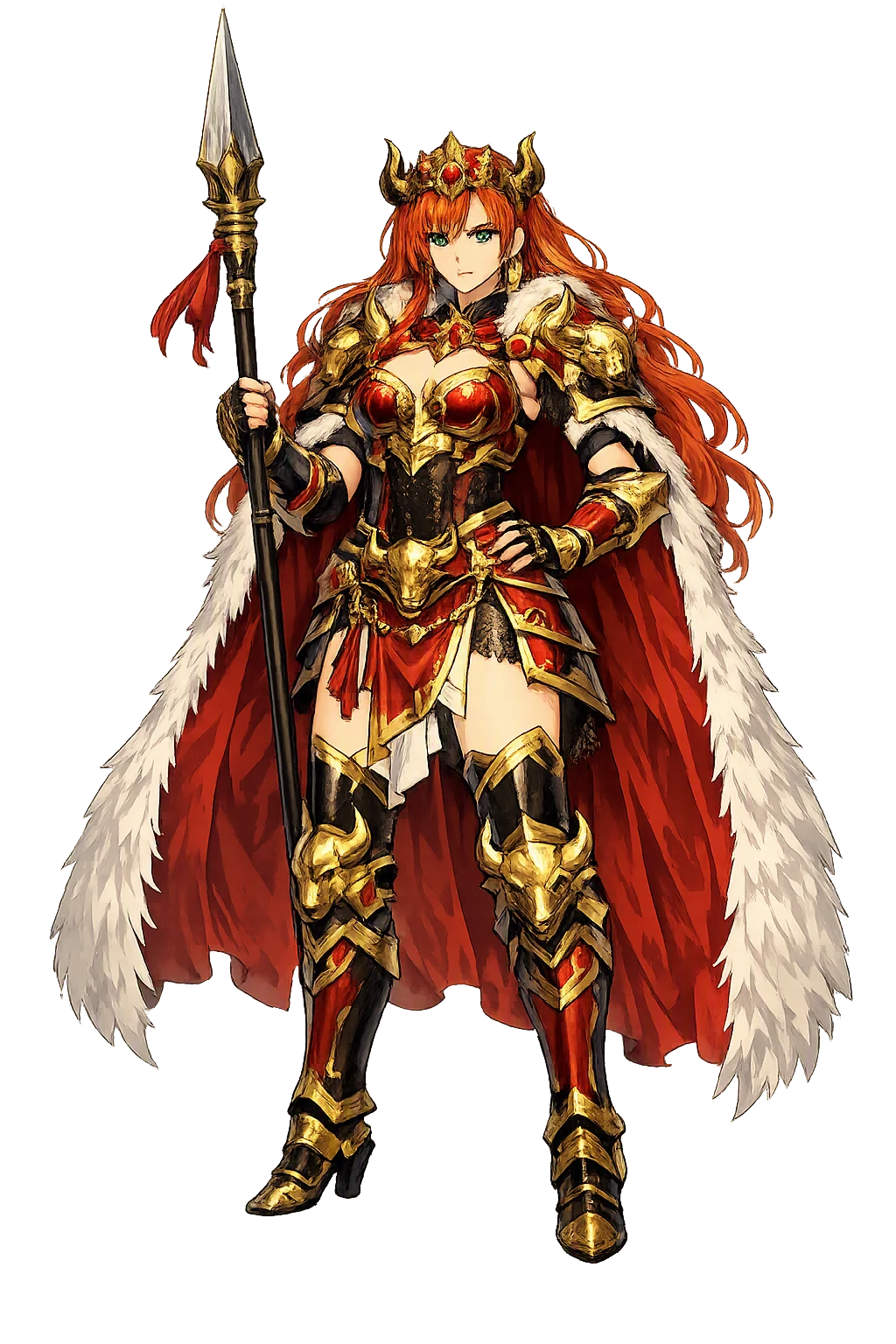
Medb mascot