PuniCodex

Extended Lore

Marzanna

Etymology · Orthography · Cult · Iconography · Reception · Sources

Tier 2 Marzanna
Marzanna — Winter, Death, Rebirth
01

Quick Facts

Essential information about Marzanna, Winter, Death, Rebirth

Scholarly TransliterationMarzanna
Unicode RestorationMarzanna
Reconstructed Pronunciation/marˈzan.na/
PantheonSlavic
DomainWinter, Death, Rebirth
MeaningDeath goddess
ClassificationTier 2
Primary DomainMarzanna
Sacred SymbolsThe straw effigy, The river, Green boughs (gaik), Frost, The last ice
02

Etymology & Word Family

From original script to Unicode restoration

Scholarly Transliteration Marzanna Marzanna — "Death goddess"
Unicode Restoration Marzanna Canonical scholarly spelling — ASCII-identical
Modern ASCII marzanna Plain-ASCII fallback

The name Marzanna reaches the modern world through scholarly transliteration of the slavic tradition. Because the conventional spelling uses only Latin letters, its Unicode and ASCII forms coincide — the tradition it carries is in the name itself, not in diacritics.

03

Unicode Character Breakdown

Character-by-character philological analysis

CharacterUnicodeNameBlockPhonetic Role
MU+004DLatin Capital Letter MBasic LatinSame, capitalized
aU+0061Latin Small Letter ABasic LatinSame
rU+0072Latin Small Letter RBasic LatinSame
zU+007ALatin Small Letter ZBasic LatinSame
aU+0061Latin Small Letter ABasic LatinSame
nU+006ELatin Small Letter NBasic LatinSame
aU+0061Latin Small Letter ABasic LatinSame

The Tier 2 classification here reflects fidelity to the attested tradition, not recovered diacritics: every character of Marzanna already survives in ASCII. What the restoration preserves is the canonical spelling itself — the form scholarship standardised.

04

Cult & Worship

How the sacred was kept — rites, sanctuaries, remains

The Cult

Marzanna's cult is a rite, not an institution — no temples, no priesthood, no votive inscriptions, only a village acting in concert. Every spring, in the week the church calendar calls Zielone Świątki, the Green Week, the settlement carries her out: a doll of straw and rags dressed as a woman — crowned, shawled, splashed with water as she goes — in procession to the river or the last snowdrift, where she is beaten, drowned, and often burned, while the children sing that Marzanna is dead. Green boughs, the gaik, are carried home as proof that life returns with her going. Medieval Polish synods condemned the rite for centuries — the condemnations are its earliest written evidence — and sixteenth-century chroniclers describe it still being performed. The votaries are the whole community, above all girls and children; the surviving 'votive objects' are the effigies themselves, of which ethnographic museums in Warsaw and Kraków preserve drowned examples. Modern Rodnovery has since built altar-worship around her, but the attested cult is the riverbank rite, performed continuously for half a millennium.

In the Earth

Marzanna left no temples, statues, or inscriptions — the early Slavs built in wood and wrote little — so her material record is the rite itself. Ethnographic museums in Warsaw and Kraków hold collections of the drowned effigies, rescued from rivers by curators: straw women in shawls, each one a winter actually ended. The written evidence is mostly hostile: medieval Polish church synods repeatedly condemned the drowning and the songs that went with it, which lets us track the custom backward through the condemnations for centuries. Archaeology adds only indirect light — early-medieval Slavic river cult sites with votive deposits are known — but the rite's continuity needs no dig: it has eyewitnesses, from 16th-century clergy complaining about it to news crews filming it this March.

05

Iconography

How Marzanna was imaged across the ages

The Image

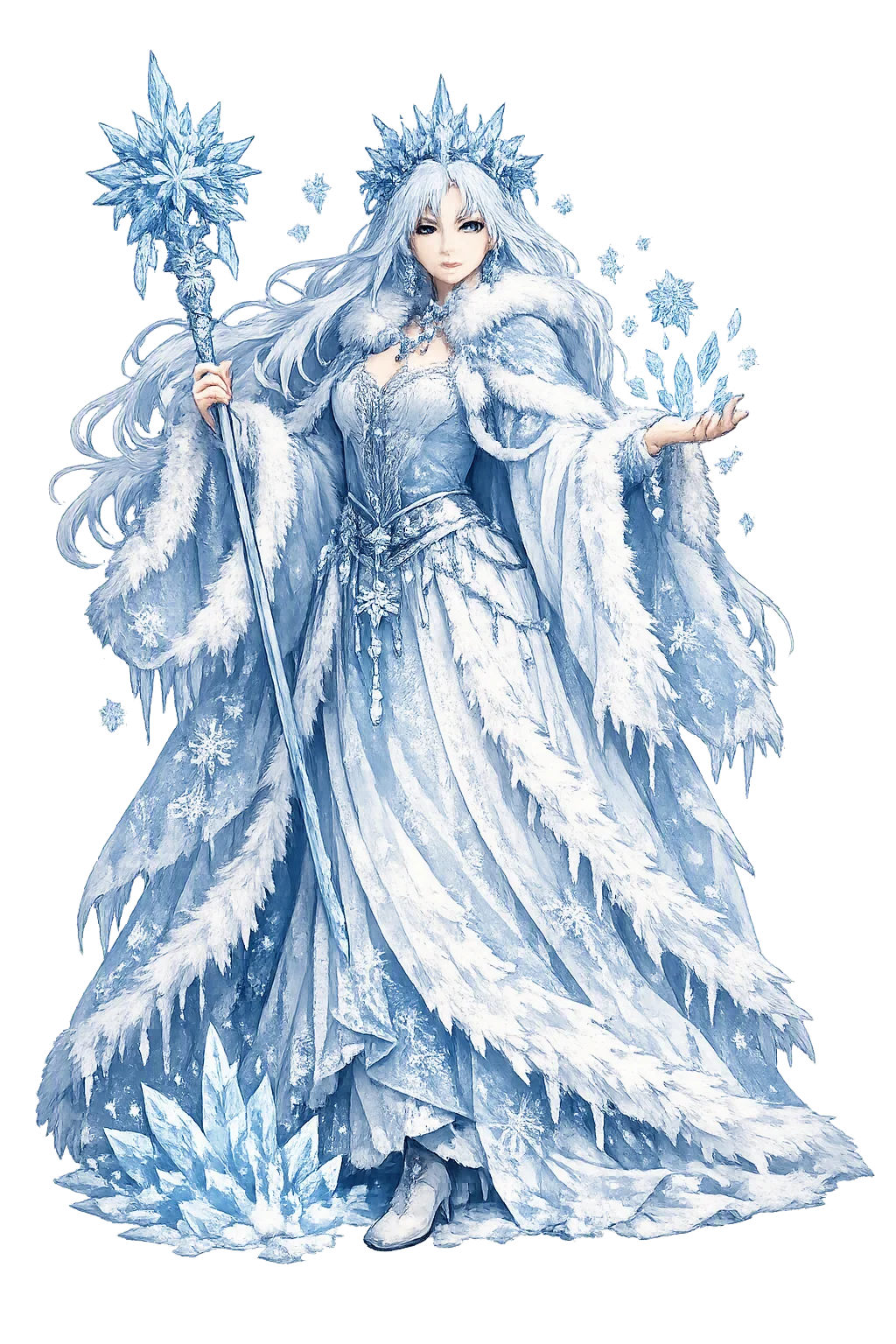
Marzanna's only image was made to be destroyed. The canonical iconography is the effigy: a straw body, rags for skin, a shawl and crown for regalia, sometimes a birch switch — winter given a woman's wardrobe, deliberately crude, deliberately perishable. Drenching is part of the portrait: water is thrown on the doll as it passes through the village so that winter rains away with her. No medieval Slavic artist painted or carved her; the early Slavs built in wood, wrote almost nothing, and the church that condemned the rite forbade its imagery. The first depictions are therefore modern and documentary — nineteenth- and twentieth-century ethnographic photographs of the procession, and the museum effigies fished out of rivers by curators — images of an icon in the act of being drowned. The attributes the songs assign her are atmospheric rather than anatomical: frost on one reading of her name, the night-hag on the other, both ending in cold water.

06

Reception & Transformation

The name after its own age — transmission, translation, survival

Afterlives

Marzanna's transmission runs, fittingly, through water and paperwork rather than parchment epics. The earliest witnesses are hostile: medieval Polish synodal statutes thundering against the drowning for centuries, then Renaissance chroniclers — Stryjkowski among them — describing a rite they could not suppress. Romanticism discovered her as folklore: Afanasyev read the Russian spring dirges as the grief of a dying vegetation goddess, and Oskar Kolberg's vast ethnographic survey fixed the Polish rite in print. Jan Máchal's chapter in the Mythology of All Races (1918) carried her to the English-speaking world, while Aleksander Brückner's skeptical survey made her the test case of how much deity a custom can support. The twentieth century added structural ambition: Rybakov's 1981 reconstruction wove her into a full seasonal drama with the dying Jarilo, Ivanits catalogued the folk belief, and Vyazovski's recent synthesis restates the case; post-communist heritage work then re-legitimated the rite as national patrimony. A goddess whose only scripture was a folk song thus acquired, century by century, a complete scholarly biography.

Identifications Across Traditions

Christianity did not erase Marzanna; it rescheduled her. The drowning migrated to Zielone Świątki, the 'Green Week' after Pentecost, so that a pagan death-rite could wear the church's calendar, and medieval Polish synodal statutes thunder against the custom for centuries — the surest proof it never died. Her identity also split along her etymologies: where the frost reading dominated she remained a personified winter; where the mora reading survived she shaded into the night-hag, the rusalka's colder cousin, and into the whole Slavic company of female spirits of death and water. Modernity returned her to dignity: the drowning of Marzanna entered Poland's national register of intangible cultural heritage in the twenty-first century, and Slavic neopaganism (Rodnovery) now worships her openly as a goddess of winter, death, and the rebirth that only her departure makes possible.

Modern Legacy

The drowning of Marzanna is not folklore embalmed in a book; it is a living custom. Every March, Polish schoolchildren still braid her effigy, march it to the river, and throw it in — television covers it, ethnologists measure it, and the rite stands on the Polish national register of intangible cultural heritage. Her wider family stays busy: Morana is drowned in the Czech lands and Slovakia each spring, and Rusalka week in early summer belongs to the same watery calendar of female spirits. In language she survives on both sides of her disputed etymology — in 'nightmare,' if the mora school is right, and in the very word for freezing, if the frost school is. And in the new Slavic paganism she has come fully back: not a demon to be exorcised each spring, but a goddess to be addressed — winter, death, and return, honored in her own right.

07

The Meditation

What Marzanna means — beyond the dictionary

Most cultures personify the good seasons; the Slavs dared to personify the bad one. Marzanna is the honest goddess: winter without apology, old age and frost and the failure of things, given a woman's face and a woman's name. What her rite teaches is bracing. You do not appease winter, and you do not wait it out in reverent silence; you make a doll of it, carry it to the river in procession, singing, and hold it under. Renewal is not a mood but an act — an act with a body count of one, gladly paid. There is also a darker reading available. The effigy is a woman, and the village drowns her so the crops can grow. However we judge that image, the ritual holds it up every spring and lets us look. Perhaps that is the deepest use of Marzanna: a culture keeping, in public and with its children watching, a ceremony that admits winter must be killed — and asks who, each year, does the killing.

08

Frequently Asked Questions

Common questions about Marzanna, Winter, Death, Rebirth, and Unicode restoration

01How do you pronounce Marzanna?

In reconstructed pronunciation, Marzanna is /marˈzan.na/ — approximately mar-ZAH-nah — the stress falls on the second syllable, and the double n is held longer than English allows.

02What does Marzanna mean?

Marzanna means Death goddess in the slavic tradition.

03What are the symbols of Marzanna?

Marzanna is associated with The straw effigy (The braided doll of rags and straw drowned in the river — the goddess made portable, so the village itself could carry her out.), The river (The running water that receives her each spring; drowning is not execution but return.), Green boughs (gaik) (The green branches brought back from the drowning — proof that life returns the moment she leaves.), Frost (Her visible body on window glass and ploughed earth — the signature she leaves on the world.), The last ice (The final snowdrift at the village edge, where the effigy is sometimes burned instead of drowned — the season's funeral pyre.).

04Why restore Marzanna in Unicode?

Marzanna is written entirely in ASCII letters, so its restoration is about canonical fidelity rather than recovered diacritics: the temple fixes the name in its scholarly standard spelling, attested in the source tradition, instead of leaving it to drift.

05What is the most important myth about Marzanna?

“Death to the Winter Queen” — the The Drowning story that anchors the mythology of Marzanna, told in full on the lore page.

09

Scholarly Sources

The philological foundations of this restoration

Every claim on this page is grounded in established scholarship. The orthographic restorations follow disciplinary convention. The etymological chain follows the best available reference works. This is not invention — it is resurrection through scholarship.

◈

Lexicography & Philology

  • Folklore
  • Ivanov-Toporov
◎

Primary Texts

  • The Primary Chronicle (Povest’ vremennykh let); the Hypatian Codex; East Slavic chronicle tradition and South Slavic folk invocations.
◉

Archaeology & Art History

  • Material evidence — iconography, inscriptions, and temple archaeology — for Marzanna and related cults.
✦

Religious Studies

  • Máchal, Jan, 'Slavic Mythology,' in The Mythology of All Races, vol. 3 (1918)
  • Ivanits, Linda J., Russian Folk Belief (1989)
  • Afanasyev, A. N., Poetic Views of the Slavs on Nature (1865–69)
  • Rybakov, B. A., Yazychesvo drevnikh slavyan — Ancient Slavic Paganism (1981)
  • Vyazovski, Pavel, Slavic Mythology (2017)
Return

The Surface Awaits

You have traced the name from its earliest attestation to its Unicode restoration. Now return to the myth. The story is where the name lives.

Back to Lore
Marzanna mascot