PuniCodex

Extended Lore

Mārs

Etymology · Orthography · Cult · Iconography · Reception · Sources

Tier 1 Mārs.com
Mārs — War, Agriculture, Sovereignty
01

Quick Facts

Essential information about Mārs, War, Agriculture, Sovereignty

Scholarly TransliterationMārs
Unicode RestorationMārs
Reconstructed Pronunciation/maːrs/
PantheonRoman
DomainWar, Agriculture, Sovereignty
MeaningThe Roman god of war and guardian of agriculture, father of Rōmulus and Rēmus; namesake of the planet Mars and the month of March (epigraphic MARS)
ClassificationTier 1
Primary DomainMārs.com
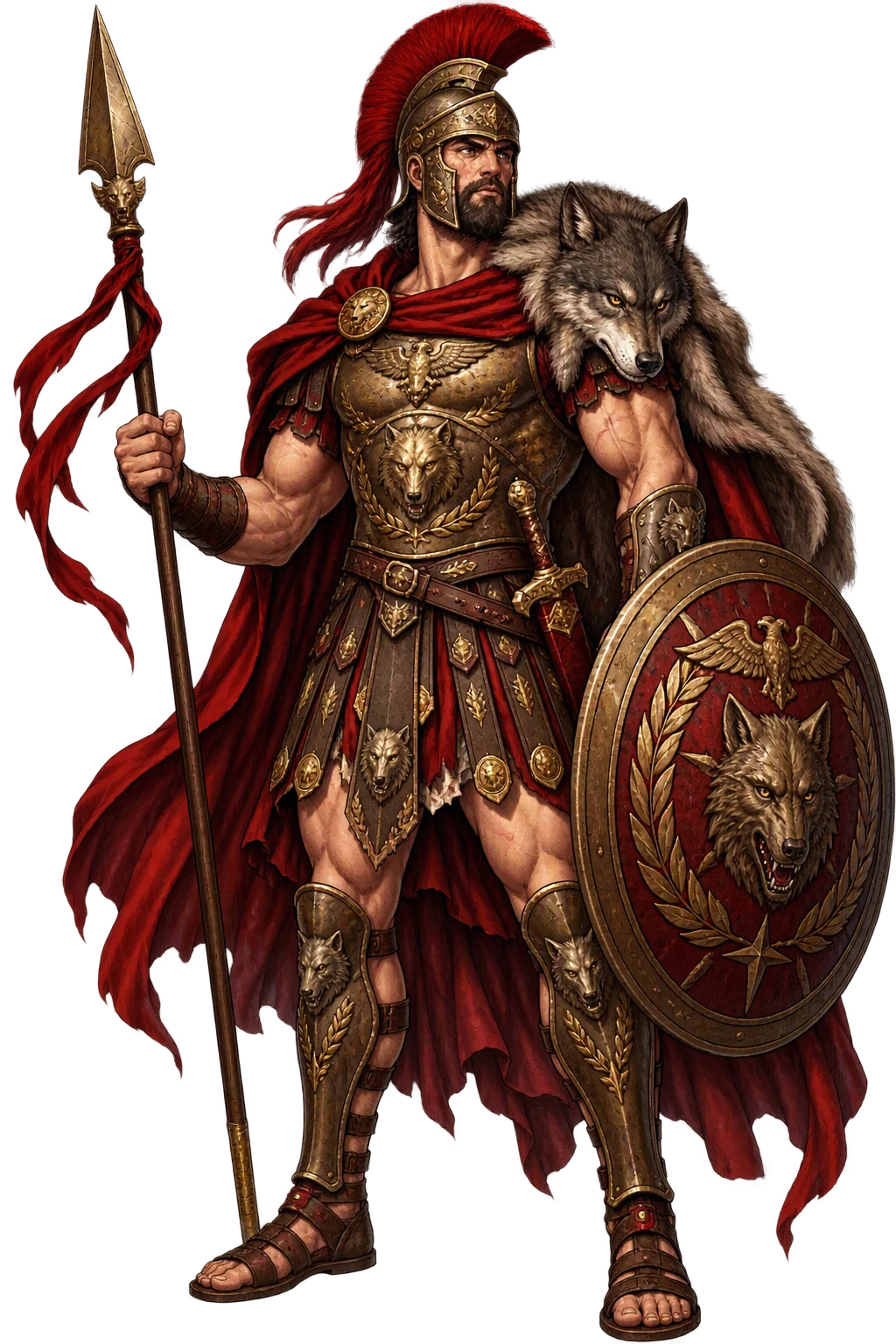
Sacred SymbolsHasta Martis, Ancile, The she-wolf, The woodpecker (picus), The October Horse
02

Etymology & Word Family

From original script to Unicode restoration

Scholarly Transliteration Mārs Mārs — "The Roman god of war and guardian of agriculture, father of Rōmulus and Rēmus; namesake of the planet Mars and the month of March (epigraphic MARS)"
Unicode Restoration Mārs Restored stress, length, and script
Modern ASCII mars Plain-ASCII fallback

The name Mārs carries the orthographic signature of the roman tradition. Unicode restoration recovers what ASCII flattens.

03

Unicode Character Breakdown

Character-by-character philological analysis

CharacterUnicodeNameBlockPhonetic Role
MU+004DLatin Capital Letter MBasic LatinSame, capitalized
āU+0101Latin Small Letter A with MacronLatin Extended-ALong vowel
rU+0072Latin Small Letter RBasic LatinSame
sU+0073Latin Small Letter SBasic LatinSame

The Tier 1 classification reflects how much of the original phonology this restoration preserves — stress and vowel length for Greek names, distinctive letters and diacritics for every other tradition.

04

Cult & Worship

How the sacred was kept — rites, sanctuaries, remains

The Cult

Mars's cult was state machinery. His oldest priests were the Salii, two colleges of twelve dancing warriors — the Salii Palatini on the Palatine, the Salii Collini on the Quirinal — who carried the twelve ancilia through the city through March, leaping in armor to a song older than Latin's literature. His spear stood in the Regia, moved by the state when war began; his oldest temple rose in 388 BC; and the Campus Martius outside the pomerium was consecrated to him as the mustering field — only the war god's ground could hold an army inside the city's sight. His festivals trace the agricultural year he guarded: the Feriae Marti opened his month on March 1, the Equus October sacrificed the October Horse on the Ides, and the Mamuralia — the old man driven out and beaten with sticks on the day after the Ides of March — was read even in antiquity as the expulsion of Mamurius, the smith of the shields. Farmers purified their fields before him (Cato, De agricultura 141), and the Arval Brethren sang his name in their grove hymn. No Roman god was busier, and none less optional.

In the Earth

The Temple of Mars Ultor in the Forum of Augustus, excavated and partially re-erected, held its colossal caryatid-flanked exedrae and fragments of the cult statues; its dedication inscription (CIL VI 872) survives. The temple of Mars in Circo, vowed after the Gallic capture and dedicated in 388 BC, stood in the Campus Flaminius. The Regia in the Forum — rebuilt in imperial times over archaic foundations — housed the hasta Martis and the October Horse's blood. The Altar of Mars and Venus in the Forum Boarium, vowed in 296 BC, celebrated the Julian claim of descent. Roman denarii from 137 BC onward stamp the she-wolf and twins on thousands of reverses, and imperial issues add Mars Ultor crowning a trophy — the god as Rome's most reliable mint-mark.

05

Iconography

How Mārs was imaged across the ages

The Image

Mars enters art fully armed and never takes the armor off. The canonical type is Mars Ultor from the Forum of Augustus: bearded, in crested helmet and muscled cuirass, spear grounded while Victory reaches him the tropaion — war as Rome's finished business. Gradivus, the marching form, strides with the left foot forward, cloak thrown back, the field god on the move; the type passed through a thousand gems and lamps. On coins he is compact and emblematic: helmeted head on obverses from the Social War onward, the wolf-and-twins beneath a fig-tree on the reverse of the denarius of 137 BC and its endless imitations, Mars Ultor crowning a trophy on Augustan issues. The Renaissance softened him — Botticelli's Venus and Mars (c. 1485, National Gallery, London) sinks the exhausted, disarmed god into a post-coital sleep while little satyrs make off with his lance — a joke the Fasti's Anna Perenna would have appreciated.

06

Reception & Transformation

The name after its own age — transmission, translation, survival

Afterlives

Mars outlived his cult by adopting every new medium. In the Middle Ages he became a planet first and a god second: the children-of-the-planets cycles — sculpted over cathedral doorways, painted in the Palazzo Schifanoia at Ferrara — show him enthroned and armed, ruling the blood-red destinies of those born under him. Astrology made the red planet his permanent body: red like blood, hot and choleric, the Lesser Malefic. Astronomy kept the name and changed the frame — Schiaparelli's canali in 1877 were mistranslated into canals, and within twenty years Wells's War of the Worlds (1897) had turned Mars into the invader of the popular imagination, a projection so strong it survives every photograph the landers have sent back. The courts and the sporting world kept the stem honest: martial law, court martial, martial arts. He is the most culturally diffused of all the war gods precisely because Rome made him useful — to the calendar, the courts, the fields, and the sky.

Identifications Across Traditions

The interpretatio graeca named Mars 'the Roman Ares,' and the identification never stopped misleading people. Greek writers rendered him Ἄρης without hesitation; Roman poets borrowed Ares's mythology wholesale; yet the cults were opposite in spirit. Árēs owned almost no temples and was despised; Mars owned some of Rome's greatest and was Rome's ancestor — the Salii danced for him, the Arval Brethren sang for him, and the old Roman year itself began in his month. Outside the Greek equation he traveled as a template: the Celts poured their own gods into his name, so that Roman Britain knows Mars Camulos, Gaul knows Mars Lenus and Mars Loucetius ('lightning'), and Tacitus reports the Suebi worshipping a Mars Thingsus, a 'Mars of the assembly.' The pattern is interpretatio in its purest form: a local deity kept entirely, a Roman label laid over him, and both names entered on the same altar.

Modern Legacy

Mars is the most quietly successful name in the Western calendar. The month of March — Latin Martius, the first month of the old Roman year, when the spear moved and the campaigning season opened — still carries him; the weekday dies Martis became French mardi, Spanish martes, Italian martedì, and rode the loan into Japanese kasei and Korean hwasŏng as the name of the planet. 'Martial' preserves the stem in every English court martial and martial law; the Campus Martius, Rome's field of Mars, survives as the name of a district in the capital itself and as the common noun 'campus.' The planet, blood-red to every unaided eye, made him the sky's permanent soldier long after the last Salius had stopped dancing.

07

The Meditation

What Mārs means — beyond the dictionary

Mārs is the rare war god who is also a farmer's god, and the combination is not a puzzle but a doctrine. Roman war and Roman agriculture were the same activity at different seasons: the boundary-stone guarded in peace is the frontier defended in war, and the men who hold the spear in summer are the men who hold the plough in spring. Mars stands at that hinge — Gradivus marching out in March, the October Horse thanked at the season's close — and the state that honored him knew exactly what it was saying: that its violence and its husbandry were one continuous act of possession.

The restoration of the long ā is a small act of the same kind. The inscriptions say MARS; the prosody says Mārs; Lewis & Short print the macron because the genitive Mārtis leaves no choice. To flatten the name to 'mars' is to lose the one thing Latin actually tells us about how it sounded — a vowel held twice its length before the roll of the r, a syllable built like the god's own discipline: close, sustained, and complete.

08

Frequently Asked Questions

Common questions about Mārs, War, Agriculture, Sovereignty, and Unicode restoration

01How do you pronounce Mārs?

In reconstructed pronunciation, Mārs is /maːrs/ — approximately 'MAHRS' — a single syllable; hold the open 'ah' longer than English wants to, let the r roll, and close it with a hiss.

02What does Mārs mean?

Mārs means The Roman god of war and guardian of agriculture, father of Rōmulus and Rēmus; namesake of the planet Mars and the month of March (epigraphic MARS) in the roman tradition.

03What are the symbols of Mārs?

Mārs is associated with Hasta Martis (The spear of Mars kept in the Regia at the hearth of the pontifex maximus. When Rome went to war the arms were 'moved' — the sign by which the whole city knew the campaign had begun; the spear stood at the exact center of the state.), Ancile (The shield that fell from heaven in Numa's reign and could not stay still while Rome's safety hung on it. The smith Mamurius Veturius forged eleven perfect copies so no thief could tell the true one; all twelve, the ancilia, were carried through the city each March by the dancing Salii.), The she-wolf (The lupa who found the exposed twins at the fig-tree of Rumina and suckled them in the cave of the Lupercal. She is Mars's creature doing Mars's work — his sons fed by his own landscape — and she outlasted the republic on every coin.), The woodpecker (picus) (Mars's bird, sacred above others: in some accounts it was the woodpecker that flew down to feed the crying twins when the she-wolf was away, and Ovid's Mavors swears his oath by 'the woodpecker and the wolf, my birds and my beasts.'), The October Horse (The right-hand trace-horse of the winning chariot at the October races on the Campus Martius, sacrificed to Mars on the Ides of October; its head was fought over by the Subura and the Via Sacra, and its blood was kept at the Regia.).

04Why restore Mārs in Unicode?

Plain ASCII mars strips the stress, length, and script that make the name specific. Unicode restoration returns the name to its original written dignity.

05What is the most important myth about Mārs?

“Rhea Silvia at the River” — the The Vestal and the Twins story that anchors the mythology of Mārs, told in full on the lore page.

09

Scholarly Sources

The philological foundations of this restoration

Every claim on this page is grounded in established scholarship. The orthographic restorations follow disciplinary convention. The etymological chain follows the best available reference works. This is not invention — it is resurrection through scholarship.

◈

Lexicography & Philology

  • Lewis & Short
◎

Primary Texts

  • Virgil
  • Ovid
  • Ovid, Fasti 3 (Anna Perenna, Mamurius, the Salii); Fasti 5.545–598 (the temple of Mars Ultor)
  • Virgil, Aeneid 7, 9, and 12 (Mars and Turnus)
  • Plutarch, Life of Romulus 3–5; Life of Numa 13 (the ancile)
◉

Archaeology & Art History

  • Material evidence — iconography, inscriptions, and temple archaeology — for Mārs and related cults.
✦

Religious Studies

  • Livy, Ab urbe condita 1.3–4 (Rhea Silvia and the twins); 6.42 (the temple in Circo, 388 BC)
  • Dionysius of Halicarnassus, Roman Antiquities 1.76–79 and 2.70–72
  • Tacitus, Germania (Mars among the Germani; Mars Thingsus of the Suebi)
  • Cato the Elder, De agricultura 141 (the lustratio prayer to Mars)
  • Festus, De verborum significatu s.v. Mamurius Veturius and October equus
  • Lewis & Short, A Latin Dictionary, s.v. Mārs, Mārtis
Return

The Surface Awaits

You have traced the name from its earliest attestation to its Unicode restoration. Now return to the myth. The story is where the name lives.

Back to Lore
Mārs mascot