
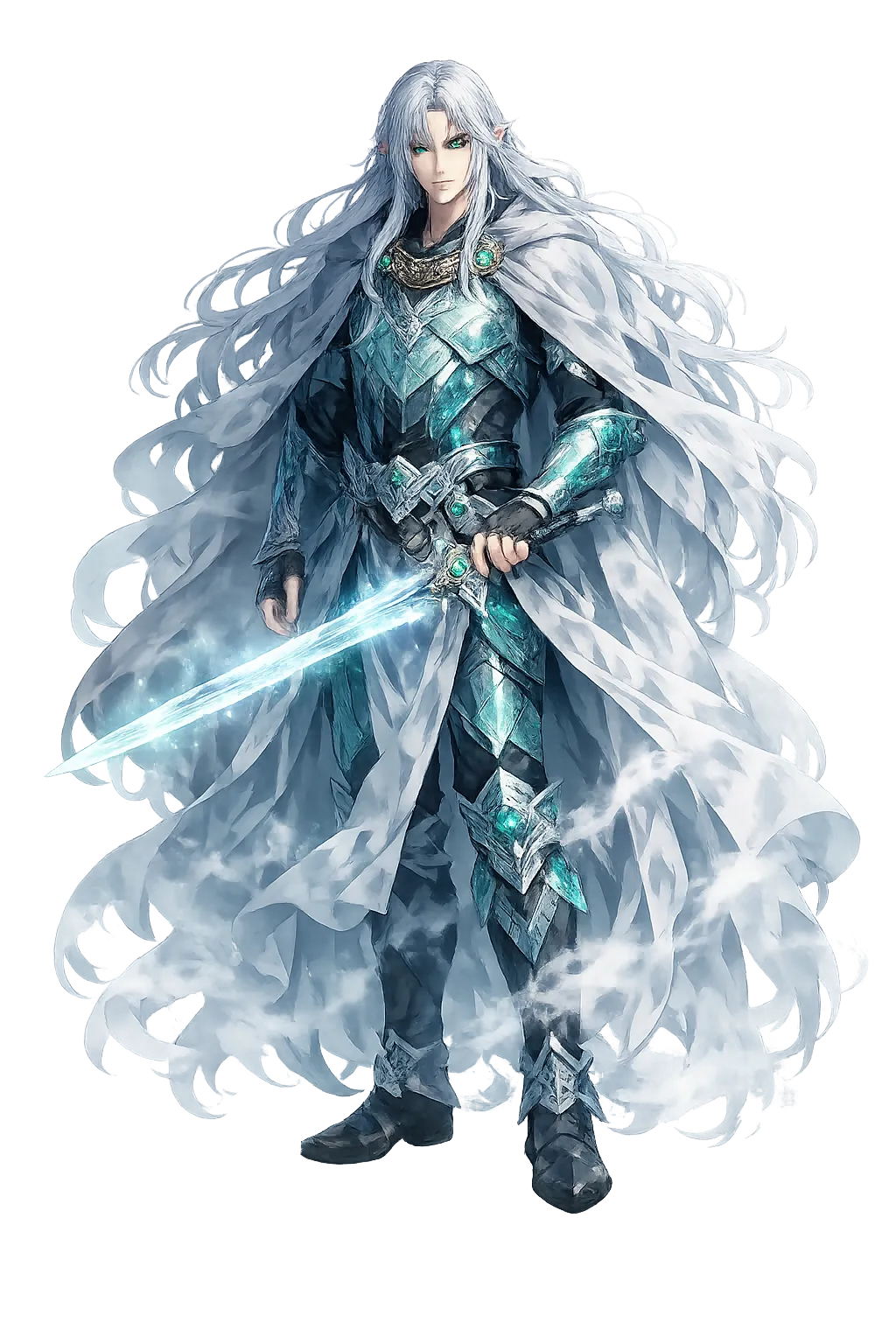
Manannán: the stories first, then the spelling
Before the spelling, the story. Manannán earns its restoration the old way — through what was actually told.
The Stories That Carry the Name
The Chariot on the Wave-Plain. In Immram Brain, the Voyage of Bran, the god meets a mortal expedition on its own element. Bran mac Febail had heard music behind him until he slept, and woke to find a silver branch with white blossoms at his hand; a strange woman sang to him of the Land of Women until he put to sea with three companies of nine. Out on the ocean a chariot came toward the boat, and the charioteer hailed Bran across the water — it was Manannán mac Lir, driving over what Bran took for the sea and the god took for a flowery plain.
The Silver Apples of the Land of Promise. Echtra Cormaic maic Airt i Tír Tairngiri sends him into Tara itself. A warrior appeared at Cormac mac Airt's court bearing a branch with three silver apples that played sweet music; for it the king gave, one by one, his wife and his son and his daughter — and then grieved. A grey-haired man with a shining branch led him through a mist into the Land of Promise, where four palaces stood and a pig was roasted and renewed every night, and where an aged couple kept an ever-full cauldron: 'the world is a wave,' the old man told him, 'ebbing and flowing.
The Keeper of the Hollow Hills. Altram Tige Dá Medar, the Fosterage of the House of the Two Methers, gives him his strangest office: landlord of the gods. When the sons of Míl divided Ireland among mortals, Manannán counselled the Túatha Dé Danann not to contest the division but to take the sídhe — the hollow hills beneath the land — and he himself allotted each god his mound: the Dagda his Brug, Bodb Derg the síd of Munster, Midir his Brí Léith. He became foster-father to the children of the gods — Óengus among them — and his mist, the féth fíada, hid the hidden Ireland from human eyes.
And Here Is What the Spelling Preserves
The restoration keeps one feature the ASCII form manannan cannot show:
- a → á — Acute on a: stressed syllable: where the voice peaks.
A storyteller pronouncing the name would restore every one of them by instinct. The file only writes down what the voice already knows.
At a Glance
- Restored name: Manannán
- ASCII form: manannan
- Meaning: "Son of the sea (from Old Irish Manannán)"
- Domain of influence: Sea, Otherworld, Mist
- Pantheon: Celtic
- Classification: Tier 1
- Original script: Manannán mac Lir
- Series: The Restoration Files, No. 295 of 546
The Name Travels
Manannán's closest counterpart is the Welsh Manawydan fab Llŷr, the patient, just, sea-wise figure of the Second and Third Branches of the Mabinogi — husband of Rhiannon, and the one lord in the Welsh tales who cannot be outwitted or outwaited. Both names rest on a Common Celtic *Manaw-, and both bear the same patronymic: son of Lir, son of Llŷr, the Sea.
The Address It Earned
The temple of Manannán stands at /manannan/ — lore, scholars, patterns — because a name carrying this much story deserves more than a parking page. Tier-1 is not a compliment; it is a measurement. This restoration keeps something the ASCII form provably loses, and the measurement is repeatable.
The File Continues
Read the founding dispatch for the name's full story, the Resonance File for the archetype at work — or the whole archive in one sitting.
Continue the series — previous file: Mamaragan (read it here) · next file: Manawydan (read it here).
The Restoration Files are written from the same canonical record as the temples themselves: the lexicon, the lore catalog, the pattern atlas, and the cited scholarly sources. If a file ever disagrees with its temple, the temple is right — tell us, and the file will be corrected.