PuniCodex

Extended Lore

마고 (麻姑) Mago

Etymology · Phonology · Orthography · Cultural Legacy · Primary Sources

Tier 2 Mago
Mago — Creator Goddess, Earth
01

Quick Facts

Essential information about Mago, Creator Goddess, Earth

Original Script마고 (麻姑)
Unicode RestorationMago
Reconstructed Pronunciation/ma.ɡo/
PantheonKorean
DomainCreator Goddess, Earth
MeaningGreat goddess
ClassificationTier 2
Primary DomainMago
Sacred SymbolsMountains and rivers, Skirt, Gourd or vessel, Serpent or dragon
02

Etymology & Word Family

From original script to Unicode restoration

Original Script 마고 (麻姑) Mago — "Great goddess"
Unicode Restoration Mago Restored stress, length, and script
Modern ASCII mago Plain-ASCII fallback

A simple two-syllable name; the second syllable is low and level. In religious usage it is often lengthened to Mago Halmi or Mago Halmeoni.

03

Unicode Character Breakdown

Character-by-character philological analysis

CharacterUnicodeNameBlockPhonetic Role
MU+004DLatin Capital Letter MBasic LatinSame, capitalized
aU+0061Latin Small Letter ABasic LatinSame
gU+0067Latin Small Letter GBasic LatinSame
oU+006FLatin Small Letter OBasic LatinSame

The Tier 2 classification reflects how much of the original phonology this restoration preserves — stress and vowel length for Greek names, distinctive letters and diacritics for every other tradition.

04

Cultural Significance

From ancient cult to modern Unicode

Ancient Domain

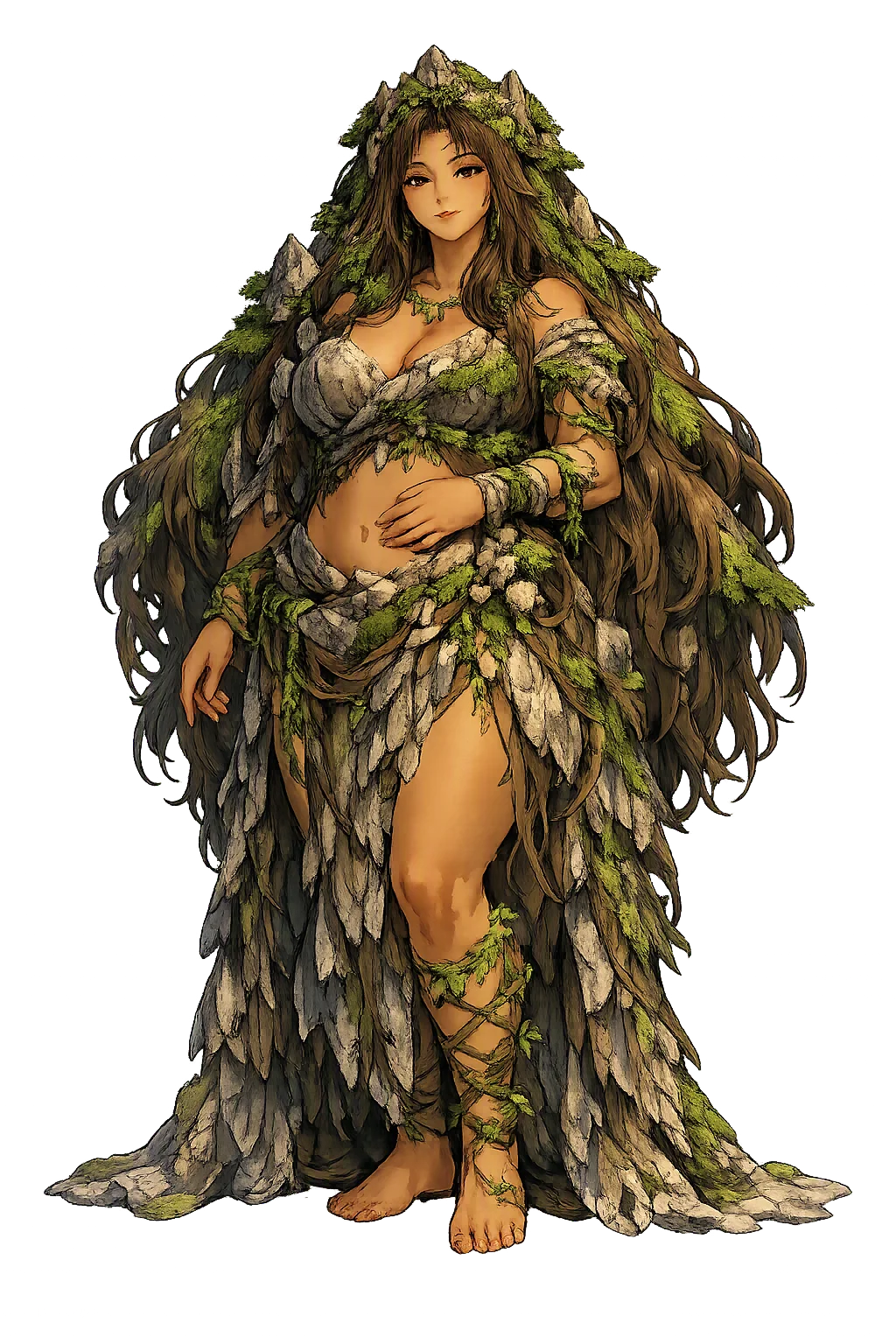
Mago is the great goddess, a primordial creator figure who shapes the earth and is honoured as the great mother in Korean shamanic cosmology in Korean tradition. The name means "Great goddess" and belongs to the domain "Creator Goddess, Earth." Mago is the great goddess of Korean shamanic cosmology, often addressed as Mago Halmi, the grandmother who creates and shapes the world. In folk narrative she is a primordial giant whose body, urine, sighs, and skirt become mountains, rivers, and islands.

Mago in Later Traditions

Mago sits at the intersection of Korean shamanism, Chinese Daoist folklore, and contemporary goddess spirituality. Chinese sources know Magu as an immortal associated with hemp and longevity; Korean sources transform her into a creator grandmother. Modern scholars such as Helen Hye-Sook Hwang argue that Mago represents the survival of a pan-East Asian goddess religion beneath later patriarchal traditions. The figure has also been embraced by feminist and ecological movements as a symbol of female creative power and embodied relationship with the earth.

Modern Legacy

Mago is increasingly central to discussions of Korean indigenous religion, feminist theology, and environmental ethics. Her name appears in scholarly monographs, goddess spirituality networks, and cultural projects that reclaim female divine imagery. Regional festivals and shamanic rituals on Jeju and the mainland invoke Mago Halmi as a protector and creator. The figure also informs Korean diaspora identity, offering a female-centred mythic anchor distinct from the male-dominated state foundation narrative.

Unicode Restoration as Cultural Act

Restoring Mago in a domain name is more than orthographic accuracy. It is a statement that the internet should recognize the full range of human writing — not only the ASCII keyboard.

05

Frequently Asked Questions

Common questions about Mago, Creator Goddess, Earth, and Unicode restoration

01How do you pronounce Mago?

In reconstructed pronunciation, Mago is /ma.ɡo/ — approximately 'MAH-goh' — A simple two-syllable name; the second syllable is low and level. In religious usage it is often lengthened to Mago Halmi or Mago Halmeoni..

02What does Mago mean?

Mago means Great goddess in the korean tradition.

03What are the symbols of Mago?

Mago is associated with Mountains and rivers (The landscape itself, understood as the body and work of Mago.), Skirt (A textile symbol of female creative power that shapes topography.), Gourd or vessel (A womb-like container of life and abundance associated with the great mother.), Serpent or dragon (A chthonic companion symbolising the creative energy of earth and water.).

04Why restore Mago in Unicode?

Plain ASCII mago strips the stress, length, and script that make the name specific. Unicode restoration returns the name to its original written dignity.

05What is the most important myth about Mago?

In Korean folktales, Mago Halmi is so enormous that her body becomes the landscape. Her urine forms rivers, her sighs become wind, and her skirt covers mountains. She creates the topography of Korea through her movements and labour.

06

Scholarly Sources

The philological foundations of this restoration

Every claim on this page is grounded in established scholarship. The orthographic restorations follow disciplinary convention. The etymological chain follows the best available reference works. This is not invention — it is resurrection through scholarship.

Lexicography & Philology

  • Korean folklore
  • Shamanic texts

Primary Texts

  • Primary sources in the korean tradition for Mago.

Archaeology & Art History

  • Material evidence — iconography, inscriptions, and temple archaeology — for Mago and related cults.

Religious Studies

  • Hwang, Helen Hye-Sook, The Magoist Cosmogony of Korea (Mago Books, 2015).
  • Hong Tae-han, Korean Shamanism: Foundations and Forms (Jimoondang, 2002).
  • Lee, Jung Young, Korean Shamanistic Rituals (Mouton, 1981).
Return

The Surface Awaits

You have traced the name from its earliest attestation to its Unicode restoration. Now return to the myth. The story is where the name lives.

Back to Lore
Mago mascot