PuniCodex

Extended Lore

마고 (麻姑) Mago

Etymology · Orthography · Cult · Iconography · Reception · Sources

Tier 2 Mago
Mago — Creator Goddess, Earth
01

Quick Facts

Essential information about Mago, Creator Goddess, Earth

Original Script마고 (麻姑)
Unicode RestorationMago
Reconstructed Pronunciation/ma.ɡo/
PantheonKorean
DomainCreator Goddess, Earth
MeaningGreat goddess
ClassificationTier 2
Primary DomainMago
Sacred SymbolsMountains and rivers, Skirt, Gourd or vessel, Serpent or dragon
02

Etymology & Word Family

From original script to Unicode restoration

Original Script 마고 (麻姑) Mago — "Great goddess"
Unicode Restoration Mago Canonical scholarly spelling — ASCII-identical
Modern ASCII mago Plain-ASCII fallback

The name Mago reaches the modern world through scholarly transliteration of the korean tradition. Because the conventional spelling uses only Latin letters, its Unicode and ASCII forms coincide — the tradition it carries is in the name itself, not in diacritics.

03

Unicode Character Breakdown

Character-by-character philological analysis

CharacterUnicodeNameBlockPhonetic Role
MU+004DLatin Capital Letter MBasic LatinSame, capitalized
aU+0061Latin Small Letter ABasic LatinSame
gU+0067Latin Small Letter GBasic LatinSame
oU+006FLatin Small Letter OBasic LatinSame

The Tier 2 classification here reflects fidelity to the attested tradition, not recovered diacritics: every character of Mago already survives in ASCII. What the restoration preserves is the canonical spelling itself — the form scholarship standardised.

04

Cult & Worship

How the sacred was kept — rites, sanctuaries, remains

The Cult

Mago's ancient cult is the honest gap in her dossier. No temple, altar, or votive deposit of Mago Halmi has been excavated in Korea; her worship was sung, not built — Jeju shamans (simbang) and mainland mudang invoke her at the opening of the gut as the first grandmother whose permission orders the rite, a living liturgy documented continuously in twentieth-century fieldwork, from Hyun Yong-jun's collections to Lee Jung Young's Korean Shamanistic Rituals (1981). The Chinese namesake is better anchored: Mount Magu in Jiangxi was a recognized Daoist sacred site by the Tang dynasty, and in 771 Yan Zhenqing wrote his celebrated altar-record there in the calligraphy that made it a classic. Modern 'Magoism,' built by Helen Hye-Sook Hwang from the 2000s, is a self-conscious revival movement — reception, not attested cult, and best shelved as such.

In the Earth

Direct material evidence for Mago Halmi is scarce — shamanic song leaves no inscriptions — but her Chinese namesake is firmly anchored in stone and ink. Mount Magu (Magu Shan) at Nancheng in Jiangxi was a recognized Daoist sacred site by the Tang dynasty, and in 771 CE the calligrapher Yan Zhenqing wrote his celebrated Magu Shan xiantan ji (“Record of the Altar of the Immortals on Mount Magu”) there, one of the most famous prose inscriptions in the Chinese calligraphic canon. From the Song dynasty onward, “Magu offering birthday wine” became a standard theme in tomb furnishings, ceramics, and painting — the immortal depicted as a young woman bearing a wine jug, often riding a deer or bluebird. In Korea the archaeology is the ritual itself: the Jeju gut, with its invocations of the creation grandmothers, is a living intangible heritage documented continuously since the twentieth century.

05

Iconography

How Mago was imaged across the ages

The Image

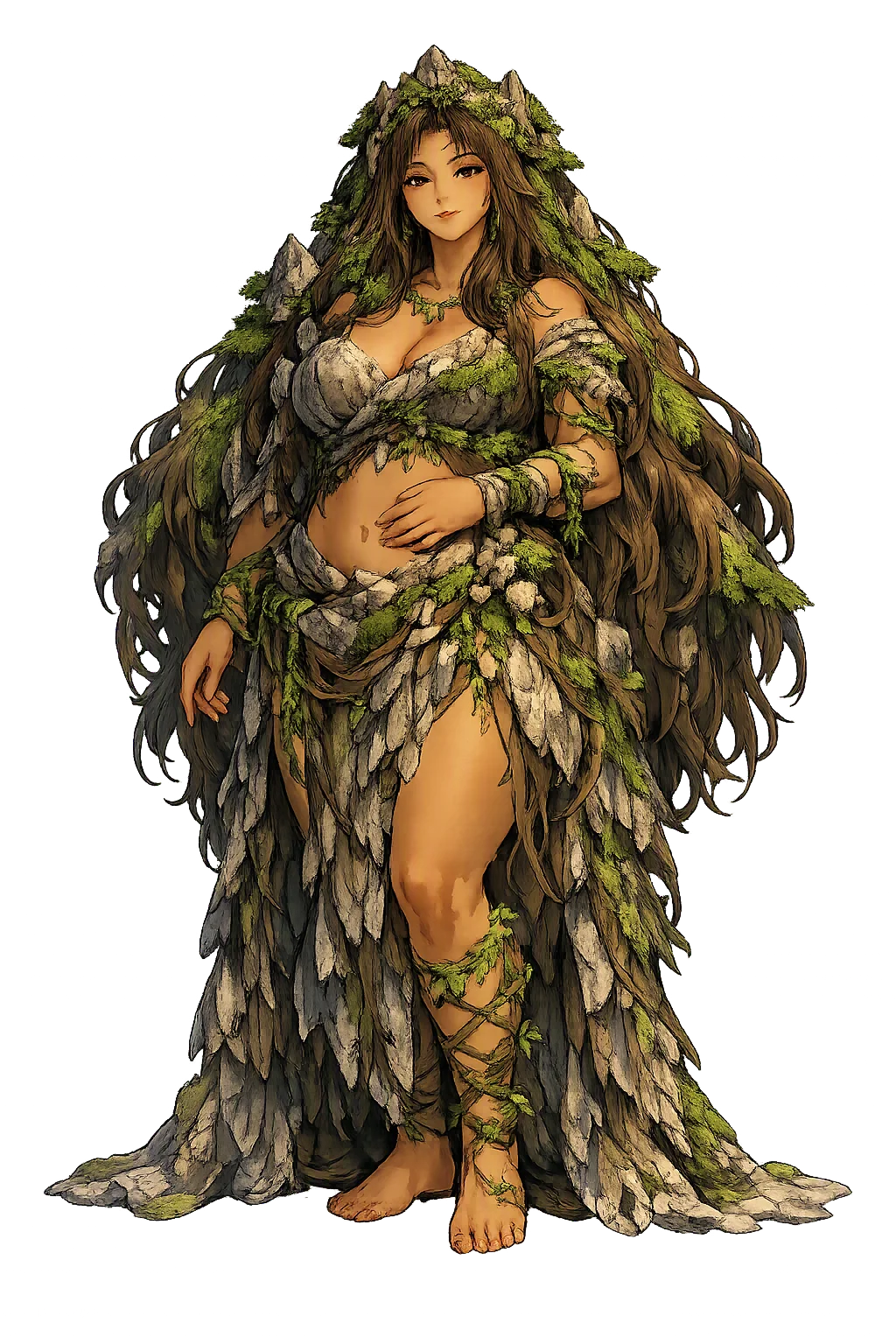
The Korean Mago has no canonical pre-modern image — an oral grandmother leaves no iconography — so her visible body is Chinese. From the Song dynasty onward 'Magu offering birthday wine' became a standard auspicious subject: a girl of eighteen or nineteen in shimmering robes, fingernails grown long and curved like bird claws, the detail fixed by the Shenxian zhuan biography — carrying a ewer of longevity wine, attended by a deer or a bluebird. The type fills Ming and Qing porcelain, tomb furnishings, and painting, and hemp belongs to her imagery, for the character of her name means hemp. Korea's oldest Mago images are modern: shamanic paintings and contemporary goddess art that give the creation grandmother a face for the first time; the standard iconographic surveys record no pre-twentieth-century Korean depiction.

06

Reception & Transformation

The name after its own age — transmission, translation, survival

Afterlives

The journey begins in ink. The Shenxian zhuan, composed by Ge Hong or his circle in the fourth century, first commits Magu to writing — the claw-nailed immortal who greets Wang Yuan with the news that the Eastern Sea has thrice become mulberry orchards. That line made her immortal in the language: cang hai sang tian, 'blue seas to mulberry fields,' remains the Chinese idiom for epochal change, and Tang poets used her constantly. In 771 the master calligrapher Yan Zhenqing carved her mountain's altar-record, and the inscription survives among the most studied works in the Chinese calligraphic canon. She crossed into Korean tradition early, but her grandest Korean witness is modern: the Jeju changsega creation song, recorded only in the twentieth century, which made her a working cosmogonic grandmother. Scholarship carried her the rest of the way — Lee Jung Young's study of the gut (1981), Hong Tae-han's history of Korean shamanism (2002), and Helen Hye-Sook Hwang's Magoist Cosmogony of Korea (2015), which made her the emblem of a debated pan-East Asian goddess stratum.

Identifications Across Traditions

Mago sits at the intersection of Korean shamanism, Chinese Daoist folklore, and contemporary goddess spirituality. Chinese sources know Magu as an immortal associated with hemp and longevity; Korean sources transform her into a creator grandmother. Modern scholars such as Helen Hye-Sook Hwang argue that Mago represents the survival of a pan-East Asian goddess religion beneath later patriarchal traditions. The figure has also been embraced by feminist and ecological movements as a symbol of female creative power and embodied relationship with the earth.

Modern Legacy

Mago is increasingly central to discussions of Korean indigenous religion, feminist theology, and environmental ethics. Her name appears in scholarly monographs, goddess spirituality networks, and cultural projects that reclaim female divine imagery. Regional festivals and shamanic rituals on Jeju and the mainland invoke Mago Halmi as a protector and creator. The figure also informs Korean diaspora identity, offering a female-centred mythic anchor distinct from the male-dominated state foundation narrative.

07

The Meditation

What Mago means — beyond the dictionary

Mago asks a different question from most creator gods: not “who made the world?” but “whose world is it?” Her answer is grandmotherly and uncompromising — the land is a relative, not a resource, and the body's ordinary labours are the true instruments of cosmogony. That matters for a name. Mago written in Hangul (마고) or Hanja (麻姑) carries script and history that ASCII cannot hold; the capitalised romanisation is a scholarly courtesy, a reminder that behind the domain name stands a goddess whom many still invoke as grandmother. To restore the name is to insist that Korean cosmogony belongs on the same shelf as Hesiod and the Eddas.

08

Frequently Asked Questions

Common questions about Mago, Creator Goddess, Earth, and Unicode restoration

01How do you pronounce Mago?

In reconstructed pronunciation, Mago is /ma.ɡo/ — approximately 'MAH-goh' — A simple two-syllable name; the second syllable is low and level. In religious usage it is often lengthened to Mago Halmi or Mago Halmeoni.

02What does Mago mean?

Mago means Great goddess in the korean tradition.

03What are the symbols of Mago?

Mago is associated with Mountains and rivers (The landscape itself, understood as the body and work of Mago.), Skirt (A textile image of female creative power: where her skirt settles, valleys open; where it bunches, peaks rise.), Gourd or vessel (A womb-like container of life and abundance associated with the great mother.), Serpent or dragon (A chthonic companion symbolising the creative energy of earth and water.).

04Why restore Mago in Unicode?

Mago is written entirely in ASCII letters, so its restoration is about canonical fidelity rather than recovered diacritics: the temple fixes the name in its scholarly standard spelling, attested in the source tradition, instead of leaving it to drift.

05What is the most important myth about Mago?

“The Grandmother Makes the World” — the Jeju creation song story that anchors the mythology of Mago, told in full on the lore page.

09

Scholarly Sources

The philological foundations of this restoration

Every claim on this page is grounded in established scholarship. The orthographic restorations follow disciplinary convention. The etymological chain follows the best available reference works. This is not invention — it is resurrection through scholarship.

◈

Lexicography & Philology

  • Korean folklore
  • Shamanic texts
◎

Primary Texts

  • Primary sources in the korean tradition for Mago.
◉

Archaeology & Art History

  • Material evidence — iconography, inscriptions, and temple archaeology — for Mago and related cults.
✦

Religious Studies

  • Ge Hong (attributed), Shenxian zhuan, biography of Wang Yuan, as quoted in Taiping Guangli (10th c.)
  • Hyun Yong-jun, Han'guk Sinhwa Ch'ŏnjip (Complete Collection of Korean Myths), Cheju-do shamanic volumes (1980–81)
  • Lee, Jung Young, Korean Shamanistic Rituals (Mouton, 1981)
  • Hong Tae-han, Korean Shamanism: Foundations and Forms (Jimoondang, 2002)
  • Hwang, Helen Hye-Sook, The Magoist Cosmogony of Korea (Mago Books, 2015)
Return

The Surface Awaits

You have traced the name from its earliest attestation to its Unicode restoration. Now return to the myth. The story is where the name lives.

Back to Lore
Mago mascot