PuniCodex

Extended Lore

ᛘᛅᚴᚾᛁ Magni

Etymology · Phonology · Orthography · Cultural Legacy · Primary Sources

Tier 2 Magni
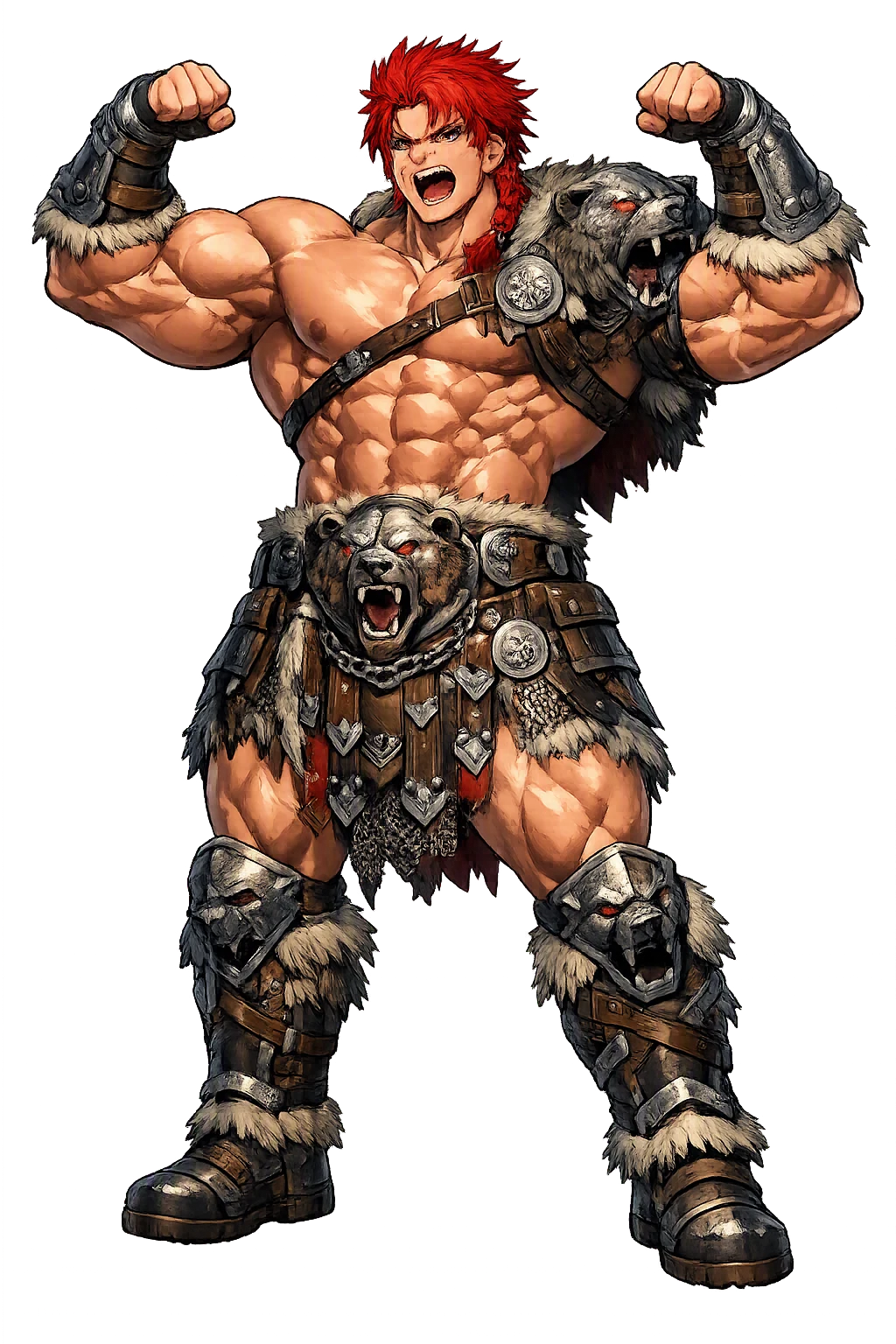
Magni — Strength, Son of Thor
01

Quick Facts

Essential information about Magni, Strength, Son of Thor

Original Scriptᛘᛅᚴᚾᛁ
Unicode RestorationMagni
Reconstructed Pronunciation/ˈmɑɣ.ni/
PantheonNorse
DomainStrength, Son of Thor
MeaningThe strong one
ClassificationTier 2
Primary DomainMagni
Sacred SymbolsHrungnir's stone leg, Gullfaxi, the gold-maned, Mjǫllnir inherited, The whetstone shard
02

Etymology & Word Family

From original script to Unicode restoration

Original Script ᛘᛅᚴᚾᛁ Magni — "The strong one"
Unicode Restoration Magni Restored stress, length, and script
Modern ASCII magni Plain-ASCII fallback

Magni is Tier 2 by the mechanical rule: the normalized Old Norse form is already plain ASCII — no diacritic, no thorn, no eth for the restoration to recover. The strongest boy in the Edda has one of its plainest names; only the capital distinguishes the temple form from the input.

03

Unicode Character Breakdown

Character-by-character philological analysis

CharacterUnicodeNameBlockPhonetic Role
MU+004DLatin Capital Letter MBasic LatinSame, capitalized
aU+0061Latin Small Letter ABasic LatinSame
gU+0067Latin Small Letter GBasic LatinSame
nU+006ELatin Small Letter NBasic LatinSame
iU+0069Latin Small Letter IBasic LatinSame

The Tier 2 classification reflects how much of the original phonology this restoration preserves — stress and vowel length for Greek names, distinctive letters and diacritics for every other tradition.

04

Cultural Significance

From ancient cult to modern Unicode

Ancient Domain

Magni is Þórr's son by the giantess Járnsaxa: the prodigy of the Edda, three nights old when he freed his father from under the fallen Hrungnir's leg — the feat all the Æsir together could not manage. And Vafþrúðnismál looks past the end of the world to give him the hammer itself: after Ragnarǫk, Magni and his brother Móði inherit Mjǫllnir.

Magni in Later Traditions

Magni's scene belongs to one of the oldest hero-patterns in the Indo-European world: the prodigious infant. Greek tradition sets it at the beginning of Heraklês' life — the baby strangling the serpents in his cradle, sung by Pindar in the first Nemean ode and told by Apollodorus (Library 2.4.8) — and Irish tradition builds the boyhood deeds of Cú Chulainn on the same armature, the macgnímrada of the Táin, where a child performs the feats of grown champions. The North compressed the whole pattern into a single sentence: three nights old, and already the strongest person in the story. The comparison is one of motif, not borrowing — Simek and Lindow treat Magni as a native figure of the Þórr-complex, and no line of transmission is needed. His name, meanwhile, is ordinary Germanic vocabulary: *maginą, 'strength', an element that built personal names all over the North — so that the strongest boy in the Edda wears the plainest possible label: 'the strong one'.

Modern Legacy

Magni's afterlife ran quiet for centuries: the Icelandic given name Magni never died out, and Victorian mythographies kept the Hrungnir duel in circulation as one of Þórr's set-pieces — the Kearys' Heroes of Asgard (1857) retold it for generations of children. The twenty-first century put the brothers back on stage. Marvel Comics introduced Magni Thorson, a future son of Thor, in the 'Reigning' storyline of Thor in the early 2000s; and Santa Monica Studio's God of War (2018) cast Magni and Modi as their father's enforcers, carrying the pair to an audience far larger than the Edda's. Modern Heathenry keeps him among the sons of the Æsir honored for the survival of the world after Ragnarǫk — the generation for whom the hammer is kept.

Unicode Restoration as Cultural Act

Restoring Magni in a domain name is more than orthographic accuracy. It is a statement that the internet should recognize the full range of human writing — not only the ASCII keyboard.

05

Frequently Asked Questions

Common questions about Magni, Strength, Son of Thor, and Unicode restoration

01How do you pronounce Magni?

In reconstructed pronunciation, Magni is /ˈmɑɣ.ni/ — approximately 'MAHG-ni' — a short open 'ah', the g softened to a voiced fricative between the vowels; Modern Icelandic hardens the same g to [k]: 'MAHK-ni'..

02What does Magni mean?

Magni means The strong one in the norse tradition.

03What are the symbols of Magni?

Magni is associated with Hrungnir's stone leg (The weight of the giant world on the gods — and the proof that strength answers to youth, not seniority), Gullfaxi, the gold-maned (The horse given to the giantess's son: a father's pride against a grandfather's protocol), Mjǫllnir inherited (The hammer carried past Ragnarǫk — the one treasure of the old world guaranteed to the new), The whetstone shard (Hrungnir's broken weapon lodged in Þórr's head — the scar the duel left when the leg was lifted).

04Why restore Magni in Unicode?

Plain ASCII magni strips the stress, length, and script that make the name specific. Unicode restoration returns the name to its original written dignity.

05What is the most important myth about Magni?

Hrungnir, the stone-hearted giant, rode his gold-maned stallion Gullfaxi into Ásgarðr on the heels of Óðinn's wager over whose horse was fastest; feasted, he drank Þórr's ale and boasted he would carry off Valhǫll and kill every god but Freyja and Sif. Þórr was summoned, and the duel was set at Grjótúnagarðar, the stone courts. The giants, fearing for Hrungnir, built him a companion of clay nine leagues tall — Mǫkkurkálfi, Mist-calf, with a mare's heart that failed him — and Hrungnir came with a heart, a shield, and a weapon all of stone, his whetstone raised. Þjálfi ran ahead and cried that Þórr would come up from below, so the giant stood on his shield to guard his feet; the thunderer came in fury and hurled Mjǫllnir through the whetstone, shattering it — one shard lodged in Þórr's own head — and Hrungnir crashed forward with his leg across Þórr's neck.

06

Scholarly Sources

The philological foundations of this restoration

Every claim on this page is grounded in established scholarship. The orthographic restorations follow disciplinary convention. The etymological chain follows the best available reference works. This is not invention — it is resurrection through scholarship.

Lexicography & Philology

  • Poetic Edda
  • Cleasby-Vigfusson

Primary Texts

  • Poetic Edda: Vafþrúðnismál 51 ('Móði and Magni shall have Mjöllnir'), Hárbarðsljóð 53 (Þórr as 'Magni's father'), Vǫluspá 56 (Þórr's death)
  • Snorri Sturluson, Prose Edda: Skáldskaparmál 17 (the Hrungnir duel; Magni, three nights old, lifts the leg; Gullfaxi) and Gylfaginning 51, 53 (Þórr's fall; the sons inherit Mjöllnir at Íðavöllr)

Archaeology & Art History

  • Material evidence — iconography, inscriptions, and temple archaeology — for Magni and related cults.
  • Magni is a purely textual figure: no runestone invokes him as a god, no votive deposit or place-name can be securely tied to his cult, and no picture stone has been convincingly read as the lifting of Hrungnir's leg. The material record keeps only his name's raw material: Magni occurs as an ordinary human personal name in Viking-Age runic inscriptions (collected in Peterson's Nordiskt runnamnslexikon), built on the same magn 'strength' element that names the god. The textual witnesses hang by the usual thin threads: Vafþrúðnismál, Hárbarðsljóð, and Vǫluspá in the Codex Regius (c. 1270); Skáldskaparmál in the Codex Regius of the Prose Edda and its sister manuscripts; and the giantess þulur of the Skáldskaparmál, which list his mother Járnsaxa among the troll-women.

Religious Studies

  • Cleasby–Vigfusson, An Icelandic-English Dictionary, s.v. magn, magni, Magni
  • Zoëga, A Concise Dictionary of Old Icelandic, s.v. Magni
  • Simek, Dictionary of Northern Mythology; Orchard, Dictionary of Norse Myth and Legend; Lindow, Norse Mythology: A Guide — s.v. Magni, Móði, Hrungnir
Return

The Surface Awaits

You have traced the name from its earliest attestation to its Unicode restoration. Now return to the myth. The story is where the name lives.

Back to Lore
Magni mascot