
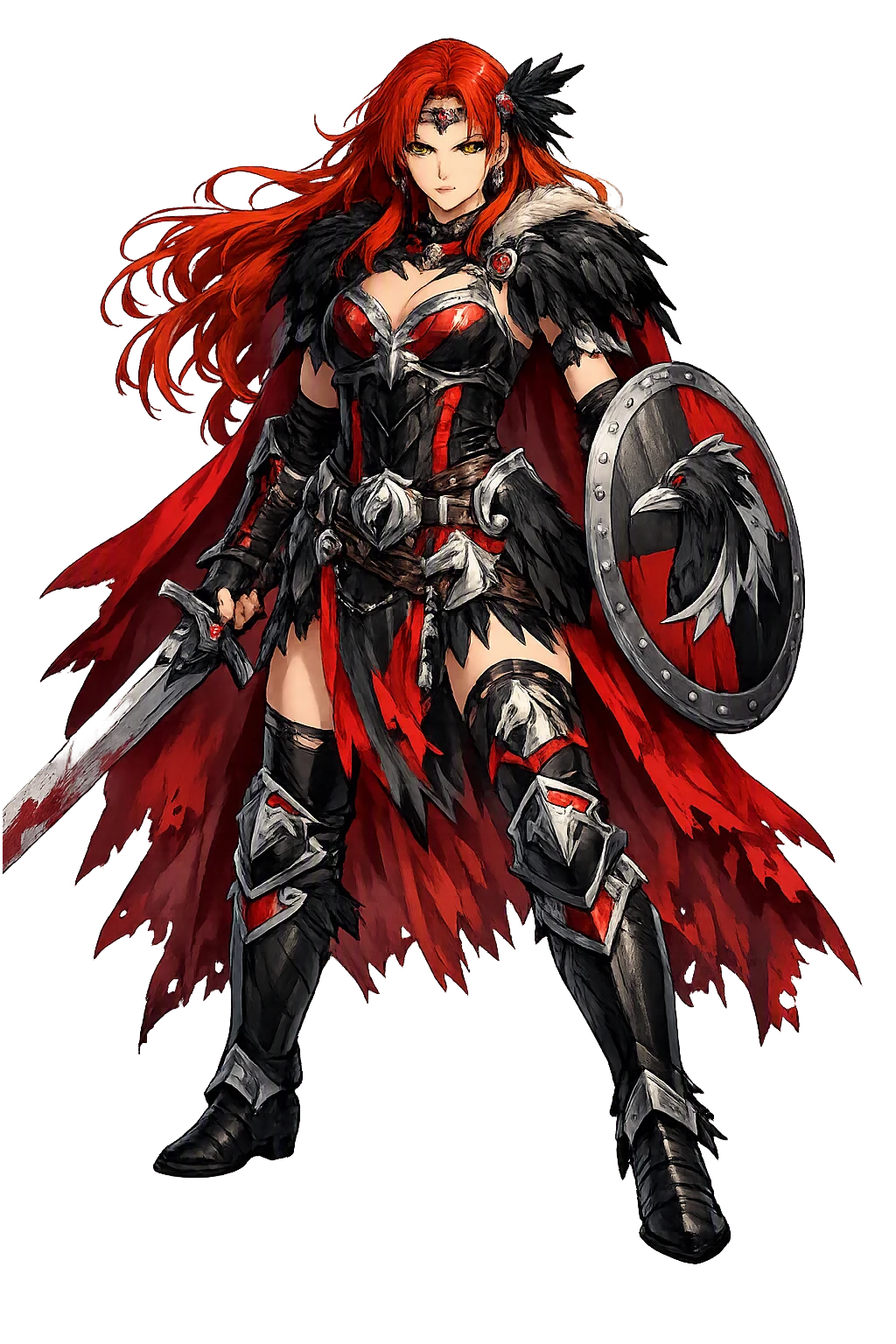
Macha — the one true spelling, and the forms that fail it
A letter to a colleague, 31 July 2026 — on the name Macha, and on the forms that keep failing it.
Your note said, roughly: surely one spelling is as good as another. Permit me to use Macha to show it is not.
First, the attestation. The tradition's record preserves this name in its romanized scholarly form: Macha — no older script survives to transcribe, so the canonical content is the exactness of the spelling itself.
Say it aloud as the sources heard it: 'MAHKH-ah' — two short open a's, stress on the first, and let the ch rasp like the end of Scottish 'loch'. Modern Irish keeps the sound: Eamhain Mhacha is said with the same fricative. The scholarly record carries that sound; the temple's canonical Macha follows the unmarked convention, and the reconstructed pronunciation above keeps it on record.
On the plain form — and I want to be precise, because you pushed on this. The plain form macha differs from the canonical Macha only by convention of display — case, not content. It is acceptable everywhere: in legacy systems, in plain-text citation, in the DNS itself. What is not acceptable is what follows in the register: respellings that change the letters, not just their case.
One more thing, because it always surprises: the name did not stay home. Macha's clearest cross-border witness is Welsh, and it is the standard comparison of the handbooks: Rhiannon of the First Branch of the Mabinogi, the otherworld woman on the horse no rider can overtake, who — falsely accused and shamed — is sentenced to sit at the horse-block and offer to carry guests on her back like a beast of burden. Mac Cana and Sjoestedt both set the two figures side by side: the sovereignty woman bound to horses, wronged by the men of the court, and made to bear an equine humiliation.
And it never stopped working. Macha rode the Celtic revival as the first wrong of the Ulster Cycle. Lady Gregory's Cuchulain of Muirthemne (1902) opens the epic with her — 'The Curse of Macha' — and made the race and the debility the gateway through which two generations of English readers entered the Táin.
The Convention's Own History
The canonical spelling of Macha rests on the tradition's own scholarly record, not on a marks convention: the name's forms are documented, compared, and one reference spelling is fixed so that citations agree across the temple, the lexicon, and this register. The principle that unifies every entry is the one the whole project stands on: a name is evidence, and evidence is not negotiable — not for keyboards, not for convenience, not for anyone.
The Address, Without an Encoding Detour
The canonical form Macha already uses ordinary Latin letters, so the address bar needs no special encoding narrative. The digital temple can preserve the spelling exactly as the scholarly record presents it. That is the practical point here: consistency between the source, the citation, and the public address.
This does not make every romanization equally valid. A wrong letter remains wrong even when it is easy to type. Canonical status still depends on the attested convention, never on convenience or registrar inventory.
Write back when you have checked the sources; they are better company than I am.
— The Register
The Verdict
Macha is the canonical form: attested, checkable, and enforced across the temple, the lexicon, the cards, the APIs, and this register. The plain form macha shares that standing — the two are the same name in every system. The false forms above are documented so that no reader has to take the temple's word on faith — the violations are stated, the sources are named, and the register stands open to challenge on every line.
The temple of Macha stands at /macha/.
The docket for this ruling: no false forms on the docket; no contested forms attested; the attestation rests on 12 cited sources — Noínden Ulad (The Debility of the Ulaidians), ed. Vernam Hull, Celtica 8 (1968) — the woman at Cruinniuc's door; the race, the twins, and the curse, Táin Bó Cúailnge, Recension 1, ed. and trans. Cecile O'Rahilly (Dublin Institute for Advanced Studies, 1976) — the ces noínden in the epic; mesrad Machae, 'Macha's mast', Lebor Gabála Érenn, ed. and trans. R. A. S. Macalister (Irish Texts Society, 1938–56) — Macha wife of Nemed; Macha Mongrúad daughter of Áed Rúad; the three daughters of Ernmas.
The Register Continues
Entry 310 of 597 in the Canonical Register. Around it: the temple's founding dispatch, the Restoration File on the marks themselves, the Resonance File on the archetype at work, and the Rulebook behind all of it.
Continue the register — previous entry: Mꜣꜥt (read it) · next entry: Magni (read it).
The Canonical Register is written from the same canonical record as the lexicon itself. If a false form is missing from this page, it is because the evidence does not support calling it false — or because we have not seen it yet. Show us, with a citation, and the register will answer.