PuniCodex

Extended Lore

Luxor

Etymology · Orthography · Cult · Iconography · Reception · Sources

ASCII-equivalent form Luxor
Luxor — Temple, Thebes, Amun
01

Quick Facts

Essential information about Luxor, Temple, Thebes, Amun

Scholarly TransliterationLuxor
Unicode RestorationLuxor
Reconstructed Pronunciation/ˈlʌksɔːr/ (conventional)
PantheonEgyptian
DomainTemple, Thebes, Amun
MeaningThe palaces
ClassificationASCII-equivalent form
Primary DomainLuxor
Sacred SymbolsThe Southern Sanctuary, The Birth Colonnade, The Colonnade of Amenhotep III, Opet’s Destination
02

Etymology & Word Family

From original script to Unicode restoration

Scholarly Transliteration Luxor Luxor — "The palaces"
Unicode Restoration Luxor Canonical scholarly spelling — ASCII-identical
Modern ASCII luxor Plain-ASCII fallback

The name Luxor reaches the modern world through scholarly transliteration of the egyptian tradition. Because the conventional spelling uses only Latin letters, its Unicode and ASCII forms coincide — the tradition it carries is in the name itself, not in diacritics.

03

Unicode Character Breakdown

Character-by-character philological analysis

CharacterUnicodeNameBlockPhonetic Role
LU+004CLatin Capital Letter LBasic LatinSame, capitalized
uU+0075Latin Small Letter UBasic LatinSame
xU+0078Latin Small Letter XBasic LatinSame
oU+006FLatin Small Letter OBasic LatinSame
rU+0072Latin Small Letter RBasic LatinSame

This restoration reflects fidelity to the attested tradition, not recovered diacritics: every character of Luxor already survives in ASCII. What the restoration preserves is the canonical spelling itself — the form scholarship standardised.

04

Cult & Worship

How the sacred was kept — rites, sanctuaries, remains

The Cult

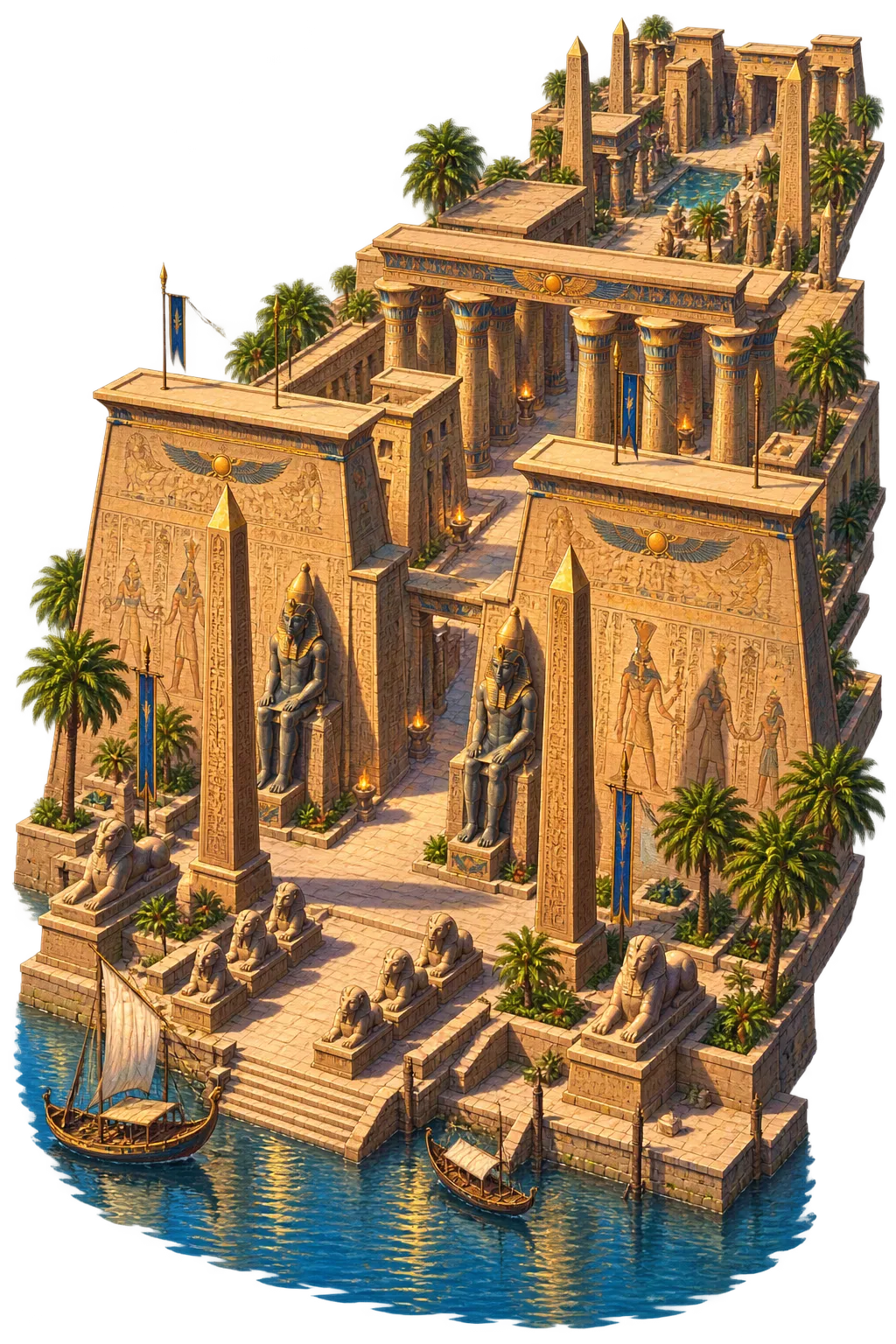
The temple was the stage of the Opet marriage-rites and the cult of Amun-Min; its priests served the ‘Southern Sanctuary’ as Karnak’s served the northern estate. The medieval mosque kept the ground consecrated without interruption — a continuity unmatched in the ancient world.

In the Earth

Amenhotep III’s colonnade and court survive at near-perfect scale; the pylon of Ramesses II fronts it with its single obelisk — the other stands in Paris’ Place de la Concorde. The temple’s axis was recently realigned with the re-excavated Avenue of Sphinxes to Karnak, restoring the ancient processional road.

05

Iconography

How Luxor was imaged across the ages

The Image

The papyrus-bundle columns of the colonnade, the seated colossi of Ramesses II, the barque-shrine of Amun; and above all the birth-scenes’ sequence — embrace, conception, fashioning on the wheel. The icon of Luxor is procession arriving: the god’s boat at the stair.

06

Reception & Transformation

The name after its own age — transmission, translation, survival

Afterlives

Luxor is modern Egypt’s tourist capital and the ancient world’s best-preserved large temple front. Its obelisk in Paris made it the first Egyptian monument to join a European capital’s furniture; and the mouloud of Abu Haggag is studied worldwide as the longest-lived case of continuous sacred use of one building.

Identifications Across Traditions

Luxor temple served Amun in his ithyphallic generative form — Amun-Min-Kamutef, ‘bull of his mother’ — tying the sanctuary to Min’s fertility theology. Its chapels later honoured the Roman imperial cult, then the mosque of Abu Haggag: three religions in one floor-plan, each claiming the same consecrated ground.

Modern Legacy

The colonnade of Amenhotep III, floodlit on the Nile’s corniche, is the most photographed temple front in the world after the Pyramids. The birth-colonnade’s iconography — Khnum at the potter’s wheel, the divine child — became the standard visual argument of Egyptian kingship, copied in every royal birth-chapel of the New Kingdom.

07

The Meditation

What Luxor means — beyond the dictionary

Luxor: a medieval plural doing the work of an ancient sanctuary-name. In the lexicon it stands for the archaeological truth that places outlive their theologies — ‘the palaces’ the Arabs named are the same walls where Amun’s fertility was renewed, and the name needs no restoration because it never referred to anything but the stones themselves.

08

Frequently Asked Questions

Common questions about Luxor, Temple, Thebes, Amun, and Unicode restoration

01How do you pronounce Luxor?

In reconstructed pronunciation, Luxor is /ˈlʌksɔːr/ (conventional) — approximately “LUK-sor”.

02What does Luxor mean?

Luxor means The palaces in the egyptian tradition.

03What are the symbols of Luxor?

Luxor is associated with The Southern Sanctuary (Ipet-resyt — the harem-temple where Amun’s fertility was renewed each year.), The Birth Colonnade (Reliefs of the divine birth of Amenhotep III — the king’s theology of legitimate succession.), The Colonnade of Amenhotep III (Fourteen massive papyrus columns — the finest preserved New Kingdom colonnade.), Opet’s Destination (The river-end of the great festival: Amun’s barque docked here for the marriage-renewal rites.).

04Why restore Luxor in Unicode?

Luxor is written entirely in ASCII letters, so its restoration is about canonical fidelity rather than recovered diacritics: the temple fixes the name in its scholarly standard spelling, attested in the source tradition, instead of leaving it to drift.

05What is the most important myth about Luxor?

“The Southern Journey” — the Opet Festival story that anchors the mythology of Luxor, told in full on the lore page.

09

Scholarly Sources

The philological foundations of this restoration

Every claim on this page is grounded in established scholarship. The orthographic restorations follow disciplinary convention. The etymological chain follows the best available reference works. This is not invention — it is resurrection through scholarship.

◈

Lexicography & Philology

  • Egyptology
  • Faulkner, R. O. A Concise Dictionary of Middle Egyptian. Oxford: Griffith Institute, 1962.
◎

Primary Texts

◉

Archaeology & Art History

  • Material evidence — iconography, inscriptions, and temple archaeology — for Luxor and related cults.
✦

Religious Studies

  • Luxor temple birth-colonnade reliefs (Amenhotep III)
  • Opet festival reliefs and barque-docking scenes
  • Abu Haggag mouloud tradition
  • Haeny, Luxor in the Oxford Encyclopedia of Ancient Egypt
Return

The Surface Awaits

You have traced the name from its earliest attestation to its Unicode restoration. Now return to the myth. The story is where the name lives.

Back to Lore
Luxor mascot