
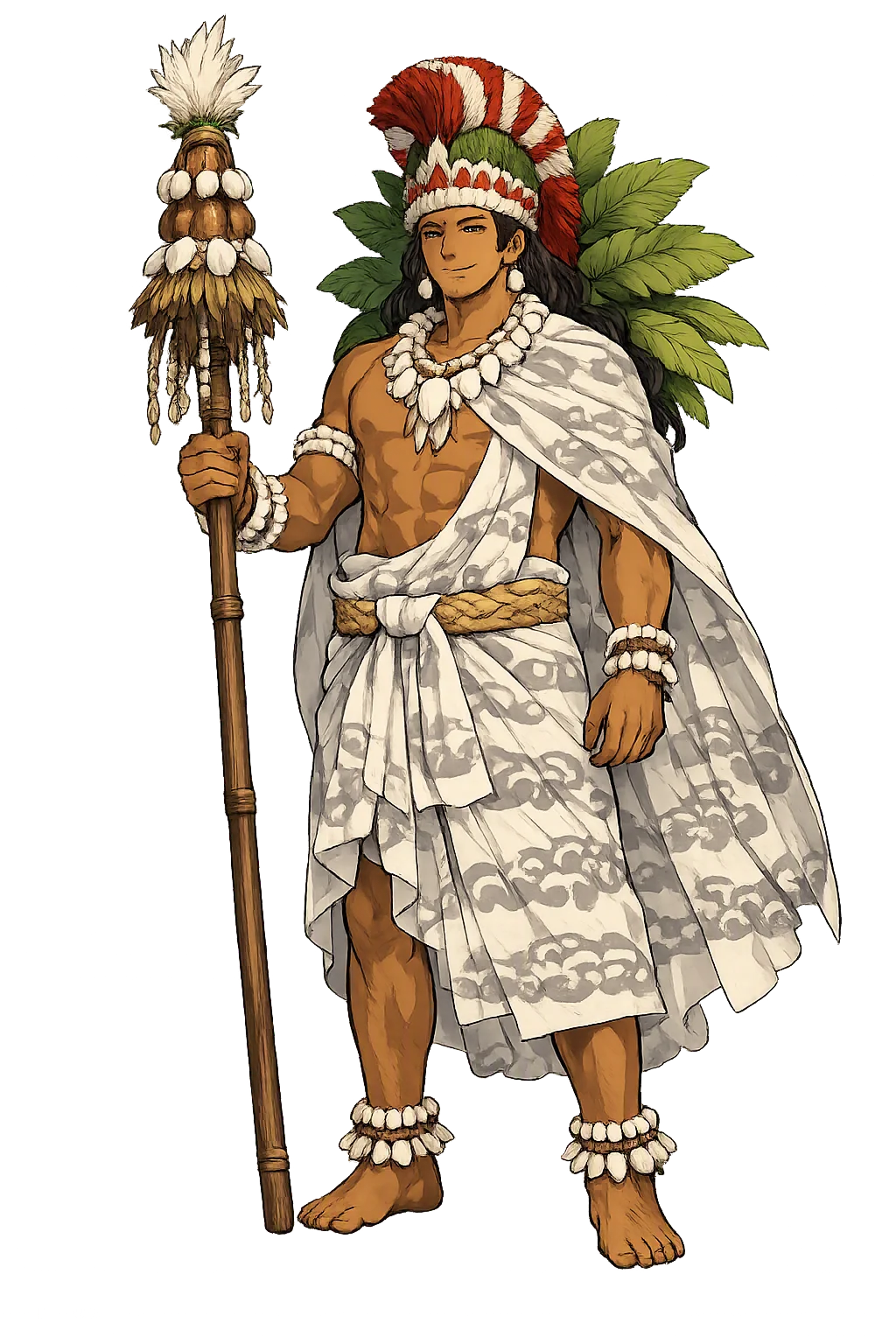
The Cult
Lono's cult had no fixed house, and that was its genius. The god lived in his feathered images — the tall akua loa and the shorter akua poko — kept in the heiau between seasons and taken up when the Pleiades rose, so that the Makahiki was worship as procession: the kahuna of Lono carrying the long god counterclockwise around the island while the season's kapu put war itself under prohibition. At each district boundary the procession halted at the stone ahu, a pig was offered, and the hoʻokupu was laid — taro, gourds, featherwork — the tribute that funded the court, so that taxation and liturgy were a single act and the god collected the year's rent in person. The days between platforms belonged to his games: wrestling, ʻulu maika bowling, surfing, spear-dancing, all played under the god's peace. The modern Makahiki, revived since the 1970s in schools and cultural festivals, consciously re-walks the old circuit — the first worship Lono has known since the kapu system fell in 1819.