PuniCodex

Extended Lore

Lada

Etymology · Orthography · Cult · Iconography · Reception · Sources

Tier 2 Lada
Lada — Love, Beauty, Spring
01

Quick Facts

Essential information about Lada, Love, Beauty, Spring

Scholarly TransliterationLada
Unicode RestorationLada
Reconstructed Pronunciation/lada/
PantheonSlavic
DomainLove, Beauty, Spring
MeaningLady, order
ClassificationTier 2
Primary DomainLada
Sacred SymbolsThe spring round dance (kolo), Jurjevo / Đurđevdan (St George's Day), Lel and Polel, Green branches (zelenika), *ladъ — harmony
02

Etymology & Word Family

From original script to Unicode restoration

Scholarly Transliteration Lada Lada — "Lady, order"
Unicode Restoration Lada Canonical scholarly spelling — ASCII-identical
Modern ASCII lada Plain-ASCII fallback

The name Lada reaches the modern world through scholarly transliteration of the slavic tradition. Because the conventional spelling uses only Latin letters, its Unicode and ASCII forms coincide — the tradition it carries is in the name itself, not in diacritics.

03

Unicode Character Breakdown

Character-by-character philological analysis

CharacterUnicodeNameBlockPhonetic Role
LU+004CLatin Capital Letter LBasic LatinSame, capitalized
aU+0061Latin Small Letter ABasic LatinSame
dU+0064Latin Small Letter DBasic LatinSame
aU+0061Latin Small Letter ABasic LatinSame

The Tier 2 classification here reflects fidelity to the attested tradition, not recovered diacritics: every character of Lada already survives in ASCII. What the restoration preserves is the canonical spelling itself — the form scholarship standardised.

04

Cult & Worship

How the sacred was kept — rites, sanctuaries, remains

The Cult

No temple of Lada has ever been found, and no priesthood is attested; her cult, if cult is the word, lived in the spring calendar. Its witnesses are nineteenth-century ethnographers recording the South-Slavic Jurjevo — St George's Day, when the grazing season opened — when young people cut the green oak (zelenika), danced the round kolo, and sang refrains punctuated by the cry Lado!: greeting, praise, or the goddess herself, the record never says. Northward, Polish and Ukrainian wedding songs keep ladko and lado as endearments for the beloved — the same word softened into courtship. Whether any of this was ever worship in the cultic sense cannot be shown: no dedication names her, no votive names her, no festival text mentions her. What survives is practice without theology — song, branch, circle, season. The modern Rodnover rites that enthrone Lada as a supreme goddess are a deliberate revival, best honored as such rather than mistaken for the folk custom they restage.

In the Earth

No material object can be assigned to Lada, and the catalogue says so plainly: no pre-Christian inscription, figurine, or cult site names her, and the so-called Slavic idols — the Zbruch figure and its kin — depict no identifiable goddess of love. Her 'archaeology' is the archaeology of performance: green-oak branches (zelenika) ritually cut and carried to pasture on Jurjevo, round-dance grounds, and the ritual calendar of Đurđevdan. The written witnesses are manuscripts, not monuments: Długosz's Annales in the Komasius copy (16th century), the 1535 print of Pogrzeb świętej Roksany, and Stryjkowski's Kronika (1582). A goddess whose entire dossier is paper, wax, and song must be honored differently from one with temples — her material record is a living spring.

05

Iconography

How Lada was imaged across the ages

The Image

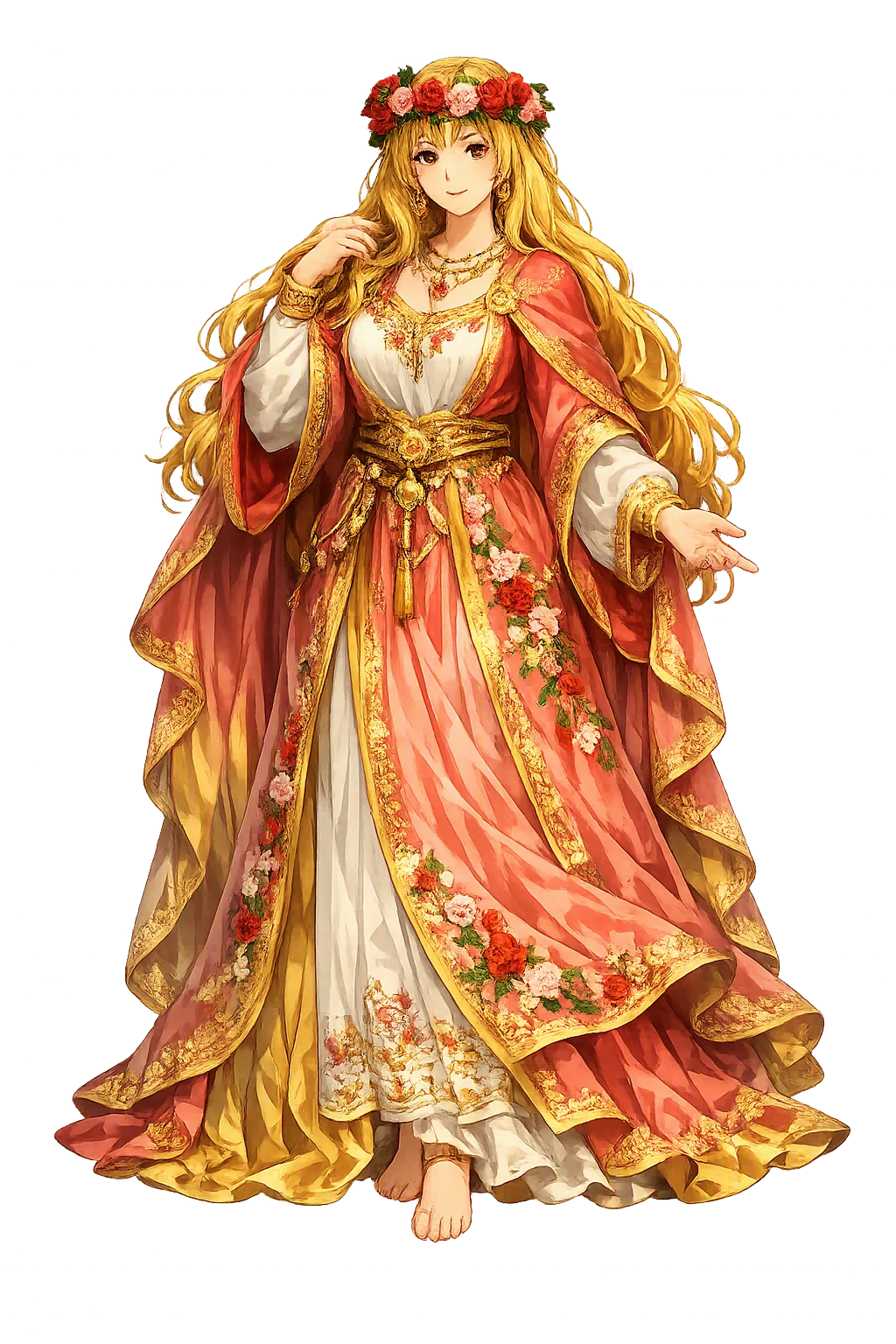
Lada has no ancient image, and no chronicler described her face — Długosz and Stryjkowski offer names, not figures. The so-called Slavic idols, the Zbruch figure and its kin, cannot be assigned to her or to anyone; the reading of a carved female form as 'the goddess of love' is guesswork this catalog declines. Her visual tradition begins in the nineteenth century, when Romantic nationalism painted the Slavic pantheon onto salon canvases and book illustrations: a young woman crowned with flowers beside a green branch — an image composed from the Venus gloss and the ethnographer's notebook, not from any excavated original. Folk practice never needed a statue. The kolo and the zelenika are her iconography — choreography and greenery standing where marble stands for other gods — and the dictionary keeps her features: Polish ład, Czech lad and ladný all descend from the *ladъ scholars hear in her name.

06

Reception & Transformation

The name after its own age — transmission, translation, survival

Afterlives

Lada reached us on paper, carried by people who doubted her. The chain begins with the Komasius manuscript of Jan Długosz's Annales, whose marginal glosses name Lada and Lado; it passes through the Kraków print shop that issued Pogrzeb świętej Roksany in 1535, preserving a goddess as a schoolboy's joke; and it thickens in the Renaissance mythography of Kromer (1555), Stryjkowski (1582), Sarnicki, and Starowolski, who copied one another with growing confidence until a complete love-goddess stood on the page — a paper deity with no temple behind her. Romanticism gave her a second life as scholarship: Afanasyev's Poetic Views of the Slavs on Nature (1865–1869) set her among the great goddesses, and the comparative school repeated her for a century. The twentieth century built the counter-tradition — Gieysztor's careful Mitologia Słowian and Słupecki's skeptical Religia Słowian, which reads the chroniclers as manufacturers. Through every stage the language itself kept the receipt, in ład and ladný — a reception history in which the refrain outlasts its skeptics.

Identifications Across Traditions

Later ages never found a Roman Lada to match her to, so they invented one: Długosz and Stryjkowski gloss her as Venus, Kromer as a love-goddess, and the equation stuck — every early-modern portrait of Lada is Venus in Slavic dress. The honest parallels are structural: the Greek Horai, guardians of spring's order, and the Latvian Laima, who apportions luck and love, fill her functional niche in neighbouring traditions, though no borrowing can be shown. Folk Christianity absorbed her feast without noticing her: Jurjevo became Đurđevdan, St George's Day, and the Balkan Roma keep the same spring festival as Ederlezi. The twentieth century added a final layer: Rodnovery, the modern Slavic Native Faith, enthrones Lada as a supreme goddess of love and cosmic harmony — a reconstruction built, openly and defiantly, on the refrains and the chroniclers alike.

Modern Legacy

Lada's cult centers are songs, not ruins: Jurjevo and Đurđevdan round-dances in Croatia, Serbia, and Bosnia; the Roma Ederlezi, when spring is ritually opened with the green oak; Kupala's fires on St John's Eve in Poland, Belarus, and Ukraine — a sister spring festival whose own antiquity is equally debated. Her name fared better in the dictionary than in the temple: Polish ład 'order, tidiness', Czech lad 'harmony, proportion', and the adjective ladný 'graceful' all descend from the same *ladъ that scholars hear in her name — love as concord made audible. Romanticism painted her on salon canvases; Slavic Native Faith circles hail her today at wedding rites and spring gatherings. No inscription marks her grave because none marks her birth: Lada lives wherever Slavic speakers still sing lado over a bride or a green branch.

07

The Meditation

What Lada means — beyond the dictionary

Most goddesses in this lexicon were carved, inscribed, or sung into epics; Lada survives in the one medium memory never loses — the chorus. Hers is a strange immortality: the sources that name her are late, contradictory, and partly fraudulent, yet the refrain they record is older than any of them, still sung on a Balkan hillside every May. The lesson she teaches is about evidence itself. A word repeated at weddings and spring fires for a thousand years need not have been a god to be holy; ritual can consecrate a syllable. To study Lada is to watch scholarship and devotion negotiate: the scholar asks 'goddess or refrain?', the grandmother answers 'Lado!' — and both are keeping the tradition alive, which may be what tradition is. Her temple, honestly built, is a round dance with no image at its center.

08

Frequently Asked Questions

Common questions about Lada, Love, Beauty, Spring, and Unicode restoration

01How do you pronounce Lada?

In reconstructed pronunciation, Lada is /lada/ — approximately Say "lada" with the stress and length implied by the scholarly restoration "Lada".

02What does Lada mean?

Lada means Lady, order in the slavic tradition.

03What are the symbols of Lada?

Lada is associated with The spring round dance (kolo) (Lado is sung inside the circle dance that opens the grazing season on Jurjevo — the goddess lives in the choreography, not the statue.), Jurjevo / Đurđevdan (St George's Day) (The spring feast whose songs carry her name, absorbed into folk Christianity as St George's day, 6 May.), Lel and Polel (The twin companions named beside her in the Roksana play and the chronicles — love flanked by play and youth.), Green branches (zelenika) (The green oak bough ritually cut for Jurjevo and carried to the pasture — the spring rite's portable sacred tree.), *ladъ — harmony (Her name's root: concord, good order, the reconciliation of lovers — love as cosmic harmony made audible.).

04Why restore Lada in Unicode?

Lada is written entirely in ASCII letters, so its restoration is about canonical fidelity rather than recovered diacritics: the temple fixes the name in its scholarly standard spelling, attested in the source tradition, instead of leaving it to drift.

05What is the most important myth about Lada?

“The Refrain in the Round Dance” — the The Oldest Witness story that anchors the mythology of Lada, told in full on the lore page.

09

Scholarly Sources

The philological foundations of this restoration

Every claim on this page is grounded in established scholarship. The orthographic restorations follow disciplinary convention. The etymological chain follows the best available reference works. This is not invention — it is resurrection through scholarship.

◈

Lexicography & Philology

  • Folklore
  • Ivanov-Toporov
◎

Primary Texts

  • The Primary Chronicle (Povest’ vremennykh let); the Hypatian Codex; East Slavic chronicle tradition and South Slavic folk invocations.
◉

Archaeology & Art History

  • Material evidence — iconography, inscriptions, and temple archaeology — for Lada and related cults.
✦

Religious Studies

  • Długosz, Annales, Book I (the Komasius manuscript glosses on Lada and Lado).
  • Pogrzeb świętej Roksany (The Funeral of St. Roxane), Kraków school drama, printed 1535.
  • Stryjkowski, Kronika (1582) — Lada as goddess of love; Kromer, Polonia (1555).
  • Afanas'ev, Poetic Views of the Slavs on Nature (1865–1869) — the Romantic Lada.
  • Gieysztor, Mitologia Słowian (1982).
  • Słupecki, Religia Słowian (2018) — the skeptical case.
Return

The Surface Awaits

You have traced the name from its earliest attestation to its Unicode restoration. Now return to the myth. The story is where the name lives.

Back to Lore
Lada mascot