
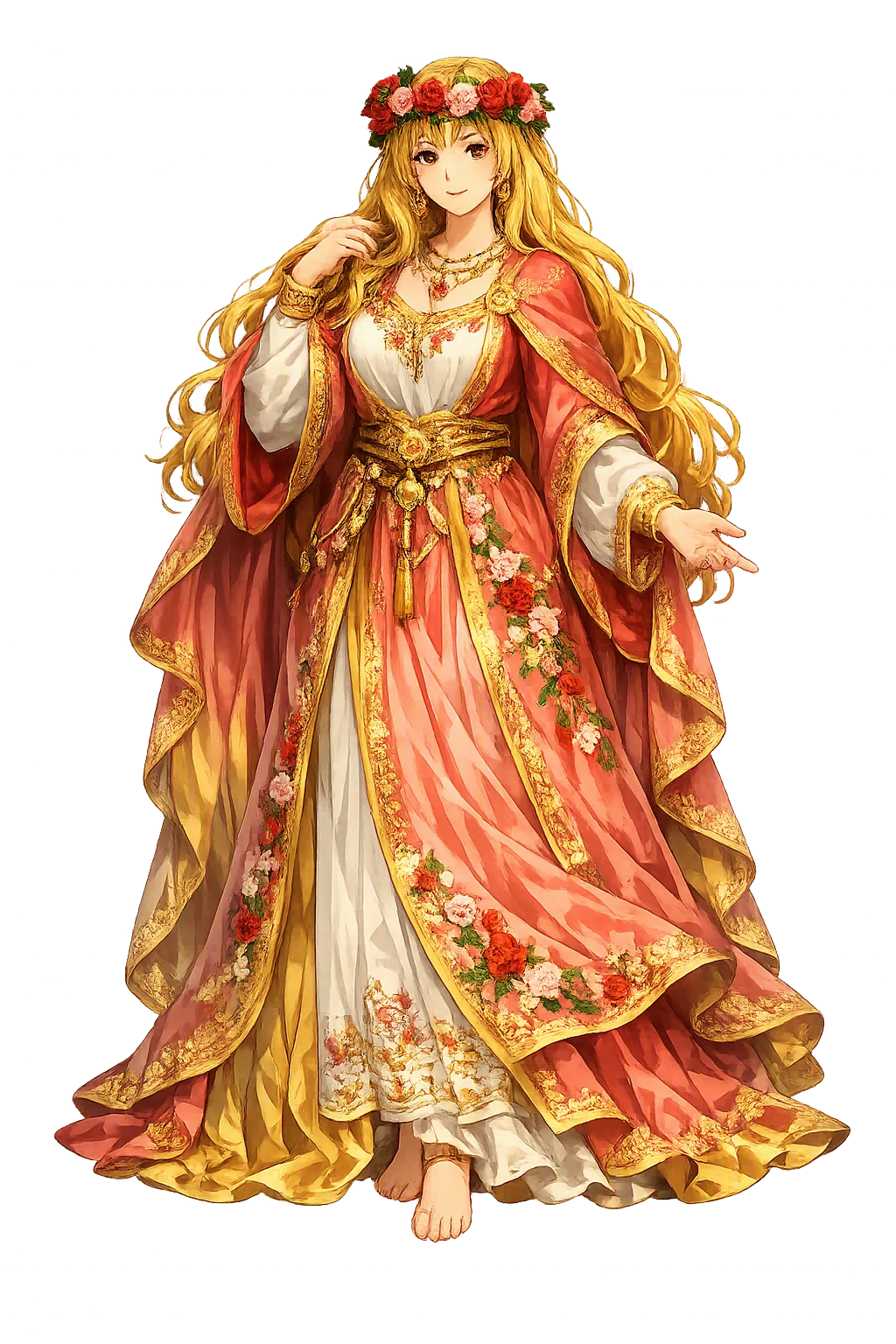
The Cult
No temple of Lada has ever been found, and no priesthood is attested; her cult, if cult is the word, lived in the spring calendar. Its witnesses are nineteenth-century ethnographers recording the South-Slavic Jurjevo — St George's Day, when the grazing season opened — when young people cut the green oak (zelenika), danced the round kolo, and sang refrains punctuated by the cry Lado!: greeting, praise, or the goddess herself, the record never says. Northward, Polish and Ukrainian wedding songs keep ladko and lado as endearments for the beloved — the same word softened into courtship. Whether any of this was ever worship in the cultic sense cannot be shown: no dedication names her, no votive names her, no festival text mentions her. What survives is practice without theology — song, branch, circle, season. The modern Rodnover rites that enthrone Lada as a supreme goddess are a deliberate revival, best honored as such rather than mistaken for the folk custom they restage.