PuniCodex

Extended Lore

Κλειώ Kleiṓ

Etymology · Orthography · Cult · Iconography · Reception · Sources

Tier 1 Kleiṓ.com
Kleiṓ — History
01

Quick Facts

Essential information about Kleiṓ, History

Original ScriptΚλειώ
Unicode RestorationKleiṓ
Reconstructed Pronunciation/kleː.ɔ́ː/
PantheonGreek
DomainHistory
MeaningProclaimer, glorifier
ClassificationTier 1
Primary DomainKleiṓ.com
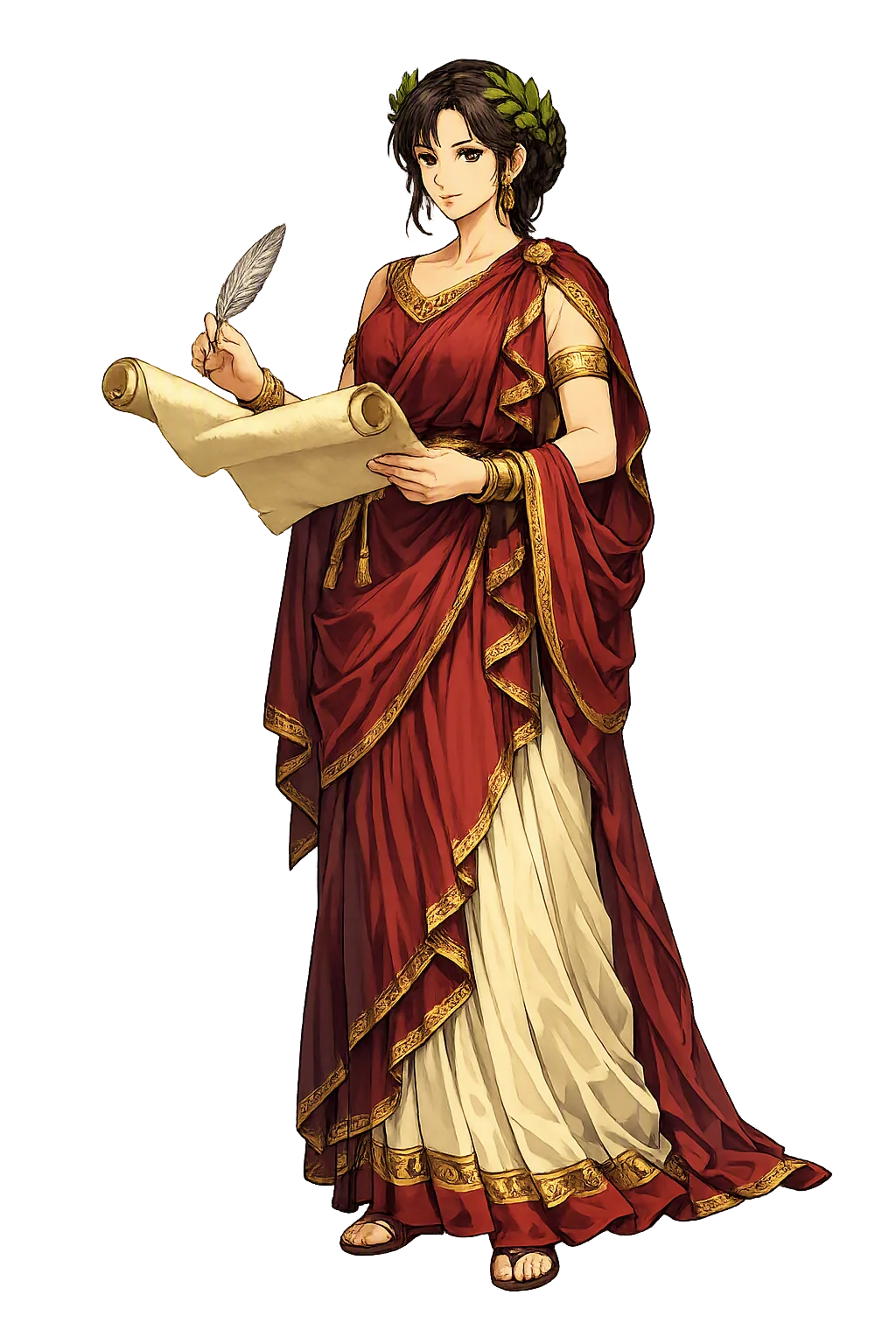
Sacred SymbolsOpen scroll (volumen), Chest of books (capsa), Writing tablets and stylus, Laurel wreath, Trumpet of Fame
02

Etymology & Word Family

From original script to Unicode restoration

Original Script Κλειώ Kleiṓ — "Proclaimer, glorifier"
Unicode Restoration Kleiṓ Restored stress, length, and script
Modern ASCII kleio Plain-ASCII fallback

The name Kleiṓ carries the orthographic signature of the greek tradition: Κλειώ. Unicode restoration recovers what ASCII flattens.

03

Unicode Character Breakdown

Character-by-character philological analysis

CharacterUnicodeNameBlockPhonetic Role
KU+004BLatin Capital Letter KBasic LatinSame
lU+006CLatin Small Letter LBasic LatinSame
eU+0065Latin Small Letter EBasic LatinEpsilon of ει
iU+0069Latin Small Letter IBasic LatinIota of ει
ṓU+1E53Latin Small Letter O with Macron and AcuteUnknownLong omega with acute (Κλειώ)

The Tier 1 classification reflects how much of the original phonology this restoration preserves — stress and vowel length for Greek names, distinctive letters and diacritics for every other tradition.

04

Cult & Worship

How the sacred was kept — rites, sanctuaries, remains

The Cult

Kleiṓ had no separate sanctuary; her cult was the collective cult of the Muses in the Valley of the Muses below Mount Helicon near Thespiai. Pausanias describes the sacred grove, the statues of the nine, and the nearby springs Aganippe and Hippokrene where the Thespians celebrated the Mouseia with musical and athletic contests. Beyond mainland Greece, the great Mouseion of Alexandria — a shrine of the Muses founded under the early Ptolemies — made her name imperial: it housed the famous library and gathered scholars under the patronage of the nine. Modern commemorations are scholarly and institutional rather than ritual, though Helicon remains a place of literary pilgrimage.

In the Earth

Kleiṓ never had a sanctuary of her own; her cult is the collective cult of the Muses. Pausanias (9.29–31) walked the Valley of the Muses below Mount Helicon and describes the sacred grove, the statues of the nine, and the springs Aganippe and Hippokrene near the festival ground where the Thespians held the Mouseia. Beyond Greece, the great Mouseion of Alexandria — literally a 'shrine of the Muses' — made the sisterhood the patronesses of scholarship itself, while Roman sarcophagi identify Kleiṓ within the Muse-choir by her unrolled scroll.

05

Iconography

How Kleiṓ was imaged across the ages

The Image

In classical art Kleiṓ is identified by her attributes rather than by a separate cult image: she holds a scroll or a set of writing tablets, the emblems of history, and is often seated among the other eight Muses. Roman Muse sarcophagi and floor mosaics from the imperial period present the canonical nine, each with her proper sign. In the Renaissance and Baroque periods painters such as Poussin and later decorative cycles in libraries and academies returned to the nine-Muse scheme, giving Kleiṓ the tablet or open book. Modern monuments to history and scholarship — university façades, library frescoes, and the occasional tarot deck — continue to pair her name with the written record.

06

Reception & Transformation

The name after its own age — transmission, translation, survival

Afterlives

Kleiṓ's name became the Greek word for history itself, so her afterlife is inseparable from the discipline she presides over. Roman rhetoricians and grammarians preserved the nine-Muse scheme, and medieval encyclopedists transmitted it through the Mythologiae of Fulgentius and the commentaries on Martianus Capella. The Renaissance humanists embraced her as the patron of written memory, placing her statue in libraries and academies across Europe; the allegorical figure of History in Baroque ceiling painting usually carries the tablet or book that had become Kleiṓ's attribute. In modern commerce the name lives on in the Clio Awards for advertising and the Clio music-and-arts festivals, while popular histories, documentary series, and historical fiction invoke her more loosely as the spirit of the past. Through it all she remains the ancient personification of how societies choose to remember and how they turn memory into narrative.

Identifications Across Traditions

Rome received the Muses wholesale and gave them no new names: Kleiṓ became Clio, invoked by Latin poets and pictured on sarcophagi with her scroll. The native Camenae — Italic spring-nymphs equated with the Muses since Livius Andronicus rendered the Odyssey's 'Musa' as 'Camena' — absorbed the cult but never the individual names. In the Renaissance, Clio was lifted out of the sisterhood altogether and made the personification of History itself, book and trumpet in hand, in iconographic manuals such as Cesare Ripa's Iconologia.

Modern Legacy

She is the one Muse whose name became a discipline's nickname: historians still speak of 'Clio' when they mean their craft personified. The quantitative school of history that rose in the 1960s called itself cliometrics — her name wedded to measurement. The asteroid 84 Klio, discovered in 1865, carries her into the sky, and the Clio Awards borrow her proclamation for advertising. The word 'history' itself descends from her Greek province, ἱστορία, 'inquiry'.

07

The Meditation

What Kleiṓ means — beyond the dictionary

That the Greeks made history a Muse is the fact worth pausing on: the recording of the past was not clerical work but an inspired art, daughter of Memory herself. Her parentage states a whole philosophy — Zeus begets on Mnēmosýnē the power that turns what is remembered into what is proclaimed. For κλέος was what heroes died to win, and Kleiṓ is the arbiter of it: she decides what is still heard when the generations have turned to dust. There is ambivalence in that gift, for memory selects as much as it preserves, and every archive is also an act of omission. Herodotus, her first great servant, understood this: his ἱστορίη is research in the service of fame, so that the deeds of Greeks and barbarians alike should not go aklea — ungloried, unheard.

08

Frequently Asked Questions

Common questions about Kleiṓ, History, and Unicode restoration

01How do you pronounce Kleiṓ?

In reconstructed pronunciation, Kleiṓ is /kleː.ɔ́ː/ — approximately 'kleh-OH' — two syllables; keep the first short and bright, then rise and linger on the long final ō. Not the modern 'KLY-oh'.

02What does Kleiṓ mean?

Kleiṓ means Proclaimer, glorifier in the greek tradition.

03What are the symbols of Kleiṓ?

Kleiṓ is associated with Open scroll (volumen) (Her constant attribute in Roman Muse-sarcophagi and later art: the unrolled record of human deeds.), Chest of books (capsa) (The archive she guards — history as something collected, ordered, and kept.), Writing tablets and stylus (The instruments of the recorder; ἱστορία begins as inquiry set down in notes.), Laurel wreath (The crown of poet and victor alike — kleos is the immortality that song confers.), Trumpet of Fame (A post-classical addition to her iconography: renown proclaimed across the ages.).

04Why restore Kleiṓ in Unicode?

Plain ASCII kleio strips the stress, length, and script that make the name specific. Unicode restoration returns the name to its original written dignity.

05What is the most important myth about Kleiṓ?

“Daughter of Memory” — the Theogony story that anchors the mythology of Kleiṓ, told in full on the lore page.

09

Scholarly Sources

The philological foundations of this restoration

Every claim on this page is grounded in established scholarship. The orthographic restorations follow disciplinary convention. The etymological chain follows the best available reference works. This is not invention — it is resurrection through scholarship.

◈

Lexicography & Philology

  • Liddell, H. G., Scott, R., & Jones, H. S. A Greek-English Lexicon. Oxford: Clarendon Press, 9th ed. 1996.
◎

Primary Texts

  • Hesiod
  • Hesiod, Theogony 53–62, 75–79
  • Herodotus 1.1; Cicero, De Legibus 1.1.5
  • Apollodorus, Bibliotheca 1.3.3
  • Ovid, Metamorphoses 10.162–219
  • Pausanias 9.29–31
  • Orphic Hymn 76 (to the Muses)
◉

Archaeology & Art History

  • Material evidence — iconography, inscriptions, and temple archaeology — for Kleiṓ and related cults.
✦

Religious Studies

  • Comparative studies of greek religion and the place of Kleiṓ within it.
Return

The Surface Awaits

You have traced the name from its earliest attestation to its Unicode restoration. Now return to the myth. The story is where the name lives.

Back to Lore
Kleiṓ mascot