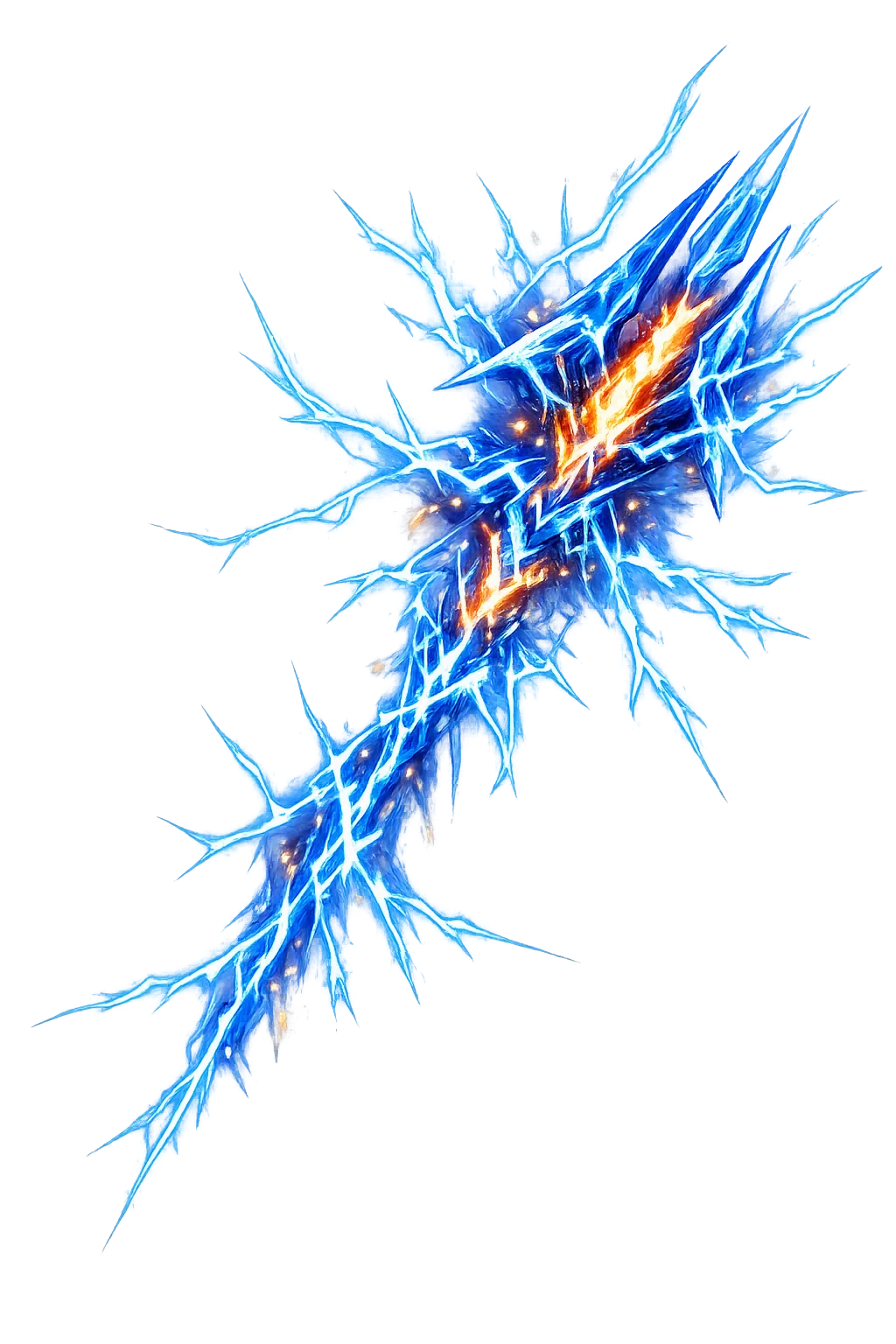
PuniCodex

Extended Lore

κεραυνός Keraunós

Etymology · Orthography · Cult · Iconography · Reception · Sources

Tier 2 Keraunós.com
Keraunós — Thunderbolt
01

Quick Facts

Essential information about Keraunós, Thunderbolt

Original Scriptκεραυνός
Unicode RestorationKeraunós
Reconstructed Pronunciation/keraˈunos/
PantheonGreek
DomainThunderbolt
MeaningThunderbolt (the weapon of Zeus)
ClassificationTier 2
Primary DomainKeraunós.com
Sacred SymbolsThe twin-tined bolt, Eagle, Lightning as omen, The oak of Dodona
02

Etymology & Word Family

From original script to Unicode restoration

Proto-indo-european *ker- to strike, horn
Original Script κεραυνός Keraunós — "Thunderbolt (the weapon of Zeus)"
Unicode Restoration Keraunós Restored stress, length, and script
Modern ASCII keraunos Plain-ASCII fallback

Greek κεραυνός 'thunderbolt'; from κεραυνός, the smiting weapon of Zeus.

03

Unicode Character Breakdown

Character-by-character philological analysis

CharacterUnicodeNameBlockPhonetic Role
KU+004BLatin Capital Letter KBasic LatinKappa
eU+0065Latin Small Letter EBasic LatinEpsilon
rU+0072Latin Small Letter RBasic LatinRho
aU+0061Latin Small Letter ABasic LatinAlpha
uU+0075Latin Small Letter UBasic LatinUpsilon
nU+006ELatin Small Letter NBasic LatinNu
óU+00F3Latin Small Letter O with AcuteLatin-1 SupplementAcute on omicron
sU+0073Latin Small Letter SBasic LatinSigma

The Tier 2 classification reflects how much of the original phonology this restoration preserves — stress and vowel length for Greek names, distinctive letters and diacritics for every other tradition.

04

Cult & Worship

How the sacred was kept — rites, sanctuaries, remains

The Cult

The thunderbolt was a primary focus of Zeus's cult across the Greek world. Votive deposits at Olympia, Dodona, and on the Capitoline contained hundreds of cast bronze and terracotta zigzag thunderbolts, offerings made where lightning had been interpreted as a divine sign. Cities that suffered a lightning strike often buried the bolt as apis, something sacred and untouchable. Phidias's colossal Zeus at Olympia held a gilded thunderbolt, making the weapon visible at the most prestigious sanctuary of the god. The cultic message was clear: the keraunos was Zeus's signature and the sign of his immediate presence.

In the Earth

The bolt's material life was votive: Greeks and Romans dedicated cast bronze and terracotta thunderbolts by the hundreds at Olympia, Dodona, and on the Capitoline — small zigzag ingots left where lightning had been read as a sign. The masterpiece was cult-size: Phidias's chryselephantine Zeus at Olympia held a thunderbolt tipped with gold in his right hand and an eagle on his sceptre, and was counted among the wonders of the world (Pausanias 5.11). Coins of Elis and of countless Greek cities mint the bolt beside the eagle until it becomes the god's signature. Rome carried it too: the fulmen decorates legionary standards and the cuirasses of emperors claiming Jove's protection, an emblem that marched.

05

Iconography

How Keraunós was imaged across the ages

The Image

The keraunos appears first as a votive object — small bronze or terracotta zigzag ingots — and then as the attribute of power. Phidias's chryselephantine Zeus at Olympia held a thunderbolt tipped with gold in his right hand, an image known from ancient descriptions and later copies. Vase painters showed Zeus hurling the weapon from Olympus, and Hellenistic and Roman rulers placed the thunderbolt on coins to claim divine sanction. In Roman art Jupiter's fulmen carried the same jagged form, which became the standard emblem of sovereign, sky, and storm power throughout classical antiquity.

06

Reception & Transformation

The name after its own age — transmission, translation, survival

Afterlives

The thunderbolt of Zeus passed from Hesiod and Homer through Pausanias and into the standard apparatus of classical religion and art. Roman Jupiter inherited the weapon as the fulmen, and imperial iconography made it a badge of worldly authority. After antiquity the bolt survived in Byzantine and medieval world chronicles, Renaissance mythological manuals, and Baroque and Neoclassical paintings of Jupiter or Zeus. In the modern era it has become a universal symbol of sudden power — used by states, sports teams, military insignia, and comic-book characters from Captain Marvel to Wonder Woman — while scholars continue to trace its origins from Minoan-Mycenaean storm-god imagery through the Greek keraunos to the Roman eagle and fulmen. Its jagged silhouette remains one of the most instantly recognizable symbols of divine power in the Western tradition.

Identifications Across Traditions

Rome received the bolt as the fulmen of Jupiter, and made of it a monument: the temple of Jupiter Tonans on the Capitoline was vowed by Augustus after a lightning strike narrowly spared his life (Suetonius, Augustus 29.3), turning the weapon into a memorial of divine warning rather than mere force. Imperial coinage pairs eagle and bolt until the emblem outgrows any single god — by late antiquity the thunderbolt is simply the sign of heaven's displeasure, and Christian art keeps it flickering in the margins of judgment scenes. The word itself survives in Modern Greek κεραυνός, 'lightning', and in the learned coinage 'keraunograph', the lightning recorder: a weapon of the gods still employed, as technology, to listen to storms.

Modern Legacy

The keraunós became the default metaphor for suddenness itself; Greek and Latin writers reach for it whenever fate moves faster than thought. In the modern world the bolt's silhouette — a jagged zigzag — became the universal icon of electricity, the god's weapon re-signed as physics: every switch-plate and warning label still carries a little Olympus. The word echoed back into theology as well — thunderbolt imagery anchors theophany from Sinai to Delphi — and forward into fantasy, where the lightning bolt remains the grammar of divine anger in every mythology that never knew Hesiod. Restoring the acute accent of Keraunós returns the pitch to the word the sky was supposed to speak with.

07

The Meditation

What Keraunós means — beyond the dictionary

Every pantheon has a weapon; only the Greeks made the weapon a word of its own. Keraunós names not thunder but the bolt — the compact, thrown thing, power that has decided to land. It cannot be parried, dodged, or argued with: Semele's tragedy and Salmoneus's comedy are the two human postures before it, love and imitation, both fatal. Perhaps that is why Zeus rarely aims it at equals. The bolt is reserved for the moments when the cosmos itself must speak, and the gods' usual instruments — cunning, oath, marriage — have gone quiet. A temple of the thunderbolt is therefore a temple of ultimacy: the address where heaven keeps its last word, and where mortals learn that the last word is not a sentence but a light.

08

Frequently Asked Questions

Common questions about Keraunós, Thunderbolt, and Unicode restoration

01How do you pronounce Keraunós?

In reconstructed pronunciation, Keraunós is /keraˈunos/ — approximately 'keh-raow-NOSS' — the pitch rises on the final syllable, which stays short and sharp.

02What does Keraunós mean?

Keraunós means Thunderbolt (the weapon of Zeus) in the greek tradition.

03What are the symbols of Keraunós?

Keraunós is associated with The twin-tined bolt (The stylized lightning of Greek art — a ribbed, double-pointed shaft, always shown in Zeus's raised hand.), Eagle (The thunder-bird that carries the bolt in myth and holds it on coinage.), Lightning as omen (A flash on the right read as Zeus's assent; armies waited for it before advancing (Iliad 2.353–354).), The oak of Dodona (Zeus's prophetic tree, where the storm-god spoke through rustling leaves (Iliad 16.233–235).).

04Why restore Keraunós in Unicode?

Plain ASCII keraunos strips the stress, length, and script that make the name specific. Unicode restoration returns the name to its original written dignity.

05What is the most important myth about Keraunós?

“The Cyclopes Arm Zeus” — the The Forging story that anchors the mythology of Keraunós, told in full on the lore page.

09

Scholarly Sources

The philological foundations of this restoration

Every claim on this page is grounded in established scholarship. The orthographic restorations follow disciplinary convention. The etymological chain follows the best available reference works. This is not invention — it is resurrection through scholarship.

◈

Lexicography & Philology

  • Liddell, H. G., Scott, R., & Jones, H. S. A Greek-English Lexicon. Oxford: Clarendon Press, 9th ed. 1996.
◎

Primary Texts

  • Homer
  • Hesiod, Theogony 139–141, 501–506, 687–721, 853–868
  • Apollodorus, Library 1.9.7 (Salmoneus), 3.4.3 (Semele)
  • Homer, Iliad 2.353–354, 8.75, 14.323–325, 16.233–235
  • Pausanias 5.11.1–7 (the Olympian Zeus of Phidias)
  • Virgil, Aeneid 6.585–594
◉

Archaeology & Art History

  • Material evidence — iconography, inscriptions, and temple archaeology — for Keraunós and related cults.
✦

Religious Studies

  • Beekes, Etymological Dictionary of Greek, s.v. κεραυνός
Return

The Surface Awaits

You have traced the name from its earliest attestation to its Unicode restoration. Now return to the myth. The story is where the name lives.

Back to Lore
Keraunós mascot