PuniCodex

Extended Lore

कल्कि Kalki

Etymology · Orthography · Cult · Iconography · Reception · Sources

ASCII-equivalent form Kalki
Kalki — Prophecy, Renewal, Avatar of Vishnu
01

Quick Facts

Essential information about Kalki, Prophecy, Renewal, Avatar of Vishnu

Original Scriptकल्कि
Unicode RestorationKalki
Reconstructed Pronunciation/ˈkɑːlki/
PantheonSanskrit
DomainProphecy, Renewal, Avatar of Vishnu
MeaningThe avatāra yet to come — the tenth and final avatāra of Viṣṇu, who appears at the end of the Kali Yuga riding a white horse to destroy unrighteousness and restore the age of truth
ClassificationASCII-equivalent form
Primary DomainKalki
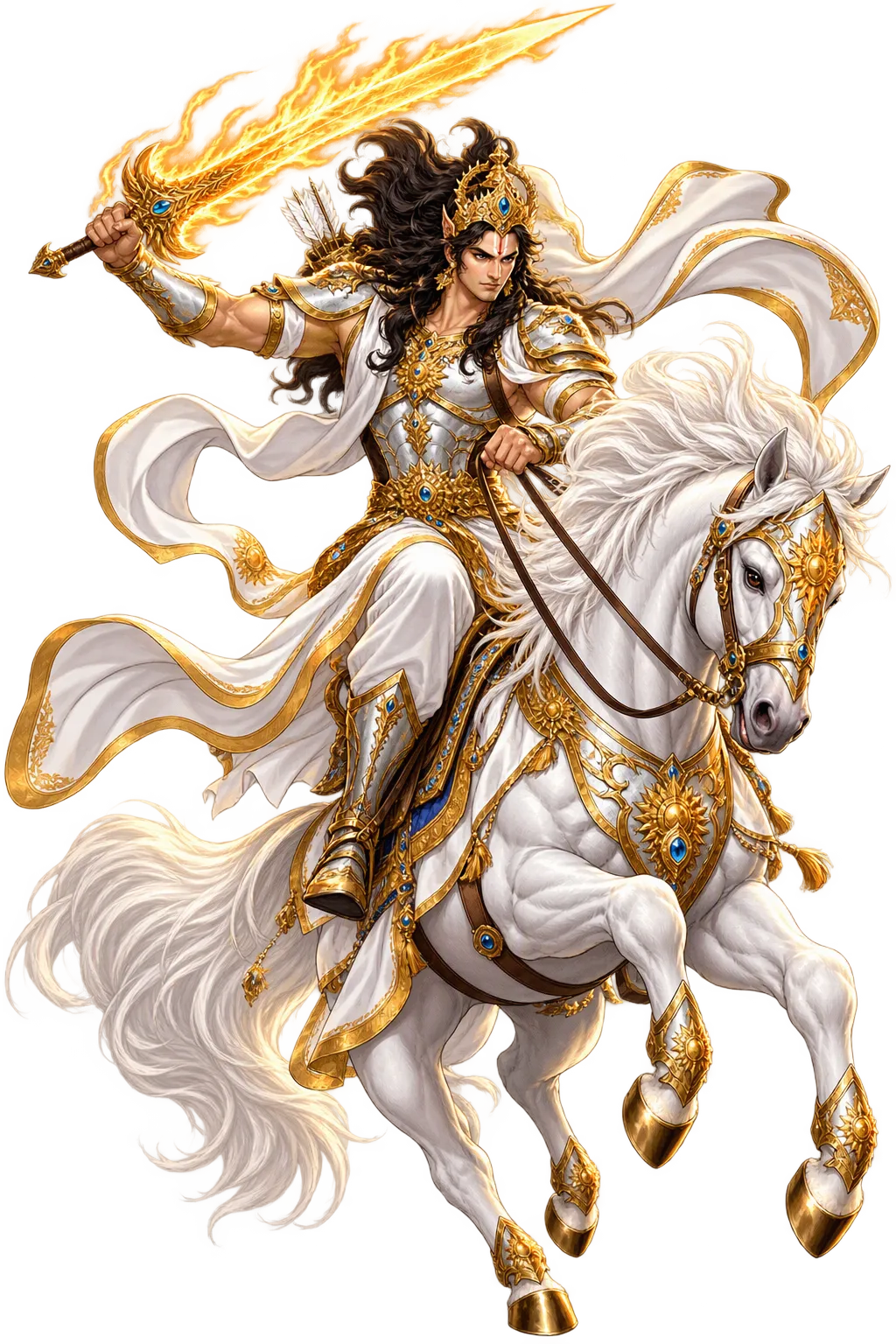
Sacred SymbolsThe White Horse, The Sword of the Age, Born in Śambhala, The Restarter of Time
02

Etymology & Word Family

From original script to Unicode restoration

Original Script कल्कि Kalki — "The avatāra yet to come — the tenth and final avatāra of Viṣṇu, who appears at the end of the Kali Yuga riding a white horse to destroy unrighteousness and restore the age of truth"
Unicode Restoration Kalki Canonical scholarly spelling — ASCII-identical
Modern ASCII kalki Plain-ASCII fallback

The name Kalki reaches the modern world through scholarly transliteration of the sanskrit tradition. Because the conventional spelling uses only Latin letters, its Unicode and ASCII forms coincide — the tradition it carries is in the name itself, not in diacritics.

03

Unicode Character Breakdown

Character-by-character philological analysis

CharacterUnicodeNameBlockPhonetic Role
KU+004BLatin Capital Letter KBasic LatinSame
aU+0061Latin Small Letter ABasic LatinShort /a/
lU+006CLatin Small Letter LBasic LatinSame
kU+006BLatin Small Letter KBasic LatinSame
iU+0069Latin Small Letter IBasic LatinShort /i/

This restoration reflects fidelity to the attested tradition, not recovered diacritics: every character of Kalki already survives in ASCII. What the restoration preserves is the canonical spelling itself — the form scholarship standardised.

04

Cult & Worship

How the sacred was kept — rites, sanctuaries, remains

The Cult

His cult is expectation: the recitation of the Kali-Yuga signs, the keeping of the Dashavatāra sequence with the tenth place left open. In South India, Kalki devotion has produced modern temples — the only god in the lexicon whose shrines post-date his prophecy’s writing.

In the Earth

No ancient Kalki temples — he has not yet been born. But his images ride through South Indian temple friezes of the Dashavatāra, and the Śambhala iconography of Tibetan thangkas gives his myth a monumental afterlife in paint across the Himalayas.

05

Iconography

How Kalki was imaged across the ages

The Image

A blazing horseman on Devadatta, sword high, often four-armed with bow and discus — Vishnu’s weapons on the rider’s frame. The comet’s tail marks his banner; behind him the armies of the age’s end ride out from Śambhala’s gates.

06

Reception & Transformation

The name after its own age — transmission, translation, survival

Afterlives

Comparative eschatology sets Kalki beside the Mahdi, the Maitreya, and the Second Coming as the great expected ones — but unique among them in arriving by prophecy rather than promise. Modern fiction from Gore Vidal’s Kalki to manga has made his name a byword for the terminal avatar.

Identifications Across Traditions

The Kalki cycle absorbed apocalyptic expectations from every quarter: the White Horse echoes the sun-horse of Indo-Iranian myth; the sword of the age borrows Paraśurāma’s axe; and Śambhala, his hidden kingdom, became the axis of Tibetan Buddhism’s Kalacakra — the wheel of time teachings centred on the king who will come.

Modern Legacy

Kalki is eschatology’s most durable prophetic figure in the living world: films, novels, and comics re-stage his coming endlessly, and ‘waiting for Kalki’ is an idiom for expecting the end of a corrupt order. The Śambhala legend seeded Theosophy’s Shambhala and, through it, a century of Western occult geography.

07

The Meditation

What Kalki means — beyond the dictionary

Kalki: a name that is a countdown. Restored plainly, it stands at the lexicon’s far edge — the god who has no past tense. Every other entry in this temple restores what was; this one restores what will be, and the plain letters are appropriate: the last avatāra needs no decoration on his way to end the age.

08

Frequently Asked Questions

Common questions about Kalki, Prophecy, Renewal, Avatar of Vishnu, and Unicode restoration

01How do you pronounce Kalki?

In reconstructed pronunciation, Kalki is /ˈkɑːlki/ — approximately “KAHL-kee”.

02What does Kalki mean?

Kalki means The avatāra yet to come — the tenth and final avatāra of Viṣṇu, who appears at the end of the Kali Yuga riding a white horse to destroy unrighteousness and restore the age of truth in the sanskrit tradition.

03What are the symbols of Kalki?

Kalki is associated with The White Horse (Devadatta, the winged white steed, given by Śiva; Kalki rides from Śambhala at the age’s end.), The Sword of the Age (Ratnamaru, the jewelled sword, given by the gods — it ends the Kali Yuga as a blade ends a lie.), Born in Śambhala (His village, Śambhala, waits hidden; when dharma’s four legs shrink to one, he is born there.), The Restarter of Time (After the sword, the restart: Kalki inaugurates the next Kṛta Yuga — death midwifing rebirth.).

04Why restore Kalki in Unicode?

Kalki is written entirely in ASCII letters, so its restoration is about canonical fidelity rather than recovered diacritics: the temple fixes the name in its scholarly standard spelling, attested in the source tradition, instead of leaving it to drift.

05What is the most important myth about Kalki?

“The Prophecy of the Horse” — the Mahābhārata 3.191 story that anchors the mythology of Kalki, told in full on the lore page.

09

Scholarly Sources

The philological foundations of this restoration

Every claim on this page is grounded in established scholarship. The orthographic restorations follow disciplinary convention. The etymological chain follows the best available reference works. This is not invention — it is resurrection through scholarship.

◈

Lexicography & Philology

  • Mahabharata
  • Puranas
  • Bhagavata
  • MW
◎

Primary Texts

  • The Ṛgveda; the Śatapatha Brāhmaṇa; the early Upaniṣads; the Śiva Purāṇa and Liṅga Purāṇa.
◉

Archaeology & Art History

  • Material evidence — iconography, inscriptions, and temple archaeology — for Kalki and related cults.
✦

Religious Studies

  • Mahābhārata 3.191 (the earliest Kalki prophecy)
  • Kalki Purāṇa (the full biography)
  • Bhaviṣya Purāṇa (the Kali Yuga lists)
  • Kalacakra tradition (Śambhala)
Return

The Surface Awaits

You have traced the name from its earliest attestation to its Unicode restoration. Now return to the myth. The story is where the name lives.

Back to Lore
Kalki mascot