
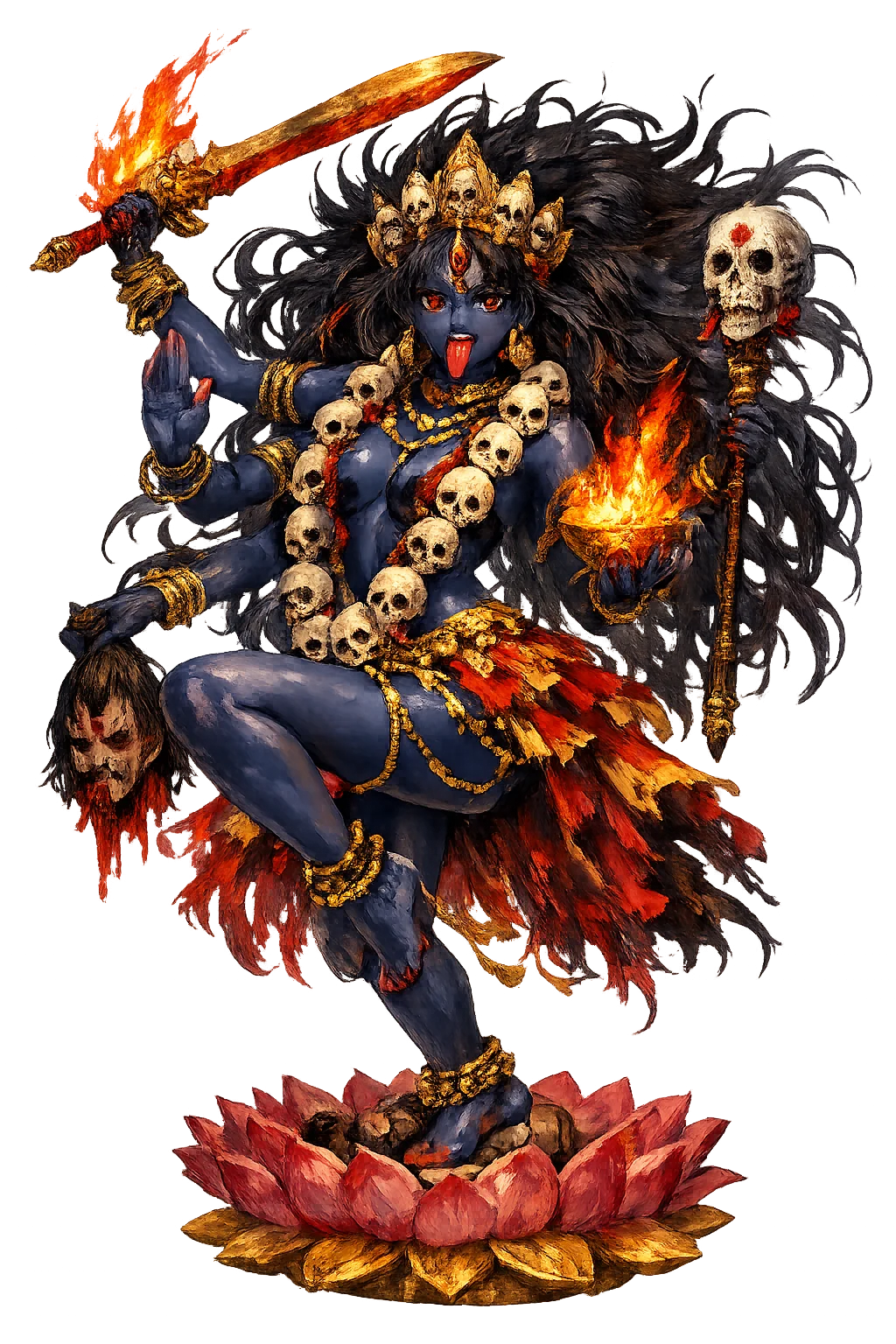
The Cult
Kālī's cult is documented best where it still lives: Bengal. The Kālīghāṭ ghaṭ on the Hooghly, counted among the fifty-one Śakti Pīṭhas where Satī's toes fell, drew worshippers for centuries before the present temple rose in 1809, and hereditary pujārī families still serve her there. Bengali tradition credits the sixteenth-century Tantric Krishnananda Agamavagīśa, author of the Tāntrasāra, with fixing her great public festival — Kālī Pūjā, on the new moon of Kārtik — after the goddess herself commanded it in a vision; it remains Bengal's second great festival night. The rites have always carried her ferocity: historically, goat sacrifice at her great temples, red hibiscus heaped before the image, and, in the Tantric current, cremation-ground sādhanā by initiates who approach her as the void itself. In Assam, where the Kālikā Purāṇa was composed, the great Śākta seat of Kāmākhyā kept her within its cycle of Tantric worship. None of this is antiquarian: the calendar, the offerings, and the possessive devotion of her votaries form a continuous living cult.