PuniCodex

Extended Lore

ᛁᚢᚱᛘᚢᚾᚴᛅᚾᛏᚱ Jǫrmungandr

Etymology · Orthography · Cultural Legacy · Reception · Primary Sources

Tier 1 Jǫrmungandr.com
Jǫrmungandr — World Serpent
01

Quick Facts

Essential information about Jǫrmungandr, World Serpent

Original Scriptᛁᚢᚱᛘᚢᚾᚴᛅᚾᛏᚱ
Unicode RestorationJǫrmungandr
Reconstructed Pronunciation/ˈjɔrˌmun.ɡan.dr/
PantheonNorse
DomainWorld Serpent
MeaningHuge monster (from jǫrmun + gandr)
ClassificationTier 1
Primary DomainJǫrmungandr.com
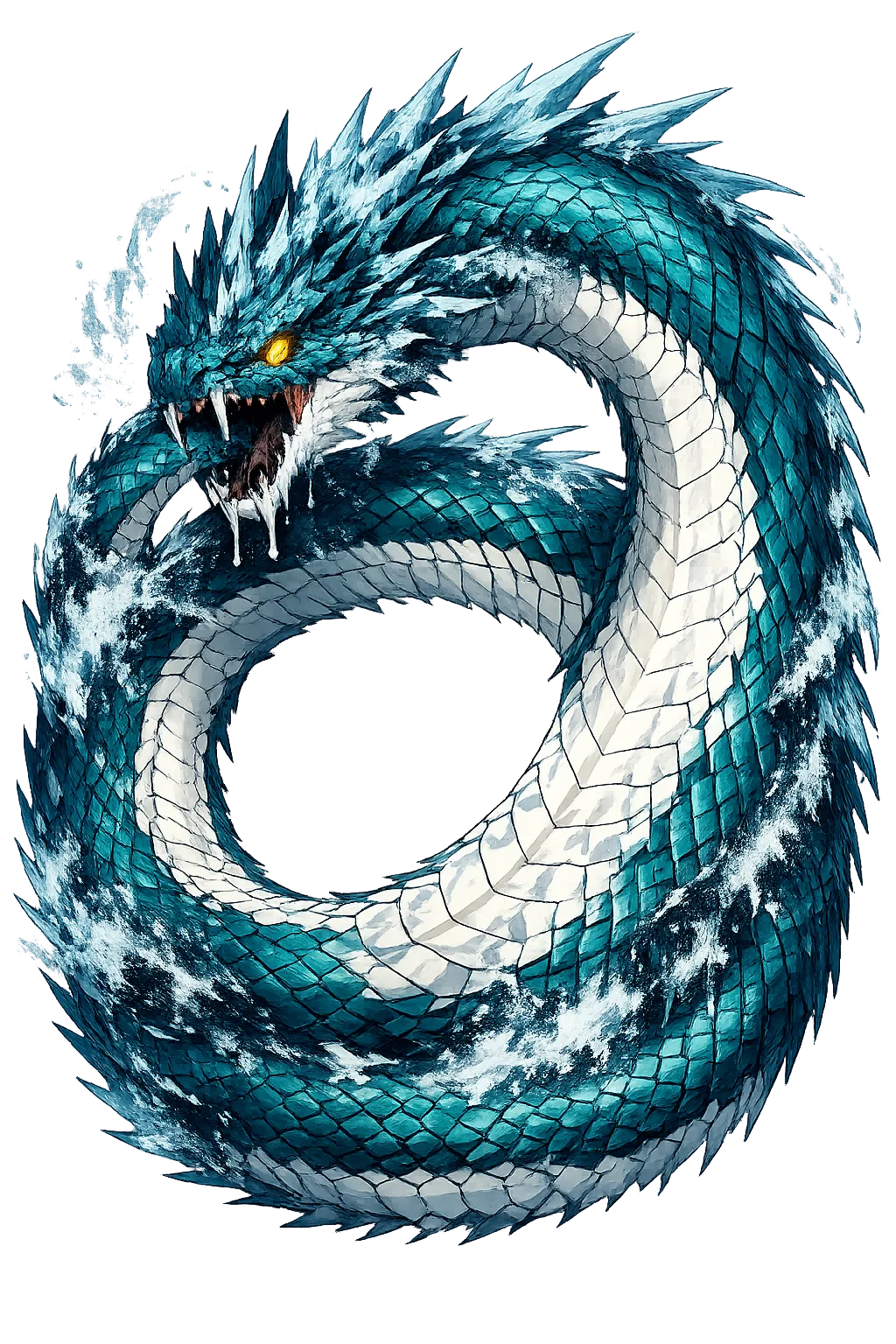
Sacred SymbolsCoiled serpent biting its tail, Ocean, Ox-head bait, Venom
02

Etymology & Word Family

From original script to Unicode restoration

Original Script ᛁᚢᚱᛘᚢᚾᚴᛅᚾᛏᚱ Jǫrmungandr — "Huge monster (from jǫrmun + gandr)"
Unicode Restoration Jǫrmungandr Restored stress, length, and script
Modern ASCII jormungandr Plain-ASCII fallback

The name Jǫrmungandr carries the orthographic signature of the norse tradition: ᛁᚢᚱᛘᚢᚾᚴᛅᚾᛏᚱ. Unicode restoration recovers what ASCII flattens.

03

Unicode Character Breakdown

Character-by-character philological analysis

CharacterUnicodeNameBlockPhonetic Role
JU+004ALatin Capital Letter JBasic LatinSame
ǫU+01EBLatin Small Letter O with OgonekLatin Extended-BO-hook: short /ɔ/ vowel
rU+0072Latin Small Letter RBasic LatinSame
mU+006DLatin Small Letter MBasic LatinSame
uU+0075Latin Small Letter UBasic LatinSame
nU+006ELatin Small Letter NBasic LatinSame
gU+0067Latin Small Letter GBasic LatinSame
aU+0061Latin Small Letter ABasic LatinSame
nU+006ELatin Small Letter NBasic LatinSame
dU+0064Latin Small Letter DBasic LatinSame
rU+0072Latin Small Letter RBasic LatinSame

The Tier 1 classification reflects how much of the original phonology this restoration preserves — stress and vowel length for Greek names, distinctive letters and diacritics for every other tradition.

04

Cultural Significance

From ancient cult to modern memory

Jǫrmungandr in Later Traditions

The tail-biting serpent is not unique to Norse myth. Comparable figures include the Greek Ouroboros, the Egyptian Mehen, and various Indo-European and Near Eastern dragon-serpents that encircle the cosmos or guard the boundary between worlds. Some scholars see Jǫrmungandr as a specifically Germanic development of an Indo-European 'chaos monster' defeated by a thunder-god, comparable to the Vedic Vṛtra slain by Indra or the Babylonian Tiamat defeated by Marduk. The figure of the world-serpent also influenced medieval Christian art and early modern alchemy, where the ouroboros became a symbol of cyclical renewal.

Modern Legacy

Jǫrmungandr has become one of the most iconic images of Norse mythology, appearing in comics, films, video games, and fantasy novels as the world-serpent and the destined killer of Thor. Its ouroboros form has been adopted by esoteric traditions as a symbol of eternity, self-reflexivity, and cosmic wholeness. In modern Heathenry, Jǫrmungandr is honored as a force of necessary limitation — the boundary that holds the world together even as it threatens to crush it.

In the Earth

The Altuna runestone in Uppland, Sweden (U 1161) is the most famous pictorial attestation of Þórr fishing for Jǫrmungandr, showing the god in a boat with his hammer raised and the serpent at the line. Gosforth Cross in Cumbria and other Scandinavian runestones depict related scenes. Mjöllnir amulets, though not directly depicting the serpent, belong to the same visual culture in which Þórr's cosmic battles were central. The ouroboros motif appears independently in Greek, Egyptian, and medieval European iconography.

05

The Meditation

What Jǫrmungandr means — beyond the dictionary

Jǫrmungandr is the boundary made flesh. It holds the world in place by encircling it, yet its very presence is a threat. The serpent is not evil in a moral sense; it is simply too large, too ancient, too other to coexist peacefully with the gods.

The myth teaches that every order contains its own undoing. The ocean that protects Miðgarðr also nourishes the beast that will drown it. Þórr's final walk of nine paces after killing the serpent is one of the most moving images in the corpus: victory and death arrive together, and even the strongest god cannot save himself from the venom of the world he defended.

06

Screen & Culture

Where Jǫrmungandr echoes through film, television, and games — and how

07

Frequently Asked Questions

Common questions about Jǫrmungandr, World Serpent, and Unicode restoration

01How do you pronounce Jǫrmungandr?

In reconstructed pronunciation, Jǫrmungandr is /ˈjɔrˌmun.ɡan.dr/ — approximately 'YOR-mun-gand-r' — stress the first syllable, pronounce the 'or' like the 'o' in 'hot' with an r-color, and keep the final r light and trilled.

02What does Jǫrmungandr mean?

Jǫrmungandr means Huge monster (from jǫrmun + gandr) in the norse tradition.

03What are the symbols of Jǫrmungandr?

Jǫrmungandr is associated with Coiled serpent biting its tail (The ouroboros, an image of the world bounded by a single endless body), Ocean (The watery realm into which Jǫrmungandr was cast and in which it grew), Ox-head bait (The bait Þórr used when he fished for the serpent in Hymiskviða), Venom (The poison that will kill Þórr even after he slays the worm at Ragnarök).

04Why restore Jǫrmungandr in Unicode?

Plain ASCII jormungandr strips the stress, length, and script that make the name specific. Unicode restoration returns the name to its original written dignity.

05What is the most important myth about Jǫrmungandr?

“The Casting into the Sea” — Jǫrmungandr is one of the three great threats to the gods, alongside Fenrir and Hel. It does not speak in the myths, yet its body defines the shape of the world and its final battle with Þórr is one of the climactic moments of Ragnarök. The full telling lives on the lore page.

08

Scholarly Sources

The philological foundations of this restoration

Every claim on this page is grounded in established scholarship. The orthographic restorations follow disciplinary convention. The etymological chain follows the best available reference works. This is not invention — it is resurrection through scholarship.

Lexicography & Philology

  • Cleasby-Vigfusson
  • Zoëga

Primary Texts

Archaeology & Art History

  • Material evidence — iconography, inscriptions, and temple archaeology — for Jǫrmungandr and related cults.

Religious Studies

  • Cleasby & Vigfusson, An Icelandic-English Dictionary (1874), s.v. jǫrmun-, gandr
  • Zoëga, A Concise Dictionary of Old Icelandic (1910)
  • de Vries, Jan, Altgermanische Religionsgeschichte
  • Simek, Rudolf, Dictionary of Northern Mythology
  • Lindow, John, Norse Mythology: A Guide to the Gods, Heroes, Rituals, and Beliefs
Return

The Surface Awaits

You have traced the name from its earliest attestation to its Unicode restoration. Now return to the myth. The story is where the name lives.

Back to Lore
Jǫrmungandr mascot