PuniCodex

Extended Lore

Ἰφιγένεια Iphigéneia

Etymology · Orthography · Cult · Iconography · Reception · Sources

Tier 2 Iphigéneia
Iphigéneia — Sacrifice, Winds, Aulis
01

Quick Facts

Essential information about Iphigéneia, Sacrifice, Winds, Aulis

Original ScriptἸφιγένεια
Unicode RestorationIphigéneia
Reconstructed Pronunciation/iphigeneia/
PantheonGreek
DomainSacrifice, Winds, Aulis
MeaningMighty-born (ἶφι "by might" + γένος "birth")
ClassificationTier 2
Primary DomainIphigéneia
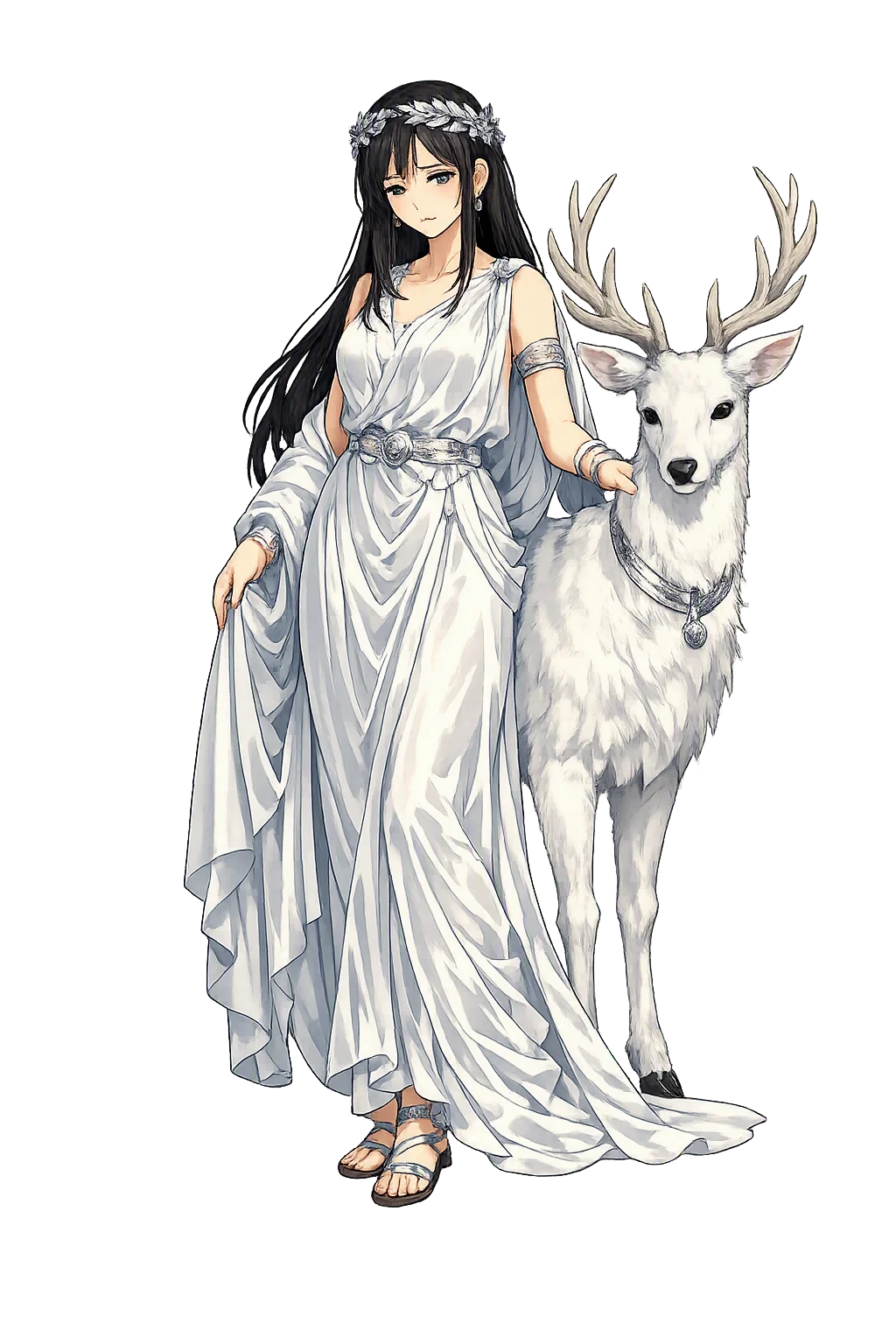
Sacred SymbolsThe saffron robe, The deer, The letter, The bear (arktos), The becalmed sea
02

Etymology & Word Family

From original script to Unicode restoration

Original Script Ἰφιγένεια Iphigéneia — "Mighty-born (ἶφι "by might" + γένος "birth")"
Unicode Restoration Iphigéneia Restored stress, length, and script
Modern ASCII iphigeneia Plain-ASCII fallback

The name Iphigéneia carries the orthographic signature of the greek tradition: Ἰφιγένεια. Unicode restoration recovers what ASCII flattens.

03

Unicode Character Breakdown

Character-by-character philological analysis

CharacterUnicodeNameBlockPhonetic Role
IU+0049Latin Capital Letter IBasic LatinSmooth breathing
pU+0070Latin Small Letter PBasic LatinPi
hU+0068Latin Small Letter HBasic LatinAspiration of phi
iU+0069Latin Small Letter IBasic LatinIota
gU+0067Latin Small Letter GBasic LatinGamma
éU+00E9Latin Small Letter E with AcuteLatin-1 SupplementEpsilon
nU+006ELatin Small Letter NBasic LatinNu
eU+0065Latin Small Letter EBasic LatinDiphthong ei
iU+0069Latin Small Letter IBasic LatinDiphthong ei
aU+0061Latin Small Letter ABasic LatinAlpha

The Tier 2 classification reflects how much of the original phonology this restoration preserves — stress and vowel length for Greek names, distinctive letters and diacritics for every other tradition.

04

Cult & Worship

How the sacred was kept — rites, sanctuaries, remains

The Cult

Iphigéneia's cult is unusually well documented, because Athens made a murdered princess the guardian of girls. At Brauron on Attica's east coast stood the sanctuary of Artemis Brauronia, where little girls — the arktoi, 'bears' — served the goddess before marriage, dancing in saffron robes and dedicating their childhood garments on departure (Aristophanes, Lysistrata 641–647; the rite's law survives inscribed on marble). Pausanias (1.33.1) saw Iphigéneia's tomb and cult there, together with the garments of women who had died in childbirth dedicated at her shrine; Megara showed a rival tomb (1.43.1). At Halai Araphenides Euripides installs the stolen Taurian image, with its bloodless token rite — a sword drawn at a man's throat in remembrance. Hermione kept a sanctuary of Artemis surnamed Iphigenia (Pausanias 2.35.1), and more than one city claimed the wandering Taurian statue. The office is constant across the shrines: the maiden the war consumed became the guardian of every girl's passage.

In the Earth

The material record belongs to her cult, not her story. The sanctuary of Artemis at Brauron in eastern Attica, excavated by the Athens Archaeological Society from 1948 onward under Ioanna Papadimitriou, preserves the stoa and spring-house where the young arktoi served, along with vast deposits of votive offerings — miniature vessels, jewelry, and the garments dedicated by girls completing their service. Pausanias (1.33.1) saw Iphigéneia's tomb there and the clothes of women dead in childbirth dedicated at her shrine; Megara showed a rival tomb (1.43.1). At Aulis, excavation has identified the Classical temple terrace traditionally linked to the fleet's gathering, and at Chersonesos Taurica in Crimea the Greek city's remains long carried the later identification with her Taurian prison.

05

Iconography

How Iphigéneia was imaged across the ages

The Image

Her oldest portraits are theatrical. Attic red-figure painters of the fifth century made the Aulis sacrifice a recognized scene — the girl in saffron robes led to the altar, Agamemnon veiling his face in his mantle — and around 400–380 BC the Iphigeneia Painter devoted an Attic calyx-krater (found at Spina, now in Ferrara) to the Tauris recognition: Iphigeneia with her temple key hands the letter to Pylades while Orestes kneels beside the goddess's ancient xoanon. Fourth-century South Italian workshops repeated the escape endlessly. Rome translated her to walls and stone: the House of Lucius Caecilius Iucundus at Pompeii carried frescoes of both the Aulis sacrifice and the Tauris escape — now in Naples — and gems and sarcophagi carried the altar scene across the empire. Her constant attributes across all media are three: the saffron robe that pours to the ground, the deer that stands in for her, and the letter that saves her brother.

06

Reception & Transformation

The name after its own age — transmission, translation, survival

Afterlives

Iphigéneia survived because Euripides was a school author. The two Iphigenia plays rode the Byzantine curriculum — the Iphigenia in Tauris among the most copied of all tragedies — and Aristotle had already made its recognition scene the textbook case of anagnōrisis (Poetics chs. 14, 16), a pedigree that kept the name in every grammarian's head; in the Latin West the plays circulated in translation when almost no Greek tragedy did. The print era fixed her: the Aldine press issued Euripides' editio princeps at Venice in 1503, and in 1506 Erasmus published the first complete Latin translations of any Greek tragedies — Hecuba and Iphigenia at Aulis — making her the first tragic heroine a European schoolboy could read. Aeschylus' Agamemnon followed into print in 1518, and its parodos, the saffron robe pouring down, became the most quoted passage in Greek tragedy. Nineteenth-century philology recovered her epic substrate — Welcker's reconstruction of the Cypria set the sacrifice back inside the war's economics — and the arkteia of Brauron became a cornerstone of what scholarship knows of Greek girls' lives.

Identifications Across Traditions

Greek tradition quietly merged two figures: the Iliad (9.145, 287) knows Agamemnon's daughter only as Iphianassa, and the cyclic tradition's Iphigéneia was long read as the same girl under an older name. Antoninus Liberalis (27), following Nikander, reports her final promotion: Artemis made her immortal as Hekátē — a striking equation, since both receive offerings at liminal places and both govern the marginal. Roman poets kept the Aulis scene central: Lucretius (De Rerum Natura 1.84–101) names her 'the maiden of Trivia' and sets the sacrificial fillet among religion's cruelties, while Ovid (Metamorphoses 12.24–38) repeats the stag substitution in his roll-call of the war's causes. Later antiquity fixed her geography, identifying the Taurian temple with the Chersonesos in Crimea — the identification still printed beside maps of the myth.

Modern Legacy

Iphigéneia's afterlife is a one-woman argument across Western art. Euripides left a matched pair — the Iphigenia at Aulis, where she consents to die, and the Iphigenia in Tauris, where she refuses to kill — and every age has staged the two against each other. Racine's Iphigénie (1674) made her the tragedy of state reason; Gluck's operas Iphigénie en Aulide (1774) and en Tauride (1779) gave her the century's most humane music; Goethe's Iphigenie auf Tauris (1787) rewrote the escape as the triumph of pure humanity over custom — 'when humans help themselves, the gods are well disposed.' Her name survives in scholarship as the archetype of the sacrificed child, invoked wherever a society's great project demands a small victim. The cult memory is real too: Brauron's sanctuary still stands, and the arkteia it served remains a cornerstone of what we know about Greek girls' lives.

07

The Meditation

What Iphigéneia means — beyond the dictionary

Iphigéneia asks the question Greek tragedy never stops asking: what kind of necessity can require the death of a child, and who is responsible for obeying it? The tradition refuses a clean answer three times over. In the epic, the gods demand it and the father consents. In Euripides' Aulis, the victim consents too — and her consent, freely given for a nation's freedom, disturbs us more than any command could. In the Tauris, the one who was spared is ordered to become the executioner, and the play's mercy lies in her refusal.

The myth is the West's earliest study of sunk-cost devotion: a fleet assembled, a cause declared, an altar built — and each step making the sacrifice harder to undo. What Iphigéneia finally teaches is not that sacrifice is wicked but that it is always a choice wearing necessity's clothing, and the person on the altar sees the clothing most clearly of all.

08

Frequently Asked Questions

Common questions about Iphigéneia, Sacrifice, Winds, Aulis, and Unicode restoration

01How do you pronounce Iphigéneia?

In reconstructed pronunciation, Iphigéneia is /iphigeneia/ — approximately ee-fee-GEH-neh-ee-ah — five syllables, the classical p aspirated, the g hard as in 'go'; the Greek acute falls on GE.

02What does Iphigéneia mean?

Iphigéneia means Mighty-born (ἶφι "by might" + γένος "birth") in the greek tradition.

03What are the symbols of Iphigéneia?

Iphigéneia is associated with The saffron robe (The garment that poured to the ground at the altar (Aeschylus, Agamemnon 239) — maidenhood offered up in fabric.), The deer (The substitute Artemis set on the altar in the Cypria's version — the rescue the epic grants her, taken back as suddenly as given.), The letter (The written word that reunited her with Orestes in the Tauris — recognition carried by text, not tokens or scars.), The bear (arktos) (The little girls who served Artemis Brauronia before marriage — Iphigéneia's Athenian afterlife as guardian of the passage she never lived.), The becalmed sea (Aulis's windless harbor — the fleet's stillness ended only at her altar.).

04Why restore Iphigéneia in Unicode?

Plain ASCII iphigeneia strips the stress, length, and script that make the name specific. Unicode restoration returns the name to its original written dignity.

05What is the most important myth about Iphigéneia?

“The Fleet That Would Not Sail” — the Aulis story that anchors the mythology of Iphigéneia, told in full on the lore page.

09

Scholarly Sources

The philological foundations of this restoration

Every claim on this page is grounded in established scholarship. The orthographic restorations follow disciplinary convention. The etymological chain follows the best available reference works. This is not invention — it is resurrection through scholarship.

◈

Lexicography & Philology

  • Liddell, H. G., Scott, R., & Jones, H. S. A Greek-English Lexicon. Oxford: Clarendon Press, 9th ed. 1996.
  • Pape, W., & Benseler, G. E. Wörterbuch der griechischen Eigennamen. Braunschweig: Vieweg, 1884.
◎

Primary Texts

  • Euripides
  • Aeschylus
  • Aeschylus, Agamemnon 104–257
  • Euripides, Iphigenia at Aulis; Iphigenia in Tauris
  • Pausanias 1.33.1; 1.43.1
  • Lucretius 1.84–101; Ovid, Metamorphoses 12.24–38
◉

Archaeology & Art History

  • Material evidence — iconography, inscriptions, and temple archaeology — for Iphigéneia and related cults.
✦

Religious Studies

  • Cypria (fragments; Proclus' summary)
  • Antoninus Liberalis 27 (after Nicander)
Return

The Surface Awaits

You have traced the name from its earliest attestation to its Unicode restoration. Now return to the myth. The story is where the name lives.

Back to Lore
Iphigéneia mascot