PuniCodex

Extended Lore

ᚼᚢᛘᛁᚱ Hymir

Etymology · Phonology · Orthography · Cultural Legacy · Primary Sources

Tier 2 Hymir
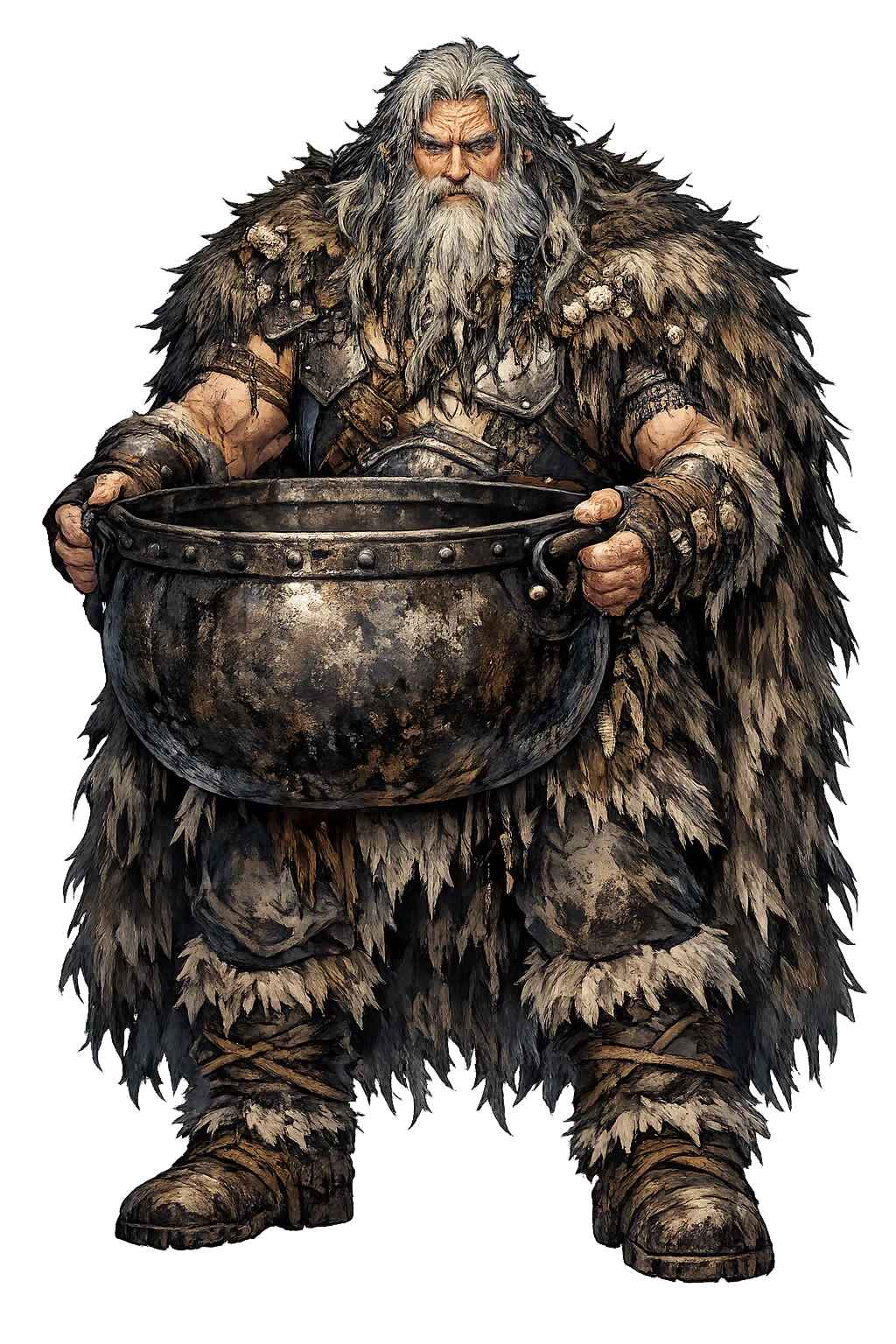
Hymir — Giant, Owner of Cauldron
01

Quick Facts

Essential information about Hymir, Giant, Owner of Cauldron

Original Scriptᚼᚢᛘᛁᚱ
Unicode RestorationHymir
Reconstructed Pronunciation/ˈhy.mir/
PantheonNorse
DomainGiant, Owner of Cauldron
MeaningDark one
ClassificationTier 2
Primary DomainHymir
Sacred SymbolsThe mile-deep cauldron, The ox-head bait, The cup broken on the skull, The nine-hundred-headed grandmother
02

Etymology & Word Family

From original script to Unicode restoration

Original Script ᚼᚢᛘᛁᚱ Hymir — "Dark one"
Unicode Restoration Hymir Restored stress, length, and script
Modern ASCII hymir Plain-ASCII fallback

Hymir is Tier 2 by the mechanical rule: the normalized Old Norse form is already plain ASCII — there is no diacritic and no distinctive letter for the ASCII alphabet to lose. Only the capital distinguishes the restored form from the input; the y the name does carry is one ASCII shares with Old Norse.

03

Unicode Character Breakdown

Character-by-character philological analysis

CharacterUnicodeNameBlockPhonetic Role
HU+0048Latin Capital Letter HBasic LatinSame, capitalized
yU+0079Latin Small Letter YBasic LatinSame
mU+006DLatin Small Letter MBasic LatinSame
iU+0069Latin Small Letter IBasic LatinSame
rU+0072Latin Small Letter RBasic LatinSame

The Tier 2 classification reflects how much of the original phonology this restoration preserves — stress and vowel length for Greek names, distinctive letters and diacritics for every other tradition.

04

Cultural Significance

From ancient cult to modern Unicode

Ancient Domain

Hymir is the sea-giant of Hymiskviða: the fierce host at the eastern edge of heaven whose herd feeds his hall, whose fishing-ground is the cold reach of the Élivágar, and whose treasure is the one thing the gods lack — the mile-deep cauldron in which Ægir could brew ale for all the Æsir at once.

Hymir in Later Traditions

Hymir's poem has drawn comparatists for a century because the cauldron-quest is one of the old travelling stories of the North Atlantic: a vessel of plenty, kept by a grudging power beyond the sea, won for the feast of the gods. Scholars since Dumézil have set Hymiskviða beside the Celtic cauldron-quests — the Welsh Preiddeu Annwfn, where Arthur sails for the cauldron of the Head of Annwn, and the Irish cauldrons that no company leaves unsatisfied — and beside Vedic parallels for the winning of the gods' drink. The fishing scene has its own comparative trail: the thunder-god's combat with the sea-serpent belongs with the wide Indo-European dragon-fight. Inside the Norse corpus the neater tension is genealogical: Hymiskviða makes the giant Týr's father, while Snorri elsewhere counts Týr among Óðinn's sons — two filiations the tradition never reconciled.

Modern Legacy

Hymir's afterlife is carried almost entirely by the fishing-trip, which became the most retold of all Þórr's adventures: Victorian mythographies made it a set-piece, modern handbooks open their Þórr chapters with it, and every popular retelling keeps the ox-head, the glaring serpent, and the giant rowing home in silence. In scholarship the poem holds a double distinction — it is both the fullest portrait of a giant household in the Edda and the standing exhibit in the debate over the cauldron-quest's Celtic kin. The name itself stayed where the þulur put it: a giant-name, rarely borrowed, carried into modern fantasy and games chiefly as the surly host of the world's most famous fishing story.

Unicode Restoration as Cultural Act

Restoring Hymir in a domain name is more than orthographic accuracy. It is a statement that the internet should recognize the full range of human writing — not only the ASCII keyboard.

05

Frequently Asked Questions

Common questions about Hymir, Giant, Owner of Cauldron, and Unicode restoration

01How do you pronounce Hymir?

In reconstructed pronunciation, Hymir is /ˈhy.mir/ — approximately 'HÜ-mir' — round the lips as for 'oo' while saying 'ee' for the y; the final r is the light nominative ending, as in Icelandic..

02What does Hymir mean?

Hymir means Dark one in the norse tradition.

03What are the symbols of Hymir?

Hymir is associated with The mile-deep cauldron (The vessel of plenty the giants keep and the gods must win — hospitality's measure in the Eddic world), The ox-head bait (The price of the catch: the herd's finest head traded for the serpent that girdles the world), The cup broken on the skull (The giant's own hardness turned against his treasure — strength answering strength), The nine-hundred-headed grandmother (The monstrous ancestry of the giant-house, set against the golden-browed mother who hides the guests).

04Why restore Hymir in Unicode?

Plain ASCII hymir strips the stress, length, and script that make the name specific. Unicode restoration returns the name to its original written dignity.

05What is the most important myth about Hymir?

The Æsir had hunted and taken auguries from the blood, and saw that Ægir — called also Gymir — had brew-stuff in plenty. Þórr ordered the sea-giant to brew ale for the gods, and Ægir, to be rid of the demand, set an impossible price: first let them bring a cauldron a mile wide. Týr knew where one stood: east of the Élivágar lives the shrewd Hymir at heaven's end, and "my fierce father owns the roomy kettle, a mile deep." So Þórr and Týr drove to the giant's hall. There they met Týr's grandmother, loathsome, with nine hundred heads — and another woman, golden-browed, Týr's mother, who hid the guests under the great cauldron, for her husband was often cruel to visitors.

06

Scholarly Sources

The philological foundations of this restoration

Every claim on this page is grounded in established scholarship. The orthographic restorations follow disciplinary convention. The etymological chain follows the best available reference works. This is not invention — it is resurrection through scholarship.

Lexicography & Philology

  • Poetic Edda
  • Cleasby-Vigfusson

Primary Texts

  • Hymiskviða (Poetic Edda)
  • Prose Edda (Gylfaginning 48; Skáldskaparmál)

Archaeology & Art History

  • Material evidence — iconography, inscriptions, and temple archaeology — for Hymir and related cults.
  • Hymir is a textual figure: his attestations are the Codex Regius of the Poetic Edda (c. 1270), which alone preserves Hymiskviða, and the manuscripts of Snorri's Edda; the þulur keep his name among the giant-heiti. The myth's antiquity is proven by skaldic verse: Bragi Boddason's Ragnarsdrápa (9th c.) describes the fishing-scene on a painted shield — the ox-head bait, the hooked serpent, the hammer raised — with the giant aboard conventionally identified as Hymir. The picture-record follows: the Altuna runestone (U 1161, Uppland) shows Þórr with his foot braced through the boat's bottom and the serpent on the line, and the Gosforth Cross fishing-panel shows two figures in the boat — the angler and his giant companion. No cult site, toponym, or inscription names Hymir himself.

Religious Studies

  • Ragnarsdrápa (Bragi Boddason)
  • Cleasby-Vigfusson
  • Zoëga
  • Simek, Dictionary of Northern Mythology
  • Orchard, Cassell's Dictionary of Norse Myth and Legend
  • Lindow, Norse Mythology: A Guide
Return

The Surface Awaits

You have traced the name from its earliest attestation to its Unicode restoration. Now return to the myth. The story is where the name lives.

Back to Lore
Hymir mascot