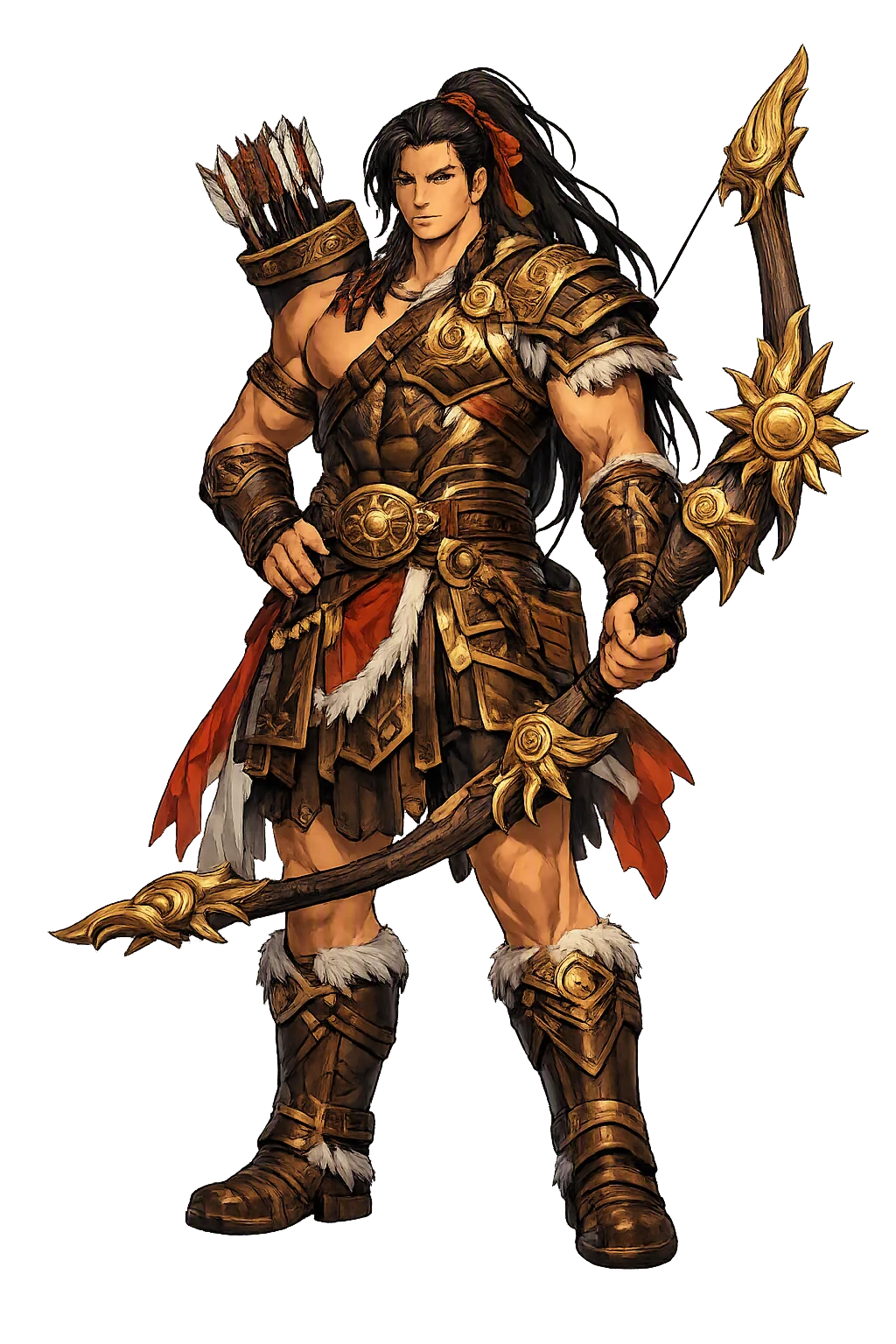
PuniCodex

Extended Lore

后羿 Hòuyì

Etymology · Orthography · Cult · Iconography · Reception · Sources

Tier 1 Hòuyì.com
Hòuyì — Archery, Suns, Heroism
01

Quick Facts

Essential information about Hòuyì, Archery, Suns, Heroism

Original Script后羿
Unicode RestorationHòuyì
Reconstructed Pronunciation/xoʊ̯˥˩.i˥˩/
PantheonChinese
DomainArchery, Suns, Heroism
MeaningThe divine archer who shot down nine suns
ClassificationTier 1
Primary DomainHòuyì.com
Sacred SymbolsThe great bow and arrows, The three-legged crow, The Fusang tree, The elixir of immortality, The spared sun
02

Etymology & Word Family

From original script to Unicode restoration

Original Script 后羿 Hòuyì — "The divine archer who shot down nine suns"
Unicode Restoration Hòuyì Restored stress, length, and script
Modern ASCII houyi Plain-ASCII fallback

The name Hòuyì carries the orthographic signature of the chinese tradition: 后羿. Unicode restoration recovers what ASCII flattens.

03

Unicode Character Breakdown

Character-by-character philological analysis

CharacterUnicodeNameBlockPhonetic Role
HU+0048Latin Capital Letter HBasic LatinSame, capitalized
òU+00F2Latin Small Letter O with GraveLatin-1 SupplementStress on o
uU+0075Latin Small Letter UBasic LatinSame
yU+0079Latin Small Letter YBasic LatinSame
ìU+00ECLatin Small Letter I with GraveLatin-1 SupplementStress on i

The Tier 1 classification reflects how much of the original phonology this restoration preserves — stress and vowel length for Greek names, distinctive letters and diacritics for every other tradition.

04

Cult & Worship

How the sacred was kept — rites, sanctuaries, remains

The Cult

Hòuyì was never a temple god on his wife's scale, and the sources never pretend otherwise. No festival calendar, priesthood, or great sanctuary is dedicated to him in the received tradition: the ritual life of his cycle belongs to Chángé, through the Mid-Autumn moon festival, and to Xīwángmǔ, the Queen Mother of the West, whose Han-dynasty cult surged in 3 BCE, when crowds moved through the passes carrying rush talismans of the goddess, as the Hàn shū records. The elixir-giver drew the altars, not the archer.

What survives of Yì's own cult is honorific. Han tomb builders set him among cosmic exemplars in stone; later tradition keeps him as the husband gazed for at the moon each autumn. His worship, where it lives at all, is the worship of a story told inside someone else's rite.

In the Earth

Hòuyì's deeds are textual before they are pictorial. The earliest witnesses are Warring States literature: the Shān Hǎi Jīng preserves the ten-suns framework and the suns' parentage, the Chǔ Cí poem Tiān Wèn (c. 4th–3rd century BCE) interrogates Yì's shooting of the suns and his tangled fate, and the Mèngzǐ records the Féngméng betrayal. The fullest surviving narrative is the Huáinánzǐ (139 BCE), which sets the archer in Emperor Yáo's reign and catalogs the slain monsters. In Han dynasty art the cycle became a staple of funerary iconography: tomb reliefs and painted stones at sites such as the Wu Liang shrines (Shandong, 2nd century CE) show the archer drawing against crow-bearing suns, while Mawangdui funerary art (168 BCE) depicts the solar crow and the moon's toad-and-hare company that would gather around Chángé. Han mirrors and later pictorial stones continued the imagery, fixing the bow, the crows, and the moon as the archer's permanent attributes.

05

Iconography

How Hòuyì was imaged across the ages

The Image

The archer's image is a set formula: bow drawn, eyes up, against a wheel of suns. The earliest surviving versions are Han: the carved shrine of Wu Liang in Shandong (2nd century CE) shows Yì beneath the Fusang tree loosing at the crow-suns, and painted tiles and engraved stones repeat the composition across the empire.

The three-legged crow inside each sun-disc is the load-bearing detail: once the crow is seen, the disc can no longer be the moon. Medieval painting kept the formula, and the late-Ming illustrated encyclopedia Sāncái Túhuì (1609) printed its own version of the scene, Yì drawing against a ring of crow-suns, which fixed the image for woodblock and New-Year print. The bow and quiver are his only attributes; in Chángé's moon imagery he survives as the small figure left below, gazing up from the earth he saved.

06

Reception & Transformation

The name after its own age — transmission, translation, survival

Afterlives

The myth reached us by commentary as much as by text. The Warring States strata, the Shān Hǎi Jīng, the Tiān Wèn's sceptical questions, the Mèngzǐ's bleak anecdote, were stitched into a single cycle by the Huáinánzǐ (139 BCE), and the early commentators did the preservative work: Wáng Yì on the Chǔ Cí (2nd century CE) and Guō Pǔ on the Shān Hǎi Jīng (4th century) answered the old questions and fixed the genealogy that every later retelling follows.

Tang and Song poets made him a proverb: Lǐ Bái's moon poems play with the elixir, the toad, and the rabbit, and Sū Shì's Mid-Autumn cí of 1076 made the moon, and the wife who fled there, the festival's permanent literary stage.

The twentieth century remade him twice. Lǔ Xùn's sardonic novella Bēnyuè (奔月, 1926) turned the cycle into modernist satire, and Yuán Kě's Zhōngguó gǔdài shénhuà (Ancient Mythology of China, 1950) welded the scattered sources into the seamless narrative every reader now meets first. Through it all the phrase "Yì shoots the suns" kept its grammar of righteous correction: nine arrows for the excess, the tenth left in the quiver.

Identifications Across Traditions

Hòuyì's myth traveled with Chinese civilization itself. In Japan the story of the archer and the ten suns was known through Chinese texts and pictorial art, where it informed depictions of solar catastrophe alongside native Amaterasu lore; Korea received the cycle through the same classical canon, and its own founding archer figure Jumong — whose very name is glossed as 'skilled archer' — shows how deeply the archer-hero type resonated on the peninsula. Vietnamese tradition likewise absorbed the ten-suns narrative through Chinese literature. Within China, Taoist tradition folded Yì into its cosmology of solar regulation and immortality elixirs, while the Queen Mother of the West, his benefactor, rose to become one of the highest deities of the Taoist pantheon. Scholars have long noted the parallel with other great archers — Apollo's plague-bringing arrows in Greece, Rama's bow in India — but the Chinese version is distinctive: the archer's target is not a rival god but disorder itself.

Modern Legacy

Hòuyì never left the Chinese imagination. The shooting of the suns is among the first myths Chinese children learn, retold in primers, animated films, and television dramas, and the Chángé sequel anchors the Mid-Autumn Festival, when families gaze at the moon where the archer's wife is said to dwell. Modern China has written the pair onto the sky itself: the national lunar exploration program is named Chángé, and its missions are spoken of as the moon goddess finally receiving visitors — a deliberate bridal of myth and engineering. The idiom of 'shooting the suns' survives as a metaphor for cutting down excess and correcting what has grown monstrous. In art, from Han dynasty tomb reliefs to contemporary illustration, the archer drawing his bow against a wheel of suns remains one of the most recognizable images in the Chinese visual canon.

07

The Meditation

What Hòuyì means — beyond the dictionary

Hòuyì teaches the hardest lesson of heroism: that power must know when to stop. Nine arrows were justice; a tenth would have been annihilation. The archer's greatness lies not in what he destroyed but in the one sun he spared — the judgment that the world needs light, only not too much of it. Chinese thought found in this a parable of the mean: excess, even of a good thing, is the true monster, and correction, not eradication, is the hero's work.

And yet the myth refuses him a clean triumph. The savior of the earth loses immortality, loses his wife, and in the darker telling dies at the hand of his own student. To name a domain Hòuyì is to claim that double inheritance: the steadiness to draw the bow against a burning sky, and the humility to accept that even perfect aim cannot hold everything it wins.

08

Frequently Asked Questions

Common questions about Hòuyì, Archery, Suns, Heroism, and Unicode restoration

01How do you pronounce Hòuyì?

In reconstructed pronunciation, Hòuyì is /xoʊ̯˥˩.i˥˩/ — approximately HOH-yee — two crisp syllables, each spoken with a sharp falling tone, like a decisive command: 'HOE! YEE!'.

02What does Hòuyì mean?

Hòuyì means The divine archer who shot down nine suns in the chinese tradition.

03What are the symbols of Hòuyì?

Hòuyì is associated with The great bow and arrows (Heaven-sent precision; the power to correct cosmic disorder without destroying the cosmos), The three-legged crow (The true form of each sun; nine were shot down, and the tenth still crosses the sky), The Fusang tree (The cosmic mulberry at the eastern edge of the world where the ten suns roosted between journeys), The elixir of immortality (Xīwángmǔ's reward and the pivot of loss — the gift that carried Chángé to the moon), The spared sun (Measured judgment; the hero preserves the order he restores rather than abolishing it).

04Why restore Hòuyì in Unicode?

Plain ASCII houyi strips the stress, length, and script that make the name specific. Unicode restoration returns the name to its original written dignity.

05What is the most important myth about Hòuyì?

“The Shooting of the Nine Suns” — the Shanhaijing · Huainanzi story that anchors the mythology of Hòuyì, told in full on the lore page.

09

Scholarly Sources

The philological foundations of this restoration

Every claim on this page is grounded in established scholarship. The orthographic restorations follow disciplinary convention. The etymological chain follows the best available reference works. This is not invention — it is resurrection through scholarship.

◈

Lexicography & Philology

  • Shan Hai Jing
  • Huainanzi
◎

Primary Texts

  • Primary sources in the chinese tradition for Hòuyì.
◉

Archaeology & Art History

  • Material evidence — iconography, inscriptions, and temple archaeology — for Hòuyì and related cults.
✦

Religious Studies

  • Shān Hǎi Jīng (Classic of Mountains and Seas)
  • Huáinánzǐ
  • Chǔ Cí — Tiān Wèn (Heavenly Questions)
  • Mèngzǐ (Mencius) 7B.24
  • Birrell, Chinese Mythology: An Introduction
  • Yang & An, Handbook of Chinese Mythology
Return

The Surface Awaits

You have traced the name from its earliest attestation to its Unicode restoration. Now return to the myth. The story is where the name lives.

Back to Lore
Hòuyì mascot