
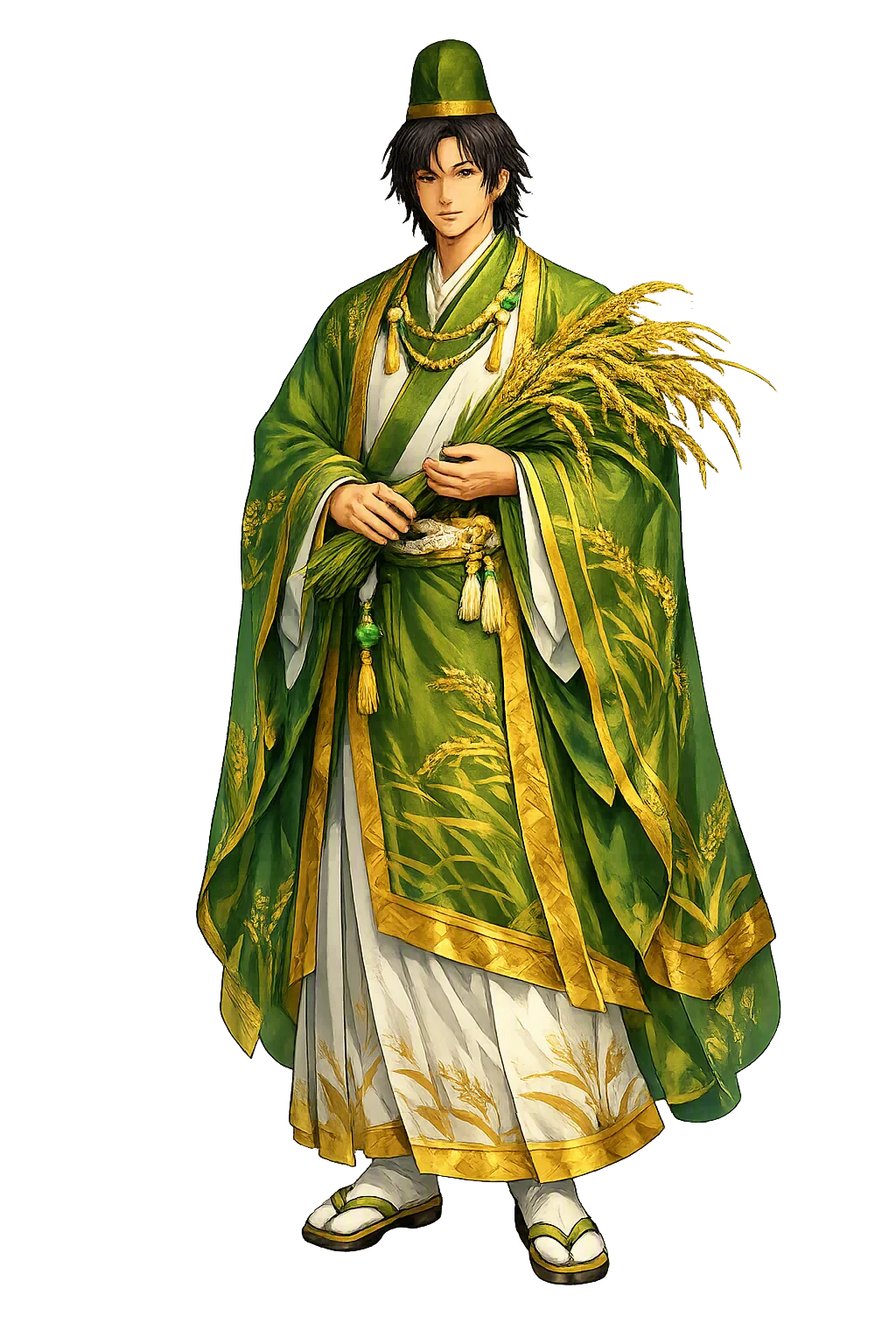
The Cult
Hoori has no shrine of his own, and the evidence for any independent cult is nil — but the geography of his story is real and still kept. In Nichinan, Miyazaki Prefecture, Udo Jingū venerates his son Ugayafukiaezu in a seaside cave identified with Toyotama's parturition hut: the 'breast rock' (ochichi-iwa) receives ladles of offered water, and visitors test the omokaru-ishi, stones whose felt weight answers the purity of a wish. Nearby Aoshima, ringed by its wave-cut 'devil's washboard,' is tied to the dragon-palace cycle in local tradition. His own cult is absorbed upward into the imperial ancestral rites: the Kashihara plain at the foot of Mount Unebi, from which his great-grandson Jimmu is said to have set out east, is watched by Kashihara Jingū (founded 1890). What survives for Hoori himself is the narrative's place in the liturgy of origins — the sea-bride and the tide-jewels retold wherever the imperial genealogy is recited.