PuniCodex

Extended Lore

ᚼᛅᛏᛁ Hati

Etymology · Phonology · Orthography · Cultural Legacy · Primary Sources

Tier 2 Hati
Hati — Moon-Chaser, Chaos
01

Quick Facts

Essential information about Hati, Moon-Chaser, Chaos

Original Scriptᚼᛅᛏᛁ
Unicode RestorationHati
Reconstructed Pronunciation/ˈhɑ.ti/
PantheonNorse
DomainMoon-Chaser, Chaos
MeaningThe hater
ClassificationTier 2
Primary DomainHati
Sacred SymbolsThe running wolf, The fleeing moon, Járnviðr, the Ironwood, The darkened sky
02

Etymology & Word Family

From original script to Unicode restoration

Original Script ᚼᛅᛏᛁ Hati — "The hater"
Unicode Restoration Hati Restored stress, length, and script
Modern ASCII hati Plain-ASCII fallback

Hati is Tier 2 by the mechanical rule: the normalized Old Norse form is already plain ASCII — there is no diacritic and no distinctive letter for the ASCII alphabet to lose. Unlike most Old Norse masculine theonyms it carries no nominative -r, since the name is the agent noun hati ('the hater') with a weak-declension stem vowel. The name's transparency is its whole story: the wolf is called, simply, 'the Hater'.

03

Unicode Character Breakdown

Character-by-character philological analysis

CharacterUnicodeNameBlockPhonetic Role
HU+0048Latin Capital Letter HBasic LatinSame, capitalized
aU+0061Latin Small Letter ABasic LatinSame
tU+0074Latin Small Letter TBasic LatinSame
iU+0069Latin Small Letter IBasic LatinSame

The Tier 2 classification reflects how much of the original phonology this restoration preserves — stress and vowel length for Greek names, distinctive letters and diacritics for every other tradition.

04

Cultural Significance

From ancient cult to modern Unicode

Ancient Domain

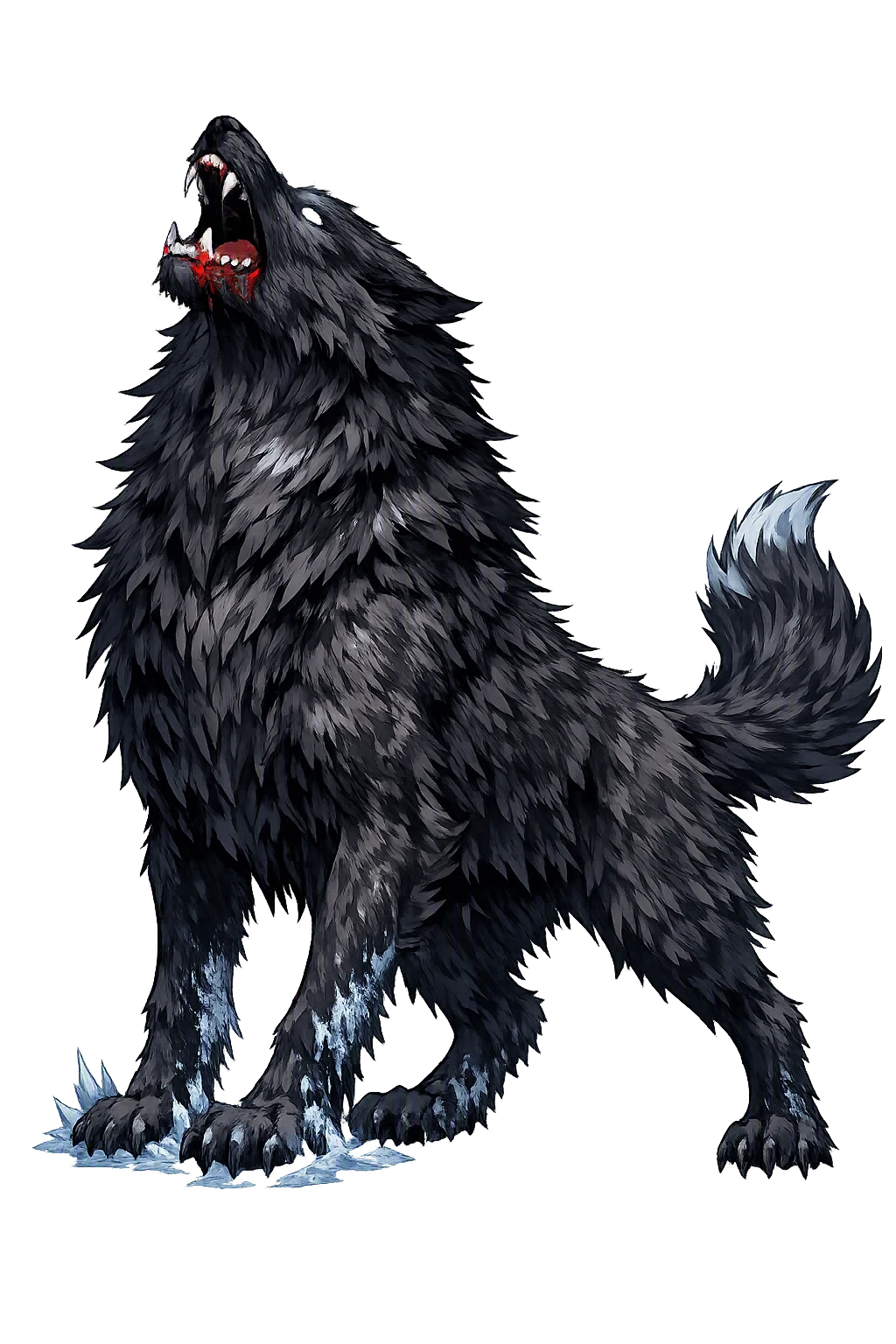
Hati Hróðvitnisson is the wolf who runs before the sun and after the moon: son of the fame-wolf Fenrir, bred in the Ironwood, and fated to seize Máni out of the sky — the chase on which the Edda hangs its explanation of the darkened moon and one of the certainties of Ragnarǫk.

Hati in Later Traditions

Hati has no cult, no continental cognate, and no existence outside the Eddic record: he belongs to the North's own eschatological machinery. Scholars since the nineteenth century have noted that the doubling of the apocalyptic wolf — one chasing the sun, one the moon — is probably a secondary systematization of the older single figure, the bound Fenrir who breaks loose at the world's end; Simek and Lindow treat Skǫll and Hati as elaborations within the Fenrir-complex rather than independent tradition. What the pair does uniquely well is etiology: the chase gives the sky a reason for its haste, and the wolf drawing near gives the North its explanation of the eclipse — when the pursuer closes, the moon darkens. The devouring-monster account of eclipses is a comparative commonplace across cultures; the Norse version is distinctive for giving its monsters names, a pedigree, and a date.

Modern Legacy

Hati's afterlife is the eclipse-wolf's: wherever the Ragnarǫk story is retold, the pair Skǫll and Hati run in the sky above it. Victorian and later handbooks of Norse myth made the chase a set-piece of cosmological explanation — the sky's motions as a hunt, the eclipse as the moment the wolf gains — and modern retellings, novels, and games keep the two wolves as Ragnarǫk's outriders. In scholarship the name is the standing example of the Edda's transparent theonymy: a god-figure called, without ornament, 'the Hater'. The name never entered the living name-pool as Baldr's did; it survives where it was born, in the poetry, doing the one job it was given.

Unicode Restoration as Cultural Act

Restoring Hati in a domain name is more than orthographic accuracy. It is a statement that the internet should recognize the full range of human writing — not only the ASCII keyboard.

05

Frequently Asked Questions

Common questions about Hati, Moon-Chaser, Chaos, and Unicode restoration

01How do you pronounce Hati?

In reconstructed pronunciation, Hati is /ˈhɑ.ti/ — approximately 'HAH-tih' — two short syllables, stress on the first; the vowels are short and plain, with no diphthong and no final nominative -r, for the name ends in a stem vowel, not an ending..

02What does Hati mean?

Hati means The hater in the norse tradition.

03What are the symbols of Hati?

Hati is associated with The running wolf (Pursuit without rest: the sky itself read as a hunt that has never once paused), The fleeing moon (Máni's course as flight — the measured path of the heavens reinterpreted as terror), Járnviðr, the Ironwood (The eastern forest where the wolf-brood is bred: chaos with an address, growing older by the year), The darkened sky (Völuspá's 'the sunshine turns black' — the eclipse and the world's ending written in one image).

04Why restore Hati in Unicode?

Plain ASCII hati strips the stress, length, and script that make the name specific. Unicode restoration returns the name to its original written dignity.

05What is the most important myth about Hati?

The name's one poetic attestation comes in Óðinn's great catalogue of the cosmos in Grímnismál, where the disguised god enumerates the heavens for the torture-bound Geirrøðr: 'Skǫll is the name of the wolf who follows the bright-faced god to the sheltering wood; but the other is Hati, Hróðvitnir's son, who runs before the bright bride of heaven.' The bright bride of heaven is the sun; the wolf who runs before her is on the heels of the moon, which travels ahead of her. In four lines the Edda converts the machinery of the sky into a hunt: what astronomy calls a course, the poem calls a chase.

06

Scholarly Sources

The philological foundations of this restoration

Every claim on this page is grounded in established scholarship. The orthographic restorations follow disciplinary convention. The etymological chain follows the best available reference works. This is not invention — it is resurrection through scholarship.

Lexicography & Philology

  • Poetic Edda
  • Cleasby-Vigfusson

Primary Texts

  • Poetic Edda: Grímnismál 39 (Hati, Hróðvitnir's son, before the bright bride of heaven) and Völuspá 39-40 (the Ironwood brood; the snatcher of the moon)
  • Snorri Sturluson, Prose Edda: Gylfaginning 12 (Skǫll and Hati; Mánagarmr) and 51 (Ragnarǫk); Skáldskaparmál þulur (wolf-heiti)

Archaeology & Art History

  • Material evidence — iconography, inscriptions, and temple archaeology — for Hati and related cults.
  • Hati is a wholly textual figure: no runestone names him, no votive deposit invokes him, and no image can be securely assigned to him. Wolf iconography is plentiful in the Viking-Age record — the wolf-rider and great-wolf scenes on the Gotland picture stones have long been argued over, and Hyrrokkin's wolf-mount at Baldr's funeral was carved in Óláfr pái's hall (Húsdrápa, c. 983) — but no carving carries an inscription that ties a wolf to the moon-chase. The name's witnesses are the manuscripts: Grímnismál in the Codex Regius (c. 1270) and AM 748 I 4to, Völuspá in the Codex Regius and Hauksbók, and Gylfaginning in the Codex Regius of the Prose Edda and its sister codices (Codex Wormianus, Codex Upsaliensis), all recording material centuries older. The þulur of Skáldskaparmál preserve Hati and Hróðvitnir among the poetic heiti for 'wolf' — the tradition's own file of the name.

Religious Studies

  • Cleasby-Vigfusson, An Icelandic-English Dictionary, s.v. hati, hata, Hróðvitnir
  • Zoëga, A Concise Dictionary of Old Icelandic, s.v. hati
  • Simek, Dictionary of Northern Mythology, s.v. Hati, Skǫll, Mánagarm; Orchard, Dictionary of Norse Myth and Legend; Lindow, Norse Mythology: A Guide — on the Fenrir-complex and the eclipse etiology
Return

The Surface Awaits

You have traced the name from its earliest attestation to its Unicode restoration. Now return to the myth. The story is where the name lives.

Back to Lore
Hati mascot