
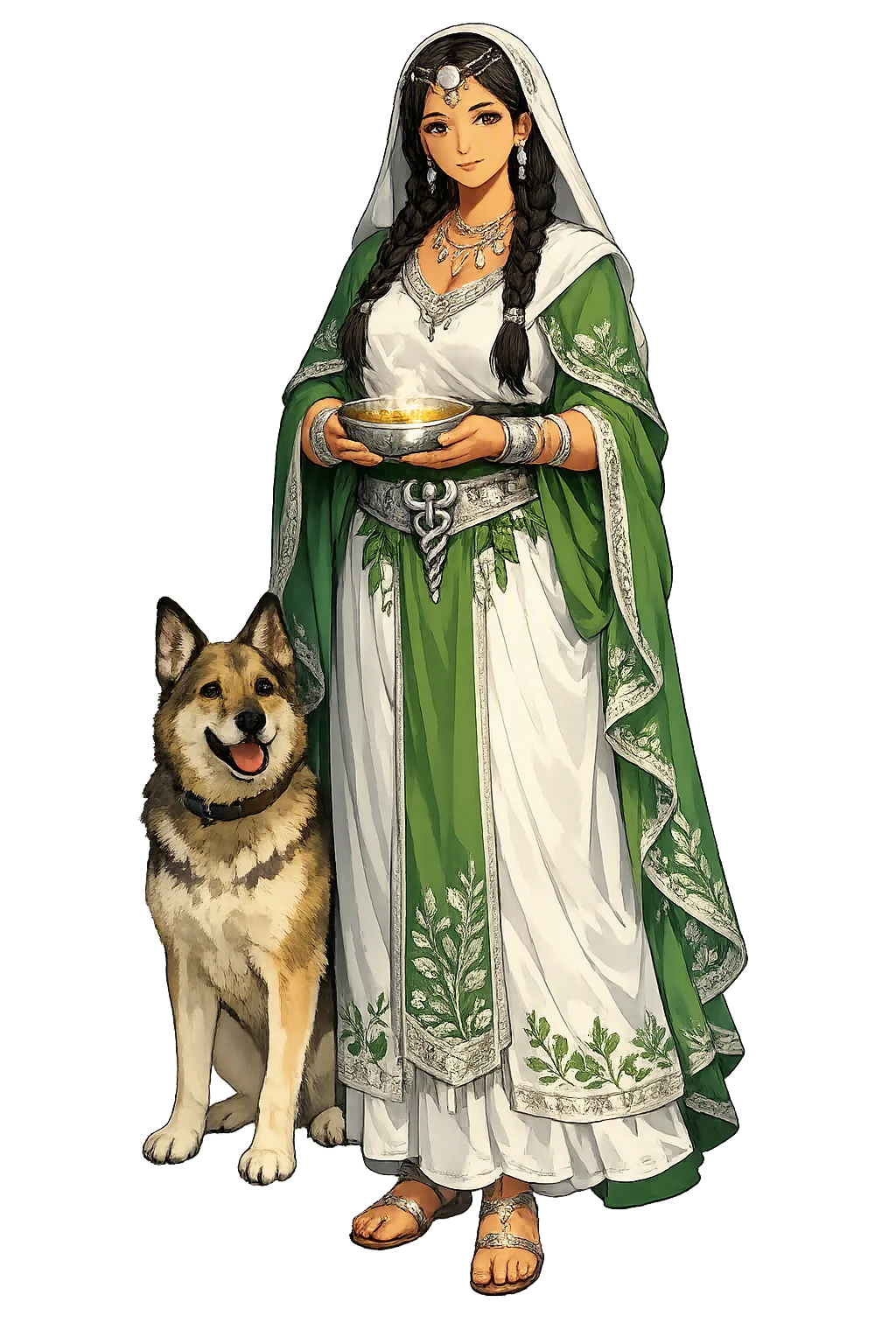
The Cult
Gula's cult was a hospital with a temple at its heart. Her Exalted Palace at Isin received the sick as suppliants — the worshipper's prayer preserved in scores of copies begs her to 'look kindly' on the sufferer — and votive terracotta dogs, some inscribed 'for the life of' a named donor, stood in her shrines at Isin, Nippur, and Adab as the petitioner's proxies. The great hymn of Bulluṭsa-rabi, composed by her temple's own poet, made her praise a liturgical standard. Her personnel were the healing professions themselves: exorcist-priests and physician-herbalists who worked under her name into the Neo-Assyrian and Late Babylonian age. Offerings, prayers, and the animal that kept watch at the sickroom door — the dog was her emblem — composed a medicine in which worship and treatment were the same act.