PuniCodex

Extended Lore

𒀭𒄖𒆷 Gula

Etymology · Orthography · Cult · Iconography · Reception · Sources

Tier 2 Gula
Gula — Healing, Medicine
01

Quick Facts

Essential information about Gula, Healing, Medicine

Original Script𒀭𒄖𒆷
Unicode RestorationGula
Reconstructed Pronunciation/ˈɡu.la/
PantheonMesopotamian
DomainHealing, Medicine
MeaningThe great one
ClassificationTier 2
Primary DomainGula
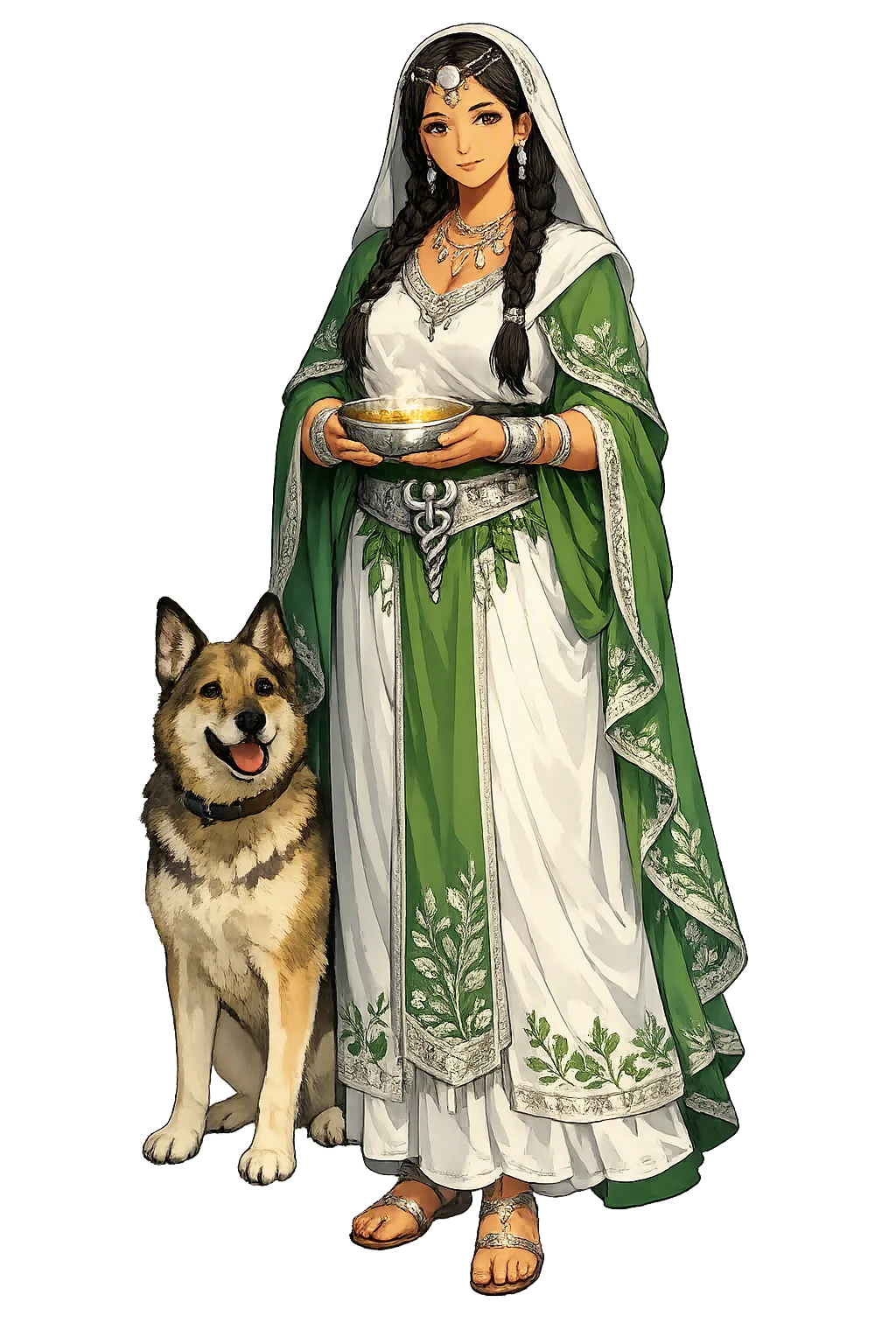
Sacred SymbolsThe Dog, The Healing Hand, The Binding Bandage, The Medicinal Herb, E-gal-maḥ
02

Etymology & Word Family

From original script to Unicode restoration

Original Script 𒀭𒄖𒆷 Gula — "The great one"
Unicode Restoration Gula Canonical scholarly spelling — ASCII-identical
Modern ASCII gula Plain-ASCII fallback

The name Gula reaches the modern world through scholarly transliteration of the mesopotamian tradition. Because the conventional spelling uses only Latin letters, its Unicode and ASCII forms coincide — the tradition it carries is in the name itself, not in diacritics.

03

Unicode Character Breakdown

Character-by-character philological analysis

CharacterUnicodeNameBlockPhonetic Role
GU+0047Latin Capital Letter GBasic LatinSame, capitalized
uU+0075Latin Small Letter UBasic LatinSame
lU+006CLatin Small Letter LBasic LatinSame
aU+0061Latin Small Letter ABasic LatinSame

The Tier 2 classification here reflects fidelity to the attested tradition, not recovered diacritics: every character of Gula already survives in ASCII. What the restoration preserves is the canonical spelling itself — the form scholarship standardised.

04

Cult & Worship

How the sacred was kept — rites, sanctuaries, remains

The Cult

Gula's cult was a hospital with a temple at its heart. Her Exalted Palace at Isin received the sick as suppliants — the worshipper's prayer preserved in scores of copies begs her to 'look kindly' on the sufferer — and votive terracotta dogs, some inscribed 'for the life of' a named donor, stood in her shrines at Isin, Nippur, and Adab as the petitioner's proxies. The great hymn of Bulluṭsa-rabi, composed by her temple's own poet, made her praise a liturgical standard. Her personnel were the healing professions themselves: exorcist-priests and physician-herbalists who worked under her name into the Neo-Assyrian and Late Babylonian age. Offerings, prayers, and the animal that kept watch at the sickroom door — the dog was her emblem — composed a medicine in which worship and treatment were the same act.

In the Earth

The core evidence is the temple precinct at Isin (Išān Baḥriyāt), excavated by the Bavarian Academy's team from 1973 onward: Gula's E-gal-maḥ, rebuilt across centuries, yielded foundation inscriptions, votive deposits, and her famous terracotta dogs — some inscribed with donors' prayers. Her shrines at Nippur (excavated by the University of Chicago and University of Pennsylvania expeditions) produced further dog burials and medical tablets, tying her cult directly to the practice of medicine; a Gula temple is also attested at Adab. Textual archaeology is equally rich: the Old Babylonian hymn of Bulluṭsa-rabi survives in scores of copies from Nippur, Ur, and Assyrian libraries, making Gula's praise one of the most widely duplicated religious poems in cuneiform.

05

Iconography

How Gula was imaged across the ages

The Image

Recognition is easy: the seated goddess with her dog. On Kassite and later Babylonian kudurrus — the boundary stones that map the gods as emblems — the dog stands at attention among the divine weapons and shrines as Gula's sign, and the same pair, mistress and hound, fills cylinder seals of the second and first millennia. No certain cult statue of her survives; what we have are these emblems plus thousands of terracotta votive dogs set up where patients prayed. By the first millennium the type has frozen entirely: the calm frontal goddess, hand raised in blessing, the dog at her knee. It is among the most conservative images in ancient art — fitting for the patroness of a profession that trusted only what had worked for a thousand years.

06

Reception & Transformation

The name after its own age — transmission, translation, survival

Afterlives

Gula's transmission is the transmission of cuneiform itself. Her hymns and medical incantations were copied from Old Babylonian schools to Ashurbanipal's library at Nineveh and on into the temple archives of the Seleucid age — the longest continuous textual lineage of any healing deity. With the script's death the tradition slept for two millennia. The nineteenth-century decipherment woke it: Rawlinson's generation re-opened the buried libraries, her clay dogs became some of the first Mesopotamian objects in European museums, and Gula emerged as the signature deity of Babylonian medicine. Modern Assyriology built the dossier: the Chicago Assyrian Dictionary mapped her names, the Isin excavation reports anchored her hymns in excavated ground, and Barbara Böck's The Healing Goddess Gula (2014) gathered the evidence of her medical theology into a single monograph. The 'Great One' now closes every survey of ancient medicine.

Identifications Across Traditions

Gula is a syncretism achieved across two thousand years. She began as Ninisina of Isin, absorbed Bau of Lagash, took the Akkadian title 'Gula,' and acquired a northern double in Ninkarrak of Sippar — the CAD treats the names as largely interchangeable in late texts. As Isin's political star set under the rising Babylonian and Assyrian empires, her goddess traveled: dog figurines dedicated to Gula appear at Nippur, Adab, and in Assyrian collections, and her incantations were copied from one medical library to another across the whole cuneiform world. In the first millennium her iconography stabilized — the goddess with her dog — and it is in this form that Hellenistic scholars compared her to Hygieia, the Greek goddess of health. Modern Mesopotamian studies treat her as the paradigmatic case of how a local healing deity became the divine patron of an entire medical tradition.

Modern Legacy

Gula's cult was centered on Isin, where her temple drew the sick from across southern Mesopotamia; her priests were the physicians and exorcists whose dual therapy — drug and incantation — defined Mesopotamian medicine. Her legacy outlived her temples. The medical manuscripts that invoke her, copied and recopied into the Seleucid period, became the foundation documents of Assyriology's study of ancient medicine, and her clay dogs are today among the most reproduced Mesopotamian objects in world museums (Berlin's Vorderasiatisches Museum holds celebrated examples). Her name persists quietly in the modern world as a byword for veterinary and medical care, and in scholarly usage 'Gula' has become shorthand for the entire theology of healing in the ancient Near East — a reputation two millennia of doctors would have recognized.

07

The Meditation

What Gula means — beyond the dictionary

Gula embodies a proposition most ancient theologies only imply: that healing is a form of greatness. Her very name is the Akkadian word for 'great' in the feminine — as if the culture had looked for the largest possible title and given it to the one who closes wounds. The Babylonian doctor, standing between the drug list and the incantation, addressed her before both, acknowledging that technique without mercy is not medicine. There is something striking in a warrior civilization's supreme goddess of care being the wife of its storm-god: the spear and the bandage married. To read her hymns is to watch a civilization think through suffering — not explaining it away, as Job's comforters tried, but giving it a face that looks back, 'soothes the heart,' and sometimes says yes. That is a theology a sickbed can actually use.

08

Frequently Asked Questions

Common questions about Gula, Healing, Medicine, and Unicode restoration

01How do you pronounce Gula?

In reconstructed pronunciation, Gula is /ˈɡu.la/ — approximately 'GOO-lah' — the name is the Akkadian feminine of 'great,' an epithet worn as a name.

02What does Gula mean?

Gula means The great one in the mesopotamian tradition.

03What are the symbols of Gula?

Gula is associated with The Dog (Her sacred animal; clay dog figurines were dedicated and buried at the gates of her temples at Isin and Nippur), The Healing Hand (Her touch that 'restores to life' — the gesture invoked at the head of medical incantations), The Binding Bandage (She who 'binds up' wounds; the idiom survives in Akkadian medical phrases for closing an injury), The Medicinal Herb (The drug of life' (šammu ša balāṭi) that she bestows, named beside her in therapeutic texts), E-gal-maḥ (Her 'Exalted Great House' at Isin, where the sick slept for dream diagnoses).

04Why restore Gula in Unicode?

Gula is written entirely in ASCII letters, so its restoration is about canonical fidelity rather than recovered diacritics: the temple fixes the name in its scholarly standard spelling, attested in the source tradition, instead of leaving it to drift.

05What is the most important myth about Gula?

“Bulluṭsa-rabi Sings Her Praise” — the The Great Hymn story that anchors the mythology of Gula, told in full on the lore page.

09

Scholarly Sources

The philological foundations of this restoration

Every claim on this page is grounded in established scholarship. The orthographic restorations follow disciplinary convention. The etymological chain follows the best available reference works. This is not invention — it is resurrection through scholarship.

◈

Lexicography & Philology

  • ETCSL
  • Black-Green
◎

Primary Texts

◉

Archaeology & Art History

  • Material evidence — iconography, inscriptions, and temple archaeology — for Gula and related cults.
✦

Religious Studies

  • Foster, Before the Muses (1993), Gula hymn and penitential psalms
  • Jacobsen, The Treasures of Darkness (1976)
  • George, The Babylonian Gilgamesh Epic (2003)
  • CAD (Chicago Assyrian Dictionary), vols. G and N
  • Hrouda (ed.), Isin — Išān Baḥriyāt excavation reports (1977– )
  • Black, Cunningham, Robson, The Literature of Ancient Sumer (2004)
Return

The Surface Awaits

You have traced the name from its earliest attestation to its Unicode restoration. Now return to the myth. The story is where the name lives.

Back to Lore
Gula mascot