PuniCodex

Extended Lore

關帝 Guāndì

Etymology · Orthography · Cult · Iconography · Reception · Sources

Tier 1 Guāndì.com
Guāndì — War, Loyalty, Protection
01

Quick Facts

Essential information about Guāndì, War, Loyalty, Protection

Original Script關帝
Unicode RestorationGuāndì
Reconstructed Pronunciation/kwán.tî/
PantheonChinese
DomainWar, Loyalty, Protection
Meaning"Emperor Guan" — the deified general Guān Yǔ, god of war, loyalty, and righteousness
ClassificationTier 1
Primary DomainGuāndì.com
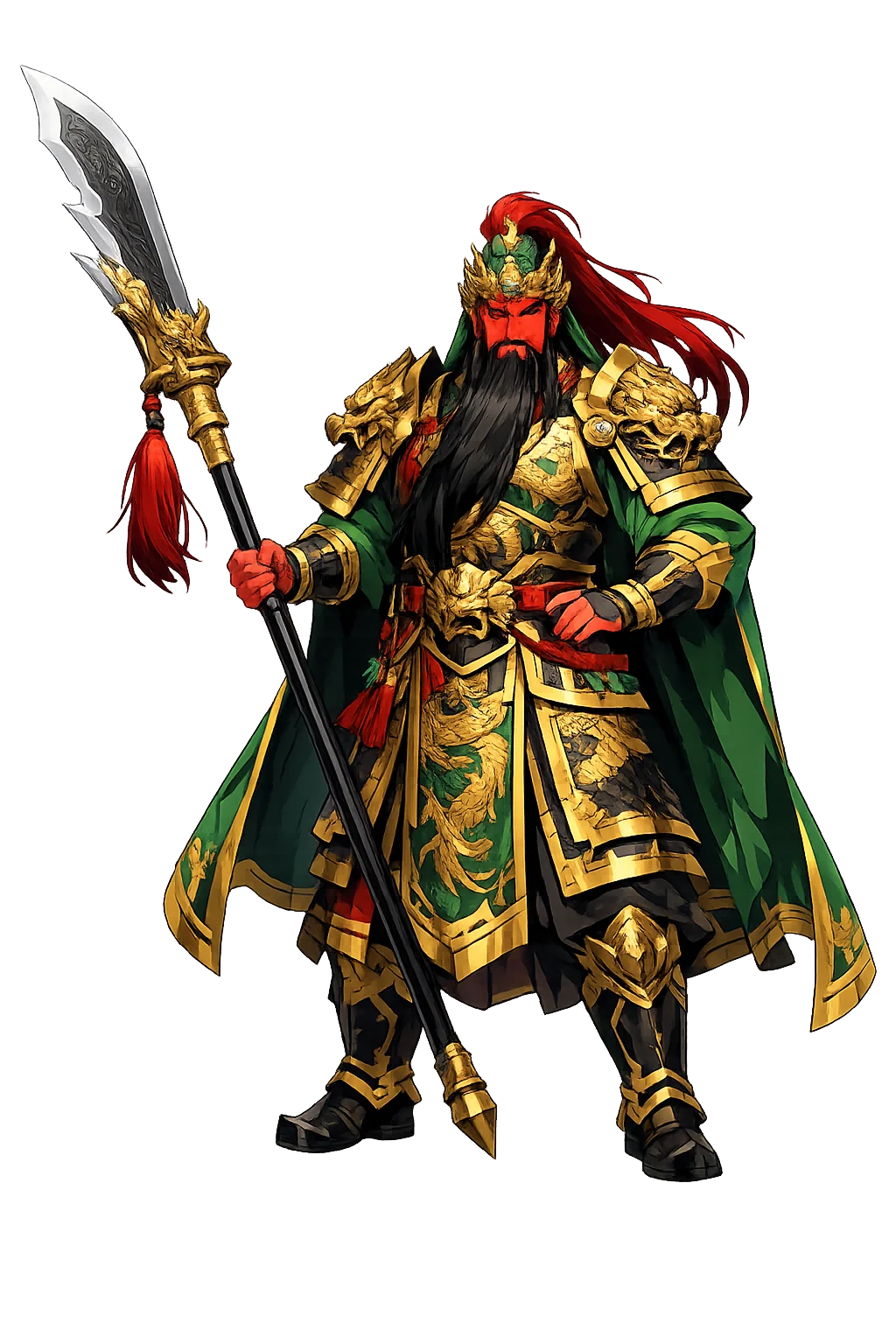
Sacred SymbolsThe crescent halberd, The red face, The green robe, The long beard, The Red Hare horse
02

Etymology & Word Family

From original script to Unicode restoration

Original Script 關帝 Guāndì — ""Emperor Guan" — the deified general Guān Yǔ, god of war, loyalty, and righteousness"
Unicode Restoration Guāndì Restored stress, length, and script
Modern ASCII guandi Plain-ASCII fallback

The name Guāndì carries the orthographic signature of the chinese tradition: 關帝. Unicode restoration recovers what ASCII flattens.

03

Unicode Character Breakdown

Character-by-character philological analysis

CharacterUnicodeNameBlockPhonetic Role
GU+0047Latin Capital Letter GBasic LatinSame
uU+0075Latin Small Letter UBasic LatinSame
āU+0101Latin Small Letter A with MacronLatin Extended-AFirst tone (high level)
nU+006ELatin Small Letter NBasic LatinSame
dU+0064Latin Small Letter DBasic LatinSame
ìU+00ECLatin Small Letter I with GraveLatin-1 SupplementFalling fourth tone

The Tier 1 classification reflects how much of the original phonology this restoration preserves — stress and vowel length for Greek names, distinctive letters and diacritics for every other tradition.

04

Cult & Worship

How the sacred was kept — rites, sanctuaries, remains

The Cult

Guāndì's cult was already taking shape by the Sui dynasty and received imperial promotion under the Song, when court canonization transformed a failed general into a national protector. His head is enshrined at Guān Lín in Luoyang, while the Guān Dì Miào at his Yuncheng birthplace remains the largest temple complex dedicated to him, rebuilt repeatedly since the Sui. Offerings of incense, wine, and roasted meat accompany petitionary prayers for loyalty, protection, and success in examinations or business. Every southern port city once housed a Guandi temple, and the diaspora carried the rite to Yokohama's Kanteibyō (1862) and Chinatowns worldwide. Police forces, triads, and merchants alike claim him as patron.

In the Earth

The Guān Lín tomb-temple at Luoyang (where Cáo Cāo buried his head with honors) and the Guān Dì Miào at his birthplace in Yuncheng, Shanxi — the largest Guandi complex, repeatedly rebuilt since the Sui — anchor his cult geography. Ming-Qing Guandi temples survive in every southern port city; Yokohama's Kanteibyō (1862) preserves the diaspora form. His statues' iconography — red face, green robe, crescent blade, the beard-bag — is among the most standardized in world religion.

05

Iconography

How Guāndì was imaged across the ages

The Image

Guāndì is instantly recognizable: a flushed red face, a flowing black beard, a green robe, and the massive Green Dragon Crescent Blade (Qīnglóng Yǎnyuè Dāo). He sits or stands in temple niches flanked by Guān Píng and Zhōu Cāng, his attendants, while operatic depictions exaggerate the red mask and martial stance. Ming and Qing woodblock prints spread this image through popular religion, and diaspora temples preserve gilded statues whose regalia copies court armor. The iconography conflates the historical Guān Yǔ with the apotheosized soldier-saint, so that every statue is at once a portrait and a badge of righteousness.

06

Reception & Transformation

The name after its own age — transmission, translation, survival

Afterlives

Guān Yǔ began as a historical general recorded in Chén Shòu's Sānguózhì; his deification was a slow sedimentation of court canonization, Buddhist appropriation, and popular devotion that reached its full form in the Ming. Luó Guànzhōng's Sānguó Yǎnyì then broadcast the red-faced, loyal warrior across East Asia, turning history into operatic myth. The Qing court promoted him to a state cult, while Chinese emigrants carried Guāndì temples to Southeast Asia and the Americas, where he became the tutelary deity of fraternal lodges and business associations. In contemporary culture he appears in martial-arts cinema, video games, and corporate shrines, his name a shorthand for masculine loyalty and righteous violence. The transformation from executed general to transnational god is one of the most complete receptions in the Chinese pantheon.

Identifications Across Traditions

He is the one deity all three teachings claim: Taoism's Guān Shèng Dì Jūn (Holy Emperor), Buddhism's Sānghārāma, Confucianism's co-Sage. The diaspora carried him everywhere — his altar stands in Yokohama's Kanteibyō, in San Francisco's oldest Chinatown temples, and in every Hong Kong police station, where officers and triads bow to the same red face: the god both sides trust because both sides fear to lie before him.

Modern Legacy

His temples outnumber Confucius' in the Chinese world; his birthday (24th day of the 6th lunar month) is a national observance from Shanxi to Singapore. The "Guān Gōng" of business is the unwritten clause of every contract; his image guards mahjong parlors, restaurants, and police stations alike. The Romance's peach-garden oath remains East Asia's template for sworn brotherhood, quoted in films, games (Dynasty Warriors made him a global icon), and every oath of office sworn with a hand on his name.

07

The Meditation

What Guāndì means — beyond the dictionary

Guāndì is the god of the thing that outlasts its usefulness. Empires fell, dynasties renamed him, merchants and monks and policemen each rewrote him — and the oath stayed. He asks the oldest question of any alliance, company, or friendship: when the peach garden is gone and the gold is on the table, what is left of the word you gave?

Notice what the police stations and the triad halls share: not the religion but the need — a witness whose displeasure is worse than the law. His altar is the one place both sides of every Chinese street agree not to lie. Eighteen hundred years later, the oath in the peach garden still collects.

His books never sold a single copy of an excuse. The Romance made him perfect and the people made him useful — the merchant's guarantee, the brotherhood's witness, the empire's conscience with a beard. Every red-faced statue asks the same question to whoever lights the incense: what is your word worth, general?

The Yokohama temple keeps the incense burning across the harbor from a city that never heard of the Han, and the policemen of Hong Kong bow to the same face as the men they arrest. Universality is usually claimed by the soft gods; it belongs, in fact, to the one who kept his word when it cost him everything. The beard alone remembers the whole story.

08

Frequently Asked Questions

Common questions about Guāndì, War, Loyalty, Protection, and Unicode restoration

01How do you pronounce Guāndì?

In reconstructed pronunciation, Guāndì is /kwán.tî/ — approximately gwahn-DEE — level tone, then a firm falling tone.

02What does Guāndì mean?

Guāndì means "Emperor Guan" — the deified general Guān Yǔ, god of war, loyalty, and righteousness in the chinese tradition.

03What are the symbols of Guāndì?

Guāndì is associated with The crescent halberd (Martial honor wielded with precision — war in service of the oath), The red face (Righteousness made visible; loyalty that cannot hide), The green robe (The gift he refused to surrender to Cao Cao — fidelity to the old lord), The long beard (The beautiful beard he protected with a silk bag — dignity kept), The Red Hare horse (The empire's finest horse, the one gift he prized — speed pledged entirely to the search for a brother).

04Why restore Guāndì in Unicode?

Plain ASCII guandi strips the stress, length, and script that make the name specific. Unicode restoration returns the name to its original written dignity.

05What is the most important myth about Guāndì?

“The Peach Garden” — the The Oath story that anchors the mythology of Guāndì, told in full on the lore page.

09

Scholarly Sources

The philological foundations of this restoration

Every claim on this page is grounded in established scholarship. The orthographic restorations follow disciplinary convention. The etymological chain follows the best available reference works. This is not invention — it is resurrection through scholarship.

◈

Lexicography & Philology

  • Sanguozhi
  • Chinese folk religion
  • Birrell
  • Chinese folklore
  • Fengshen Yanyi
  • Cambridge
◎

Primary Texts

  • Primary sources in the chinese tradition for Guāndì.
◉

Archaeology & Art History

  • Material evidence — iconography, inscriptions, and temple archaeology — for Guāndì and related cults.
✦

Religious Studies

  • Chén Shòu, Sānguózhì (Records of the Three Kingdoms), "Guan Yu zhuan" (ch. 36)
  • Luó Guànzhōng (attrib.), Sānguó Yǎnyì, ch. 1, 25–27
  • Song Chan transmission records (the Sui Yuquan legend)
  • Chinese Text Project
  • Unihan Database (Unicode Consortium)
Return

The Surface Awaits

You have traced the name from its earliest attestation to its Unicode restoration. Now return to the myth. The story is where the name lives.

Back to Lore
Guāndì mascot