
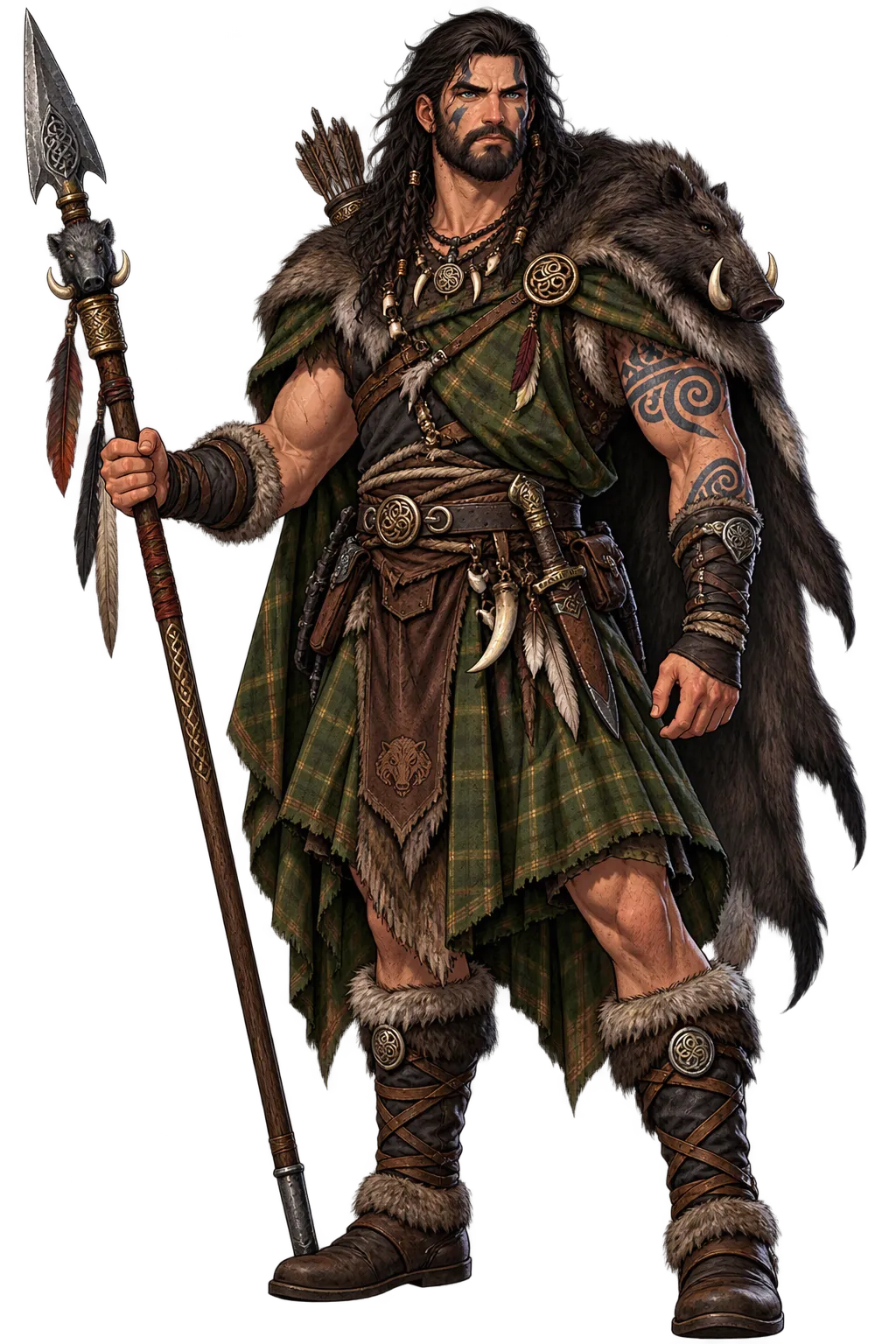
The name Gronw Pebr and the world it opens
A name is a door. Gronw Pebr opens onto an entire world: the domain of lover of blodeuwedd, a Celtic tradition, and centuries of storytelling, worship, and scholarship. This post walks through that world room by room — the name and its roots, the original script, the sound of it, the myths, the symbols, the sites, the afterlife across cultures — and ends at the newest room of all: a Unicode domain that makes the whole structure addressable. gronwpebr gets you to the same building, but only the restored form tells you why it was built.
At a Glance
- Restored name: Gronw Pebr
- ASCII form: gronwpebr
- Meaning: "Gronw the strong"
- Domain of influence: Lover of Blodeuwedd
- Pantheon: Celtic
- Restoration: ASCII-equivalent form
Overview
Gronw Pebr (gronwpebr) — Gronw the Strong · Gronw the strong — belongs to the Celtic tradition, where it is catalogued under the domain "Lover of Blodeuwedd". The name means "Gronw the strong".
Gronw Pebr is the Mabinogi’s tragic villain: the lord of Penllyn who loved Blodeuwedd, the wife fashioned of flowers for Lleu Llaw Gyffes, and who — guided by her — cast the spear that could kill the seemingly invulnerable hero through the bath-house wall. The Fourth Branch’s justice is symmetrical and severe: Lleu’s return, Gronw’s plea, and the stone that still bears the mark of the spear he asked to be placed between himself and the fatal throw.
PuniCodex restores the name as Gronw Pebr and serves its temple at its temple. The restoration aSCII-equivalent form — a description computed from the displayed form itself. The plain ASCII form gronwpebr survives as a modern convenience imposed by the early domain-name system; the restoration, not the fallback, is the form the project defends as philologically complete.
The Name
No indigenous written attestation survives for this name; Gronw Pebr is a scholarly transliteration of the reconstructed spoken form. Etymologically the name means "Gronw the strong".
The ASCII form gronwpebr survives only because the early domain-name system could not carry diacritics; it is a technological compromise, not an ancient spelling. The Unicode restoration Gronw Pebr recovers the full diacritic detail of the scholarly transliteration directly in the address bar. The restoration aSCII-equivalent form — a description computed from the displayed form itself.
The letter-by-letter transformation runs:
- g → G — Same, capitalized
- r → r — Same
- o → o — Same
- n → n — Same
- w → w — Same
- p → P — Same, capitalized
- e → e — Same
- b → b — Same
- r → r — Same
The Original Script
No indigenous writing system is securely attested for individual celtic names. The form shown is a modern scholarly transliteration.
The form Gronw Pebr is therefore a scholarly transliteration rather than an attested ancient spelling; it encodes the reconstructed sound of the name for modern use, and no mark in it is decorative.
Pronunciation
The reconstructed pronunciation of the name is /ˈɡrɔnuː ˈpɛbr/ — Middle Welsh (normalised).
Phoneme by phoneme:
- Gronw — Welsh; the w is a full vowel (“oo”), so the name is “GRON-oo”.
- Pebr — “The Strong” — pebyr/pebr is the epithet; the compound means Gronw the Strong.
- ** — The name survives in the Fourth Branch of the Mabinogi, the Math fab Mathonwy cycle.
For the modern speaker, the closest approximation is: “GRON-oo PEBR” — two words, the second meaning “the strong”
Kindred and historical forms of the name:
- Epithet — Gronw Pebyr — the fuller spelling of “the strong”
- Cycle — the Fourth Branch of the Mabinogi (Math fab Mathonwy)
His story is the Mabinogi’s darkest: the lover who killed Lleu Llaw Gyffes with the only spear that could, cast through a bath-house wall.
Mythology
Gronw’s mythology is the Fourth Branch’s dark triangle: the man, the flower-wife, and the hero engineered to be unkillable. The Mabinogi tells it without relish and without excuse — the one Welsh narrative in which adultery, murder, and retribution each get exactly their due, and the landscape itself (the Cynfael river, the stone at the bank) keeps the receipt.
The Flower-Wife’s Plot (Math fab Mathonwy)
Blodeuwedd, made of flowers by Gwydion and Math for the cursed Lleu, met Gronw by the Cynfael and loved him. Her husband’s invulnerability had one precise condition — he could be killed only while standing with one foot on a bath and one on a goat-skin, and only by a spear worked a year at the dark of the moon. She persuaded Lleu to demonstrate the posture; Gronw waited behind the bath-house wall with the finished spear.
The Cast Through the Wall (Math fab Mathonwy)
The cast went through the wall and through Lleu, who changed into an eagle and vanished into the forest. Gronw took Blodeuwedd and Lleu’s lands. But Lleu was found, healed by Gwydion’s wizardry, and returned in a year’s turning — the cursed hero restored by the uncle whose flower-magic had made the wife who betrayed him.
The Stone of the Return-Cast (Math fab Mathonwy)
The law of the tale is exact symmetry. Gronw offered compensation — land, gold, any price — and Lleu refused all but one thing: the return-cast. Gronw’s single plea was granted: a stone between him and the spear. The cast went through the stone and through Gronw, and the stone stood by the Cynfael for centuries as the tale’s material proof — the Mabinogi’s most literal monument.
The River Cynfael’s Mark (Landscape Tradition)
Welsh tradition placed the story in the real country of Penllyn and the river Cynfael — the spear-stone was shown to travellers as a landmark, the narrative pinned to the map like a deed. The Mabinogi’s habit of grounding its marvels in named places makes Gronw’s story the Welsh myth-cycle’s most topographically anchored tragedy.
Symbols & Iconography
The iconography associated with Gronw Pebr concentrates in a small set of recurring attributes, each a compressed statement about the name:
- The Spear — He cast the year-wrought, dawn-forged spear through the bath-house wall — the only weapon that could wound Lleu.
- Blodeuwedd — The flower-wife he loved — her name means “flower-face”; their plot killed her husband.
- The Bath-House — The one door through which Lleu could be killed: standing with one foot on bath and one on goat-skin, spear through the wall.
- The Stone — His last plea: a stone between himself and Lleu’s return-cast — the spear went through it, and him.
Archaeology & Evidence
The material record for Gronw Pebr survives in a small number of securely identified remains, catalogued below; the corpus is thin but unambiguous, and each site is tied to the name by ancient testimony.
Gronw leaves the spear-stone of the Cynfael valley — a tradition-landmark, not an excavation. The Mabinogi’s manuscripts (White Book, Red Book) are his monument, as they are for the whole Welsh myth-cycle.
Realm & Domain
Gronw Pebr is the Mabinogi’s tragic villain: the lord of Penllyn who loved Blodeuwedd, the wife fashioned of flowers for Lleu Llaw Gyffes, and who — guided by her — cast the spear that could kill the seemingly invulnerable hero through the bath-house wall. The Fourth Branch’s justice is symmetrical and severe: Lleu’s return, Gronw’s plea, and the stone that still bears the mark of the spear he asked to be placed between himself and the fatal throw.
The Spear
He cast the year-wrought, dawn-forged spear through the bath-house wall — the only weapon that could wound Lleu.
Blodeuwedd
The flower-wife he loved — her name means “flower-face”; their plot killed her husband.
The Bath-House
The one door through which Lleu could be killed: standing with one foot on bath and one on goat-skin, spear through the wall.
The Stone
His last plea: a stone between himself and Lleu’s return-cast — the spear went through it, and him.
Across Cultures
Gronw is the Welsh cousin of the Indo-European adulter-killer pattern — the lover who strikes the unkillable hero at his one vulnerable posture — but the Mabinogi’s telling is its own: the magic is legalistic, the justice symmetrical, and the villain allowed his one dignified plea. The flower-wife Blodeuwedd’s fate (changed into an owl, shunned by the other birds) outshines his in later retellings; his stone keeps his share.
Within the Celtic tradition, closely related names in the corpus include Aengus, Annwn, Arawn, Badb, Balor, and Bedwyr.
Cultural Legacy
The Fourth Branch is the most retold of the Mabinogi — Saunders Lewis’s drama Blodeuwedd and a hundred retellings keep the triangle current. The spear-stone tradition fed the Welsh habit of reading the landscape as document; and Gronw’s name, though minor, anchors the Mabinogi’s most exportable story in its most Welsh particulars.
The Scholarly Record
The account of Gronw Pebr given in this edition rests on the witnesses and reference works listed below. Lexica and etymological dictionaries secure the form and meaning of the name; the literary and religious texts supply the narrative evidence.
- Math fab Mathonwy (the Fourth Branch of the Mabinogi).
- White Book of Rhydderch / Red Book of Hergest manuscripts.
- Saunders Lewis, Blodeuwedd (modern dramatic retelling).
A Meditation
Gronw Pebr: the strong one, undone by the one thing strength could not block — the spear he himself had forged for another’s death. Restored plainly, his name keeps the Mabinogi’s lesson in two short words: the stone you ask for may be the only thing the return-cast needs to prove.
The Unicode Restoration
Gronw Pebr aSCII-equivalent form. The ASCII fallback gronwpebr still resolves everywhere, but it is the restored form that carries the name's full information. That is the whole thesis of this temple: the marks are the message.
Character by Character
The journey from gronwpebr to Gronw Pebr, one character at a time:
- g → G — Same, capitalized
- r → r — Same
- o → o — Same
- n → n — Same
- w → w — Same
- p → P — Same, capitalized
- e → e — Same
- b → b — Same
- r → r — Same
The Celtic Pantheon
Gronw Pebr is one of 49 entries the PuniCodex lexicon catalogues under the Celtic pantheon. The Pantheon page gathers the tradition's major figures in one place, and the Lexicon lets you filter all 983 restorations by tradition or script — the fastest way to see where this name sits among its kin.
Frequently Asked Questions
What does Gronw Pebr mean? The traditional gloss is "Gronw the strong."
Which tradition does Gronw Pebr belong to? Gronw Pebr is catalogued in the Celtic pantheon of the PuniCodex lexicon.
What does Gronw Pebr preserve that ASCII cannot show? The form itself answers: Gronw Pebr aSCII-equivalent form — and the marks in the restored spelling are exactly that evidence.
Can I use Gronw Pebr in a normal browser? Yes. The DNS resolves the punycode form automatically, and the type tool on this site converts gronwpebr to Gronw Pebr for copying and pasting.
Where does the scholarly information come from? The entry is built from lexica, inscriptional evidence, and reviewed scholarly sources listed in the Scholarly Edition. Every claim is traceable to a canonical source.
Typing Gronw Pebr
You do not need a special keyboard to use this restoration. The PuniCodex Type Tool converts the ASCII form gronwpebr into Gronw Pebr as you type, and the browser extension offers the same conversion inside any text field. Copy the restored form, paste it into the address bar, and the DNS does the rest.
Sister Temples
Other temples in the Celtic pantheon include Manannán, Manawydan, and Math — each with its own restoration story, its own scholarly record, and its own place in the lexicon.
Why This Restoration Matters
A door only matters if people walk through it. The temple is open, and everything behind it — the myths, the scholarship, the canvas, the patrons — hangs on the restored spelling. The PuniCodex project bets that the web will make room for names as they were actually written, and Gronw Pebr is one of its standing proofs. Visit, share, cite, type it yourself: each use is a small rehearsal for a web where no name has to hide its marks to be found.
Explore Further
This post is one doorway into the temple. The home page carries the full character breakdown and the ambient canvas; the lore page tells the myths in long form; the Scholarly Edition preserves the sources, pronunciation data, and revision history; and the patron wall supports the restoration directly. For the wider map, browse the Lexicon, explore the Pantheon, or return to the PuniCodex blog.
A Closer Look at the Marks
A restored name is a small map. In the case of Gronw Pebr, the map does not lead through diacritics or special letters, because the source tradition wrote the name in Celtic transcription rather than in the Latin alphabet. The ASCII form gronwpebr and the restored form share the same letters; the restoration is a decision about which conventional spelling should serve as the public reference.
That decision is not cosmetic. The original script attestation carries semantic and phonetic information that no romanization can fully reproduce. By fixing one conventional spelling as the canonical domain form, the project prevents the drift that happens when a name is romanized differently in every article, map, and database. The breakdown still lists each character — g, r, o, n, w, p, e, b, r — so visitors can see exactly what is being carried forward and what is not. What looks like "no change" is, in fact, a deliberate choice to keep the name stable, searchable, and addressable.
Gronw Pebr in Its Tradition
Gronw Pebr does not stand alone. It belongs to the Celtic tradition, where it is counted among 49 names in the PuniCodex lexicon. Its sphere — Lover of Blodeuwedd — places it beside other figures who govern similar aspects of experience. The restored spelling is therefore not only a philological decision; it is a way of keeping the name in the company of its kin. When the address bar shows Gronw Pebr, it marks the boundary between a generic search term and a named entry in a living catalog of myth. That catalog is the point of the project. Every restored name is a vote for specificity: the web should know the difference between a figure and a keyword, between a tradition and a trend. Gronw Pebr is one such vote.
What You Will Find in the Temple
The temple page for Gronw Pebr is more than a landing page. The home tab presents the character breakdown, the pronunciation guide, and the live domain status in a single view. The lore tab gathers the myths and narratives that give the name its depth. The Scholarly Edition tab publishes the sources, variant forms, and review history that justify the restoration. Industry patterns show where the name appears in modern commerce and culture, while the gallery and creatives tabs collect visual and sponsor material. The patron wall lets visitors support the restoration directly. Each tab is generated from the same canonical sources, so the domain, the blog, the scholars page, and the search index all agree. The result is a single source of truth about a name, delivered through several doors.
The Restoration on the Live Web
A domain name is a kind of publication. When Gronw Pebr resolves, it proves that the restored spelling is not a theoretical exercise; it is a working address on the public internet. Search engines can index it, language models can encounter it, and anyone who copies it from a manuscript can paste it into a browser. That practical reality changes the status of the restoration. Before Unicode domains, a scholar could write the name correctly in an article while the public web flattened it to gronwpebr. Now the public web can carry the correct form end to end. The punycode translation happens silently, so the infrastructure remains compatible while the visible name keeps its marks. That compromise — human-readable restoration, machine-readable encoding — is the foundation of every PuniCodex temple.
Restoration Notes
Restoring a name is not a single decision; it is a sequence of smaller decisions, each backed by a different kind of evidence. For Gronw Pebr, the chain begins with the attested form in Celtic transcription, continues through the standard scholarly romanizations, and ends with the DNS-compatible Unicode spelling used by this temple. The meaning "Gronw the strong" anchors the name in its semantic field; without that anchor, the marks would float free of the figure they name. The restored form Gronw Pebr and the ASCII form gronwpebr share the same Latin letters; the restoration here is a conventional capitalization rather than a recovery of lost diacritics or special characters. Those adjustments are not arbitrary styling. They follow the restoration logic the displayed form wears openly: Gronw Pebr aSCII-equivalent form. The rule is mechanical, not editorial, which means the same standard applies to every entry in the lexicon. A visitor who disagrees with the classification can at least see exactly which evidence produced it, because every step is recorded in the Scholarly Edition. That transparency is the difference between a restoration project and a branding exercise. The name is being put back, not invented.
Related Names
Sources
The full scholarly apparatus — every citation, revision, and review — lives in the Scholarly Edition. Key references for this post:
- Math fab Mathonwy (the Fourth Branch of the Mabinogi).
- White Book of Rhydderch / Red Book of Hergest manuscripts.
- Saunders Lewis, Blodeuwedd (modern dramatic retelling).
- Lexicon authorities for this entry: Mabinogion, MacKillop.