PuniCodex

Extended Lore

Gnowee

Etymology · Phonology · Orthography · Cultural Legacy · Primary Sources

Tier 2 Gnowee
Gnowee — Sun Goddess
01

Quick Facts

Essential information about Gnowee, Sun Goddess

Scholarly TransliterationGnowee
Unicode RestorationGnowee
Reconstructed Pronunciation/ˈɡnoʊi/
PantheonAboriginal
DomainSun Goddess
MeaningThe sun
ClassificationTier 2
Primary DomainGnowee
Sacred SymbolsBark torch, Yam stick / digging stick, The southern sky path, Darkness below
02

Etymology & Word Family

From original script to Unicode restoration

Scholarly Transliteration Gnowee Gnowee — "The sun"
Unicode Restoration Gnowee Restored stress, length, and script
Modern ASCII gnowee Plain-ASCII fallback

The PuniCodex restoration is **Gnowee**, capitalizing the conventional Woiwurrung spelling. The ASCII form *gnowee* loses only the proper-name capitalization; it preserves all letters. Because no distinctive diacritic, length mark, or special letter is required to recover the spoken name, the entry is classified Tier 2. The Unicode form remains the scholarly citation form.

03

Unicode Character Breakdown

Character-by-character philological analysis

CharacterUnicodeNameBlockPhonetic Role
GU+0047Latin Capital Letter GBasic LatinSame, capitalized
nU+006ELatin Small Letter NBasic LatinSame
oU+006FLatin Small Letter OBasic LatinSame
wU+0077Latin Small Letter WBasic LatinSame
eU+0065Latin Small Letter EBasic LatinSame

The Tier 2 classification reflects how much of the original phonology this restoration preserves — stress and vowel length for Greek names, distinctive letters and diacritics for every other tradition.

04

Cultural Significance

From ancient cult to modern Unicode

Ancient Domain

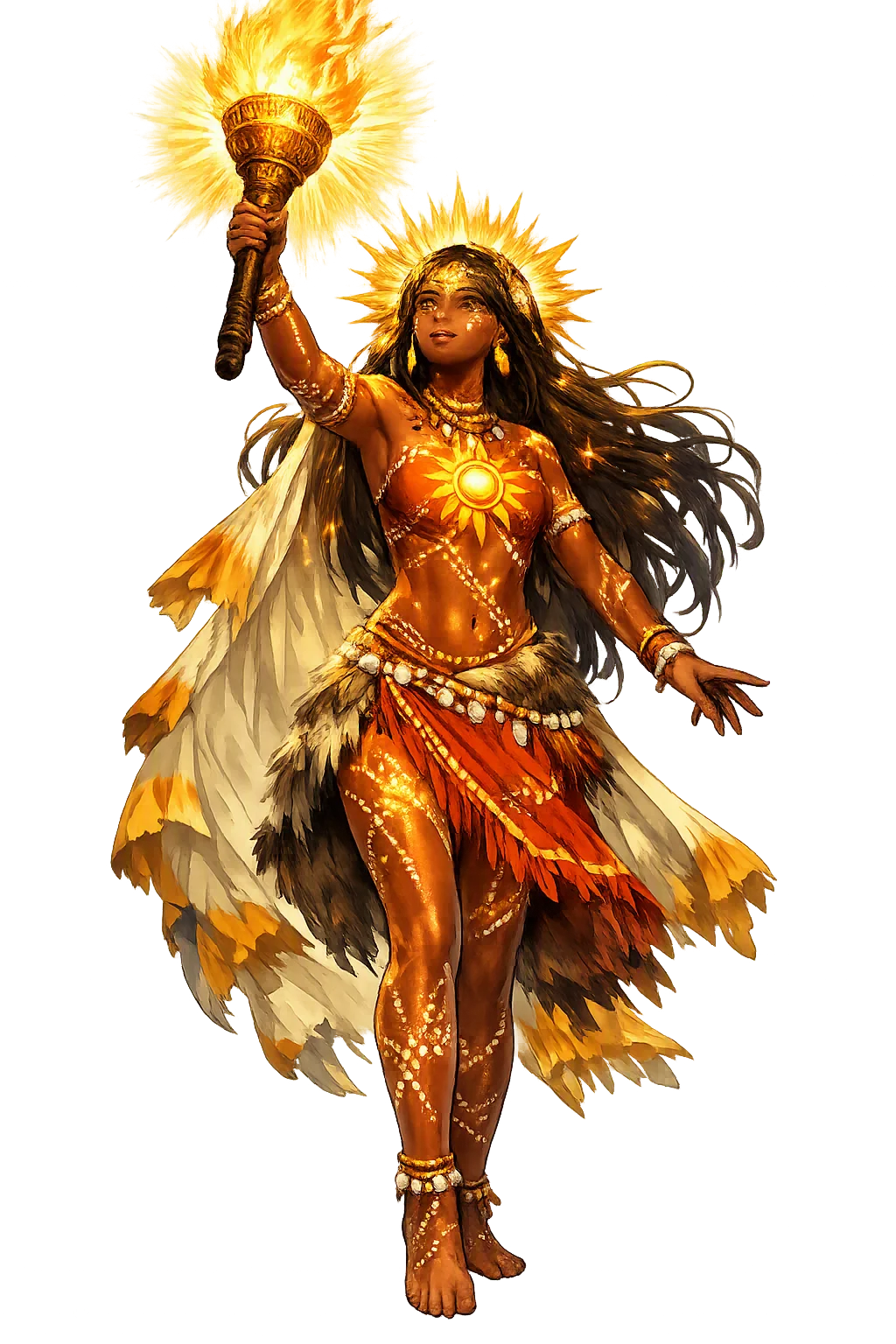
Gnowee is the sun of the Wurundjeri people. In the Kulin telling she was once a woman who went up into the sky carrying a bark torch, searching for the child she had lost in the eternal darkness below. Her daily journey across the heavens is that search still in progress: when her torch burns bright, the world is day; when it dims and gutters, evening comes; when she stops to rekindle it, night falls. She is therefore light-giver, wanderer, and bereaved mother at once.

Gnowee in Later Traditions

Gnowee is a specifically Wurundjeri figure and is not equated with the sun deities of other Aboriginal nations, each of which owns its own solar narratives. She has sometimes been grouped with 'Mother Sun' figures in comparative anthologies, but such comparisons must respect the local ownership of the story. In contemporary Victoria she appears in educational and reconciliation materials as a Woiwurrung cultural teaching, not as a generic Aboriginal sun goddess.

Modern Legacy

The Gnowee story is one of the best-known narratives of the Wurundjeri people. It is told in Victorian schools, on Wurundjeri-led country walks, and in materials produced by the Wurundjeri Woi Wurrung Cultural Heritage Aboriginal Corporation. The figure has also inspired Australian children's literature, public art, and environmental education, where the sun-as-torch remains a potent image of renewable light and searching care.

Unicode Restoration as Cultural Act

Restoring Gnowee in a domain name is more than orthographic accuracy. It is a statement that the internet should recognize the full range of human writing — not only the ASCII keyboard.

05

Frequently Asked Questions

Common questions about Gnowee, Sun Goddess, and Unicode restoration

01How do you pronounce Gnowee?

In reconstructed pronunciation, Gnowee is /ˈɡnoʊi/ — approximately 'GNOH-wee' — stress the first syllable, keep the final vowel bright and short. Some Woiwurrung speakers render the initial cluster closer to 'NOH-wee' or 'NYOH-wee'..

02What does Gnowee mean?

Gnowee means The sun in the aboriginal tradition.

03What are the symbols of Gnowee?

Gnowee is associated with Bark torch (The sun itself; a domestic fire carried into the sky and kept alight across the day), Yam stick / digging stick (The tool that drew her away from her camp and set the search in motion), The southern sky path (Her track across the heavens, observed as the sun's daily arc), Darkness below (The earth that once swallowed her child and that she now lights from above).

04Why restore Gnowee in Unicode?

Plain ASCII gnowee strips the stress, length, and script that make the name specific. Unicode restoration returns the name to its original written dignity.

05What is the most important myth about Gnowee?

In the time before the sun, the earth was dark. Gnowee left her small son sleeping beneath a tree while she went out to dig for yams with her digging stick. She wandered a long way, and when she looked back the country had closed behind her. She could not find her camp or her child. In despair she made a great torch of stringybark, climbed into the sky, and began to travel across it, searching for him. That torch is the sun; she carries it still.

06

Scholarly Sources

The philological foundations of this restoration

Every claim on this page is grounded in established scholarship. The orthographic restorations follow disciplinary convention. The etymological chain follows the best available reference works. This is not invention — it is resurrection through scholarship.

Lexicography & Philology

  • AIATSIS
  • Massola

Primary Texts

  • Primary sources in the aboriginal tradition for Gnowee.

Archaeology & Art History

  • Material evidence — iconography, inscriptions, and temple archaeology — for Gnowee and related cults.
  • The Gnowee narrative is preserved primarily in oral tradition and in nineteenth- and twentieth-century ethnographic records from the Melbourne region. No pre-contact written form exists; the material culture associated with the story includes bark torches, digging sticks, and the sky country itself as observed from Wurundjeri lands along the Yarra and its tributaries.

Religious Studies

  • Massola, Aldo, Bunjil's Cave: Myths, Legends and Superstitions of the Aborigines of South-East Australia, Lansdowne Press, 1968
  • Reed, A. W., Aboriginal Myths, Legends and Fables, Reed Books, 1982
  • Parker, K. Langloh, Australian Legendary Tales, 1896
  • AIATSIS — Australian Institute of Aboriginal and Torres Strait Islander Studies
  • Wurundjeri Woi Wurrung Cultural Heritage Aboriginal Corporation
  • William Thomas, Assistant Protector of Aborigines, Port Phillip District, nineteenth-century field notes
Return

The Surface Awaits

You have traced the name from its earliest attestation to its Unicode restoration. Now return to the myth. The story is where the name lives.

Back to Lore
Gnowee mascot