
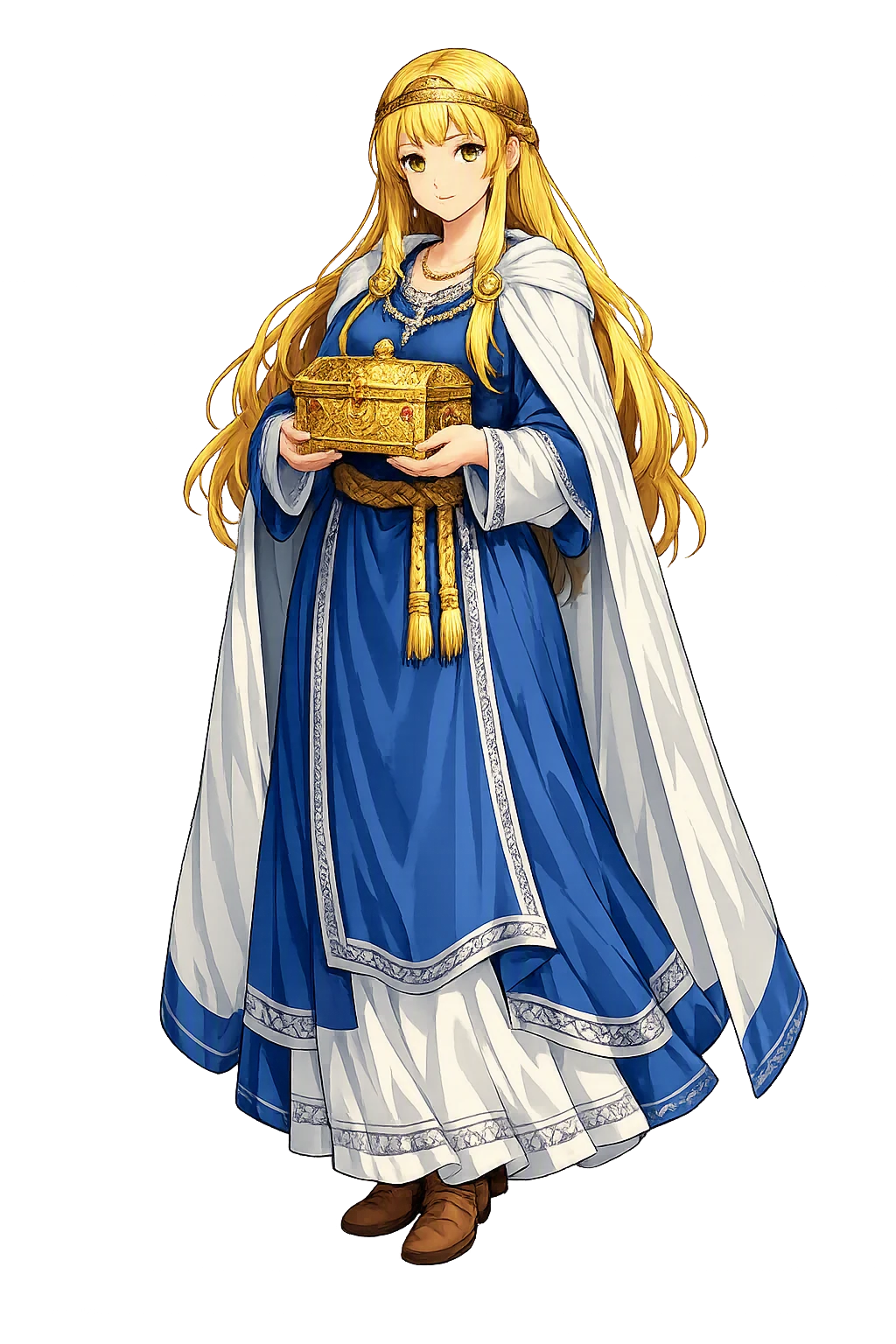
On Fulla: a letter to a colleague
A letter to a colleague, 31 July 2026 — on the name Fulla, and on the forms that keep failing it.
Your note said, roughly: surely the marks are a nicety. Permit me to use Fulla to show they are not.
First, the attestation. The attested form is ᚠᚢᛚᛚᛅ, from the tradition's own record. The canonical transliteration is Fulla.
Say it aloud as the sources heard it: fULL-ah — a short, rounded u as in 'put', a genuinely long, doubled l, and a short open 'ah'; two even syllables, stress on the first. The marks are what carry that sound to a reader who has never heard it spoken.
On the plain form — and I want to be precise, because you pushed on this. The plain form fulla differs from the canonical Fulla only by convention of display — case, not content. It is acceptable everywhere: in legacy systems, in plain-text citation, in the DNS itself. What is not acceptable is what follows in the register: respellings that change the letters, not just their case.
Now to the forms that provoked your letter. As for fula: it comes from the anglicized respelling — the name written the way English guesses it sounds, and it fails because rewrites attested consonant clusters to fit English spelling habits; every cluster simplified this way erases a letter the sources write
One more thing, because it always surprises: the name did not stay home. Fulla's cross-border life runs through one word and one relationship. The word is fullr: Proto-Germanic *fullaz gives English 'full', German 'voll', Gothic fulls, and Old Norse Fulla — a goddess whose name is the ordinary adjective turned abstract noun, 'Fullness'.
And it never stopped working. Fulla's afterlife is scholarly and liturgical rather than popular. Grimm devoted a chapter of Teutonic Mythology to her and Volla, and every handbook since — Simek, Orchard, Lindow — keeps her as the standing example of the abstract-noun ásynja, the goddess whose name tells you exactly what she is.
The Convention's Own History
The Poetic Edda survives essentially in one manuscript — the Codex Regius, c. 1270 — and normalized Old Norse spelling descends from what that manuscript and its siblings actually write. Þ and ð are not decorations: they are letters of the alphabet the skalds used (and English later abandoned), and ǫ is a nasal vowel the normalization preserves because the sources carry it. The register's rule is the manuscript's rule: spell the names the way the tradition that sang them wrote them down.
Where Protocol Meets Practice
The technical answer is simple: the canonical marks are legal IDNA 2008 characters, encoded as punycode under `xn--`. The practical answer is messier: legal does not mean stocked (registrar inventory is partial), and stocked does not mean typeable (stacked diacritics defeat mobile keyboards).
So the register's rule is a hierarchy of attested forms — full restoration, circumflex, macron-only, attested variant, and finally plain ASCII for the systems that cannot carry marks. Every rung is defensible because every rung is attested. The forms this register rules against are not rungs; they are errors, and errors do not get rungs.
Write back when you have checked the sources; they are better company than I am.
— The Register
The Verdict
Fulla is the canonical form: attested, checkable, and enforced across the temple, the lexicon, the cards, the APIs, and this register. The plain form fulla shares that standing — the two are the same name in every system. The false forms above are documented so that no reader has to take the temple's word on faith — the violations are stated, the sources are named, and the register stands open to challenge on every line.
The temple of Fulla stands at /fulla/.
The docket for this ruling: 1 false form ruled against, fula first on the docket; no contested forms attested; the attestation rests on 6 cited sources — Snorri Sturluson, Prose Edda: Gylfaginning 35 (Fulla's portrait: virgin, golden band, eski, shoes, secret counsels) and 49 (Nanna's finger-ring); Skáldskaparmál, þulur of the ásynjur, Poetic Edda: Grímnismál, prose introduction (Fulla sent to warn Geirröðr), trans. Carolyne Larrington, The Second Merseburg Charm (Friia and Volla her sister), in Braune–Ebbinghaus, Althochdeutsches Lesebuch.
The Register Continues
Entry 164 of 548 in the Canonical Register. Around it: the temple's founding dispatch, the Restoration File on the marks themselves, the Resonance File on the archetype at work, and the Rulebook behind all of it.
Continue the register — previous entry: Fūjin (read it) · next entry: Fúxī (read it).
The Canonical Register is written from the same canonical record as the lexicon itself. If a false form is missing from this page, it is because the evidence does not support calling it false — or because we have not seen it yet. Show us, with a citation, and the register will answer.