PuniCodex

Extended Lore

ᚠᚱᛁᚴᚴ Frigg

Etymology · Phonology · Orthography · Cultural Legacy · Primary Sources

Tier 2 Frigg
Frigg — Marriage, Motherhood, Queenship
01

Quick Facts

Essential information about Frigg, Marriage, Motherhood, Queenship

Original Scriptᚠᚱᛁᚴᚴ
Unicode RestorationFrigg
Reconstructed Pronunciation/ˈfriɡː/
PantheonNorse
DomainMarriage, Motherhood, Queenship
MeaningBeloved (from *frijjō)
ClassificationTier 2
Primary DomainFrigg
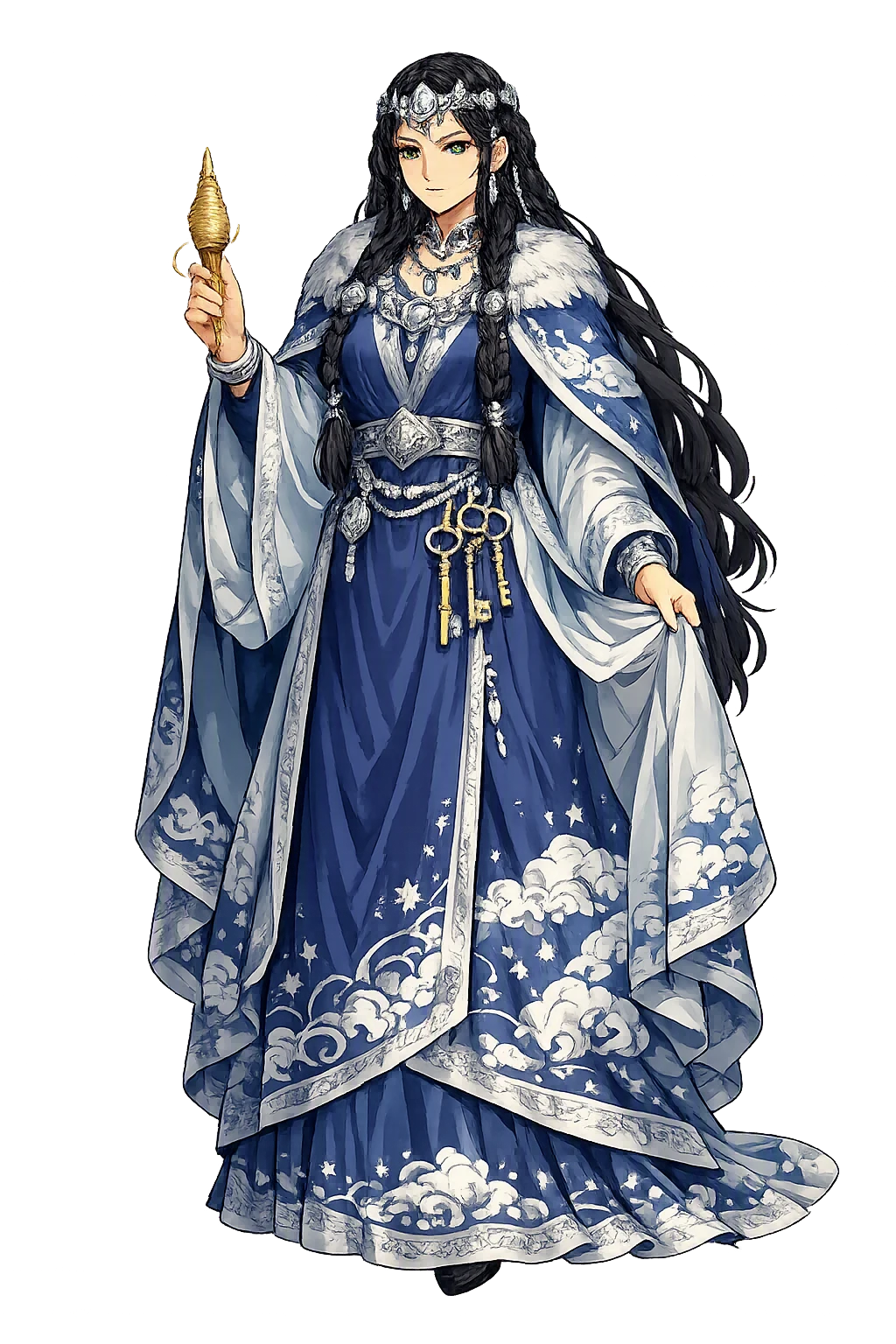
Sacred SymbolsFensalir, The unsworn mistletoe, Fulla's casket, The linen robe from Hel, Frigga's distaff
02

Etymology & Word Family

From original script to Unicode restoration

Proto-indo-european *frijjō Beloved
Original Script ᚠᚱᛁᚴᚴ Frigg — "Beloved (from *frijjō)"
Unicode Restoration Frigg Restored stress, length, and script
Modern ASCII frigg Plain-ASCII fallback

Frigg is Tier 2 by the mechanical rule: the normalized Old Norse form is already plain ASCII — there is no diacritic and no distinctive letter for the ASCII alphabet to lose. The queen of the gods carries a name so plain that only the capital distinguishes the restored form from the input.

03

Unicode Character Breakdown

Character-by-character philological analysis

CharacterUnicodeNameBlockPhonetic Role
FU+0046Latin Capital Letter FBasic LatinSame
rU+0072Latin Small Letter RBasic LatinSame
iU+0069Latin Small Letter IBasic LatinSame
gU+0067Latin Small Letter GBasic LatinSame

The Tier 2 classification reflects how much of the original phonology this restoration preserves — stress and vowel length for Greek names, distinctive letters and diacritics for every other tradition.

04

Cultural Significance

From ancient cult to modern Unicode

Ancient Domain

Frigg is the foremost of the ásynjur: daughter of Fjörgynn, wife of Óðinn, mother of Baldr. Her hall is Fensalir, the fen-halls, where she wept for her slain son; her gift is the heaviest in the Edda — she knows all fate, and says none of it.

Frigg in Later Traditions

The Roman interpretatio fixed Frigg's identity for all posterity through the calendar: when the Germanic peoples translated the seven-day week, dies Veneris — Venus's day — became Frigg's day, Old English Frīgedæg, Old Norse frjádagr, whence Friday. The equation is Venus-as-consort: the wife of the chief god takes the day of the goddess of love. Greek comparison runs to Hera, the queen and goddess of marriage, but the structural fit is imperfect — Frigg keeps a seeress's knowledge Hera never claims. The deepest syncretic debate is internal: since Grimm, scholars have asked whether Frigg and Freyja were originally one goddess — both ride falcon-cloaks, both are sought by giants, both weep for absent mates — and the handbooks (Simek, Orchard, Lindow) still print the question open. Her one firm continental witness is Langobardic Frea in Paul the Deacon; Saxo, euhemerizing, gives a Frigga who strips gold from Óðinn's statue and disgraces herself — a scandal-story that belongs to Saxo's literary workshop, not to cult.

Modern Legacy

Frigg's most durable legacy is the fifth weekday: Friday carries her name in every Germanic language, the Germanic answer to the day of Venus. The Victorian revival made her the weeping mother of the North — Matthew Arnold's 'Balder Dead' gives her long grieving speeches the Eddas only imply — and the same century's folklore collectors recorded 'Frigga's distaff' (Friggerock) as the folk name of Orion's belt, from which the romantic image of the cloud-weaving queen descends; the Eddas themselves never give her a loom. Wagner recast her as Fricka, the severe guardian of marriage in the Ring, the operatic portrait most moderns know first. Modern Heathenry honors her as the goddess of hearth, household, and the keeper of frith, and modern fantasy keeps her at Óðinn's side. Her name never needed restoring — it never left the week.

Unicode Restoration as Cultural Act

Restoring Frigg in a domain name is more than orthographic accuracy. It is a statement that the internet should recognize the full range of human writing — not only the ASCII keyboard.

05

Frequently Asked Questions

Common questions about Frigg, Marriage, Motherhood, Queenship, and Unicode restoration

01How do you pronounce Frigg?

In reconstructed pronunciation, Frigg is /ˈfriɡː/ — approximately 'FRIG' with the g held long — rhymes with 'big', the r lightly trilled, and the double-g pressed and released like the 'dg' said twice over, as in modern Icelandic Frigg..

02What does Frigg mean?

Frigg means Beloved (from *frijjō) in the norse tradition.

03What are the symbols of Frigg?

Frigg is associated with Fensalir (The fen-halls where the queen keeps her knowledge and her grief — the Edda's only named home for her), The unsworn mistletoe (The one shoot too young for the oath — the single gap through which all her foresight could not reach), Fulla's casket (The kept counsel of the queen: secrets carried, never spoken), The linen robe from Hel (Nanna's gift sent back with Hermóðr — a wife's token to the mother-in-law, carried out of the land of the dead), Frigga's distaff (Orion's belt in northern folk tradition — the later ages giving the queen the spindle the Eddas forgot).

04Why restore Frigg in Unicode?

Plain ASCII frigg strips the stress, length, and script that make the name specific. Unicode restoration returns the name to its original written dignity.

05What is the most important myth about Frigg?

When Baldr dreams baleful dreams for his life, Frigg does the one thing foresight permits: she fights the future with an oath. She travels the world and exacts from all things — fire and water, iron and every metal, stones, earth, trees, sicknesses, beasts, birds, poison, serpents — the promise that they will not harm Baldr. Only the mistletoe, growing west of Valhöll, seemed too young to demand the oath of. The completeness of the list is the point: Snorri enumerates creation itself, and the myth hangs its whole catastrophe on the one category a mother's thoroughness could not imagine mattering — a plant too young to swear.

06

Scholarly Sources

The philological foundations of this restoration

Every claim on this page is grounded in established scholarship. The orthographic restorations follow disciplinary convention. The etymological chain follows the best available reference works. This is not invention — it is resurrection through scholarship.

Lexicography & Philology

  • Cleasby-Vigfusson
  • Zoëga

Primary Texts

  • Poetic Edda: Völuspá 33 (Frigg weeps in Fensalir), 53 (the second grief at Óðinn's fall); Grímnismál, prose prologue (the fostering and the wager); Lokasenna 26–30 (the flyting; 'she knows all fate')
  • Snorri Sturluson, Prose Edda: Gylfaginning 20 (she knows the fates of men, though she prophesies nothing), 35 (foremost of the ásynjur; Fensalir; Fulla, Gná, Hlín), 49 (the oath, the mistletoe, the question of ransom, Nanna's gifts); Skáldskaparmál (kennings for Frigg)
  • Saxo Grammaticus, Gesta Danorum, Book 1 (Frigga and the statue of Óðinn), trans. Peter Fisher, ed. Hilda Ellis Davidson

Archaeology & Art History

  • Material evidence — iconography, inscriptions, and temple archaeology — for Frigg and related cults.
  • Frigg is an essentially textual goddess: no runestone invokes her, no votive deposit names her, and the place-name evidence sometimes claimed for her in Sweden and Denmark is contested by the place-name scholars. Her material footprint is calendrical and linguistic — the weekday itself: the substitution of Frigg for Venus in the Germanic translation of the seven-day week (Old English Frīgedæg, Old Norse frjádagr) is the fossil of the interpretatio romana, preserved in every modern Germanic language. The narrative witnesses are the Codex Regius of the Poetic Edda and the Codex Regius and Uppsala manuscripts of Snorri's Edda; her continental attestation, Paul the Deacon's Historia Langobardorum, survives in a rich manuscript tradition descending from the eighth-century original. Scandinavian folk astronomy, recorded by nineteenth-century collectors and noted by Grimm, kept the name Friggerock — 'Frigga's distaff' — for the three stars of Orion's belt, the nearest thing to a living material tradition attached to her.

Religious Studies

  • Paul the Deacon, Historia Langobardorum 1.8 (Frea and Godan; the naming of the Langobards)
  • Cleasby–Vigfusson, An Icelandic-English Dictionary, s.v. Frigg, Fensalir, Fulla
  • Zoëga, A Concise Dictionary of Old Icelandic, s.v. Frigg
  • Simek, Dictionary of Northern Mythology; Orchard, Dictionary of Norse Myth and Legend; Lindow, Norse Mythology: A Guide — s.v. Frigg (etymology and the Frigg–Freyja question)
  • Grimm, Jacob, Teutonic Mythology, trans. Stallybrass (Frigga's distaff in folk astronomy; the day-name)
Return

The Surface Awaits

You have traced the name from its earliest attestation to its Unicode restoration. Now return to the myth. The story is where the name lives.

Back to Lore
Frigg mascot