PuniCodex

Extended Lore

ᚠᚢᚱᛋᛁᛏᛁ Forseti

Etymology · Orthography · Cult · Iconography · Reception · Sources

Tier 2 Forseti
Forseti — Justice, Mediation
01

Quick Facts

Essential information about Forseti, Justice, Mediation

Original Scriptᚠᚢᚱᛋᛁᛏᛁ
Unicode RestorationForseti
Reconstructed Pronunciation/ˈfor.se.ti/
PantheonNorse
DomainJustice, Mediation
MeaningPresident, chairman
ClassificationTier 2
Primary DomainForseti
Sacred SymbolsGlitnir, The dómstaðr, Sátt, the settlement, The silent spring, The title forseti
02

Etymology & Word Family

From original script to Unicode restoration

Original Script ᚠᚢᚱᛋᛁᛏᛁ Forseti — "President, chairman"
Unicode Restoration Forseti Canonical scholarly spelling — ASCII-identical
Modern ASCII forseti Plain-ASCII fallback

The name Forseti reaches the modern world through scholarly transliteration of the norse tradition. Because the conventional spelling uses only Latin letters, its Unicode and ASCII forms coincide — the tradition it carries is in the name itself, not in diacritics.

03

Unicode Character Breakdown

Character-by-character philological analysis

CharacterUnicodeNameBlockPhonetic Role
FU+0046Latin Capital Letter FBasic LatinSame, capitalized
oU+006FLatin Small Letter OBasic LatinSame
rU+0072Latin Small Letter RBasic LatinSame
sU+0073Latin Small Letter SBasic LatinSame
eU+0065Latin Small Letter EBasic LatinSame
tU+0074Latin Small Letter TBasic LatinSame
iU+0069Latin Small Letter IBasic LatinSame

The Tier 2 classification here reflects fidelity to the attested tradition, not recovered diacritics: every character of Forseti already survives in ASCII. What the restoration preserves is the canonical spelling itself — the form scholarship standardised.

04

Cult & Worship

How the sacred was kept — rites, sanctuaries, remains

The Cult

Forseti's cult is attested once, and the witness is worth more than most sagas: Alcuin, in his Life of Willibrord (c. 796), describes the island the Frisians called Fosetesland — Heligoland, the holy land — with a sacred spring no man might drink from or wash in, a herd grazing under divine protection that might not be touched, and violators punished by death. When Willibrord baptized three men in the spring and slaughtered some of the herd, the Frisians read their god's answer in the trespassers' blindness and madness. That is the only near-contemporary cult description among the northern gods: sanctuary, taboo, sacred herd, and the price of violation. In Scandinavia the cult is thinner — Glitnir, the golden hall with its silver roof, is Snorri's picture — but the place-name Forsetlund, 'Forseti's grove', in Vestfold shows the name living in real cult-geography, and Frisian legal memory kept a tradition of a thirteenth law-speaker elected when the twelve could not agree — the god's office projected onto a man.

In the Earth

Forseti is a textual and onomastic god: no runestone invokes him, no image or amulet names him, and no votive deposit can be laid at his hall. The ground evidence is the place-name: Forsetlund, 'Forseti's grove', in Vestfold near the Oslo fjord, attests that the name lived in Scandinavian cult-geography and not only in Icelandic books. The Frisian witness is earlier than any Norse manuscript: Alcuin's Life of Willibrord (c. 796) preserves the island Fosetesland — Heligoland, 'holy land' — with its silent spring and sacred herd, the only near-contemporary description of the cult site of the god-name's continental form. The Norse literary witnesses are the Codex Regius (Grímnismál) and the fourteenth-century codices of the Prose Edda. The Younger Futhark rendering ᚠᚢᚱᛋᛁᛏᛁ is a normalized reconstruction of how the name would have been carved; no Viking-Age inscription of the theonym is known.

05

Iconography

How Forseti was imaged across the ages

The Image

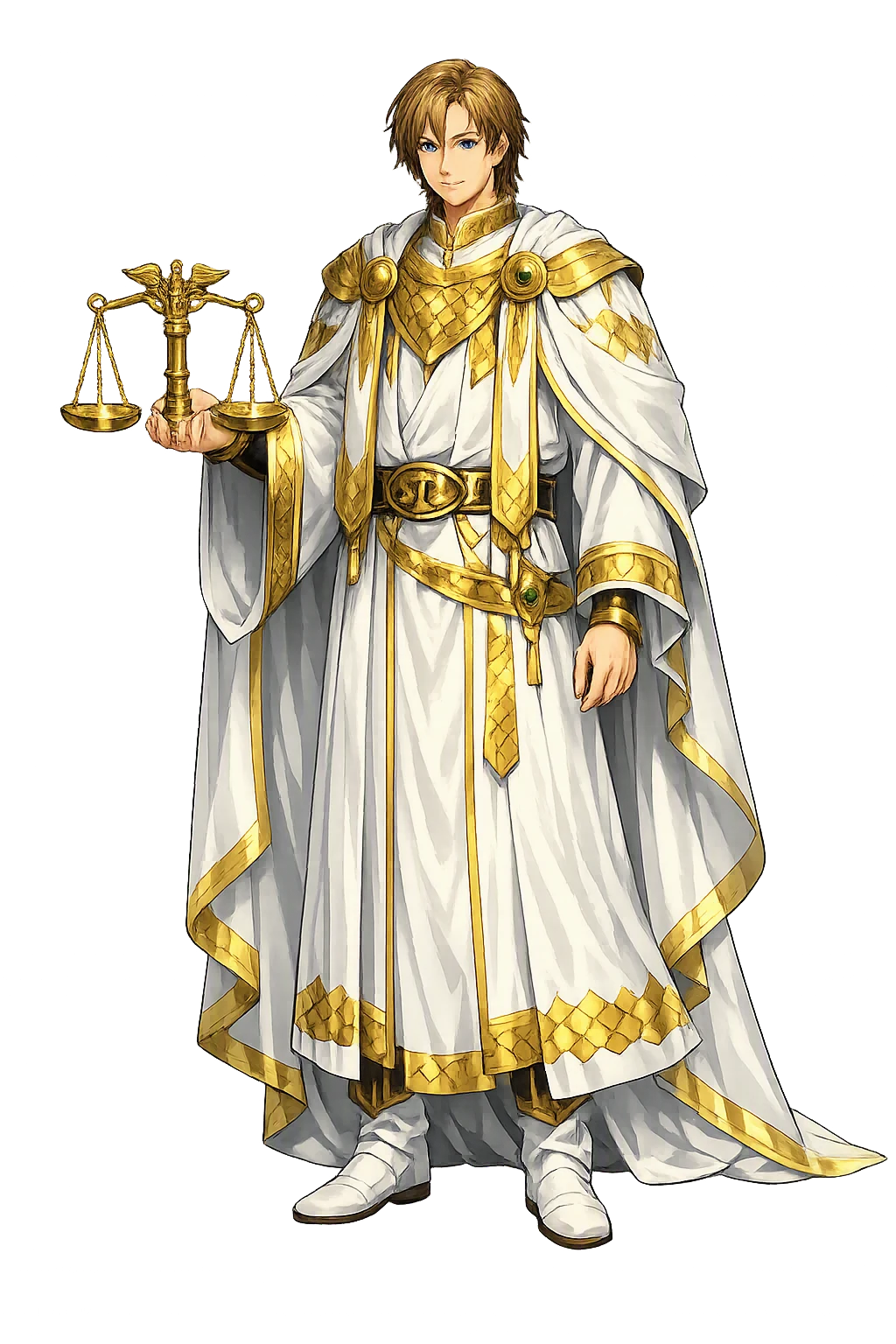
Not one image of Forseti survives, and none was described: no picture-stone god holds his scales, no pendant wears his face. The texts arm him only with the courtroom — Glitnir, the hall with pillars of gold and a roof of silver, 'the best court among gods and men' — and his attributes are procedure itself: the seat, the judgment, the reconciliation no one refuses. Among the Norse gods he is the one whose image would be a bench. The Younger Futhark spelling ᚠᚢᚱᛋᛁᛏᛁ is a normalized reconstruction, and no Viking-Age carving of the name is known. Iceland's illustrated Edda manuscripts of the seventeenth and eighteenth centuries passed him by, as the medieval ones had. To picture Forseti, picture the empty judgment seat — which is exactly what the sources give.

06

Reception & Transformation

The name after its own age — transmission, translation, survival

Afterlives

Forseti's journey begins before any Norse manuscript existed: Alcuin carried the Frisian god's name into Latin letters about 796, and the Life of Willibrord, copied through the Carolingian world, kept Fosite alive after the cult itself vanished — the island's modern name, Heligoland, 'holy land', is the fossil of the sanctuary. The Norse evidence rode the Codex Regius (Grímnismál) and the fourteenth-century Snorra Edda into print with the seventeenth-century Edda editions, and Jacob Grimm then made the decisive scholarly move, equating Frisian Fosite with Norse Forseti in the Deutsche Mythologie (1835) and turning a one-sentence god into a standing problem — for Fosite cannot be derived from the Old Norse law-term, and the direction of borrowing remains open, with modern scholarship suspecting the god was Frisian-born and re-etymologized on the way north. Nineteenth-century Edda commentary fixed his single Gylfaginning sentence as the classic text on the Norse legal imagination, and the handbooks have transmitted him ever since: a god carried to modernity on one Frankish vita, two stanzas, and a place-name.

Identifications Across Traditions

The standing cross-border question is the equation Forseti = Fosite. Jacob Grimm made it, and the philology keeps it alive: Old Norse forseti is a transparent folk-formation — 'the one who sits before' — while Frisian Fosite cannot be derived from it, which is why Lindow entertains that the Norse god was borrowed from the Frisian cult, the form attested four centuries earlier, and re-etymologized into a law-term on the way north. The Norwegian place-name Forsetlund, 'Forseti's grove', shows the name lived in Scandinavian cult-geography whatever its direction of travel. Within the corpus his true kin is Týr, the pantheon's other god of law: where Týr guarantees the oath with his right hand in the wolf's jaws, Forseti dissolves the quarrel the oath was sworn to settle. And his own house is a study in inheritance: Snorri says of Baldr that none of his judgments can stand, and of Baldr's son that no judgment of his is ever refused — the father's flaw retired in the son's office.

Modern Legacy

Forseti's afterlife is the word itself. Old Norse forseti was the law-term for the presiding judge — the one who sits before the court — and when Iceland became a republic in 1944 it reached for the same word for its head of state: the President of Iceland is to this day Forseti Íslands, and no other god of the North still signs laws. In scholarship, the god's single sentence in Gylfaginning became one of the most-quoted passages on the Norse legal imagination, the standing citation for the proposition that the North idealized reconciliation over verdict. Modern Heathenry keeps him as the patron of mediation and of disputes ended without feud; and on the Frisian side, Heligoland — the holy land — still carries the memory of the cult in its name. He left no image, no saga, no drama: he left his title to a republic.

07

The Meditation

What Forseti means — beyond the dictionary

Forseti is the patron of the outcome the sagas almost never reach: the quarrel that ends. The heroic literature of the North is a literature of feud — insult answered by wound, wound by killing, killing by lawsuit, lawsuit by ambush — and into that world the Edda sets one shining hall where the arithmetic stops. All who come with their cases go away reconciled: it is the only perfect record in the corpus, and it belongs to the son of the god whose own judgments could not stand. The tradition seems to know what it was asking. Reconciliation is not the absence of justice but its completion — the verdict both parties can live inside — and the god who delivers it is given nothing else: no weapon, no journey, no death, no prophecy. His silence is the teaching. In a mythology that counts its heroes by what they break, Forseti counts by what he puts to sleep.

08

Frequently Asked Questions

Common questions about Forseti, Justice, Mediation, and Unicode restoration

01How do you pronounce Forseti?

In reconstructed pronunciation, Forseti is /ˈfor.se.ti/ — approximately FOR-seh-ti — three short, even syllables, stress on the first, the r lightly trilled; close to the modern Icelandic pronunciation of forseti, 'president'.

02What does Forseti mean?

Forseti means President, chairman in the norse tradition.

03What are the symbols of Forseti?

Forseti is associated with Glitnir (The shining hall of gold pillars and silver roof — justice made architecture), The dómstaðr (The judgment-seat called the best among gods and men — authority measured in reconciled parties), Sátt, the settlement (The reconciled departure — the Edda's one statistic about Forseti: all who come with suits go away at peace), The silent spring (The holy water of Fosetesland, drawn only in silence — the Frisian face of the settler of strife), The title forseti ('He who sits before' — the office that became a god, and the word that outlived him).

04Why restore Forseti in Unicode?

Forseti is written entirely in ASCII letters, so its restoration is about canonical fidelity rather than recovered diacritics: the temple fixes the name in its scholarly standard spelling, attested in the source tradition, instead of leaving it to drift.

05What is the most important myth about Forseti?

“The Tenth Hall” — the Grímnismál 15 story that anchors the mythology of Forseti, told in full on the lore page.

09

Scholarly Sources

The philological foundations of this restoration

Every claim on this page is grounded in established scholarship. The orthographic restorations follow disciplinary convention. The etymological chain follows the best available reference works. This is not invention — it is resurrection through scholarship.

◈

Lexicography & Philology

  • Cleasby-Vigfusson
◎

Primary Texts

  • Prose Edda
  • Poetic Edda: Grímnismál 15 (Glitnir, 'propped with gold and thatched with silver'; Forseti, who 'puts all suits to sleep')
  • Snorri Sturluson, Prose Edda: Gylfaginning 17 (Glitnir among the heavenly halls) and 32 (Forseti, son of Baldr and Nanna; the best court of judgment among gods and men); Skáldskaparmál þulur (Forseti in the roll of the Æsir)
◉

Archaeology & Art History

  • Material evidence — iconography, inscriptions, and temple archaeology — for Forseti and related cults.
✦

Religious Studies

  • Alcuin, Vita Willibrordi 10 (the island Fosetesland, the silent spring, the sacred cattle, Radbod's lots), ed. W. Levison, MGH Scriptores rerum Merovingicarum 7
  • Jacob Grimm, Deutsche Mythologie (the Fosite equation and the legend of the thirteenth law-speaker), trans. Stallybrass as Teutonic Mythology
  • Cleasby–Vigfusson, An Icelandic-English Dictionary, s.v. forseti ('chairman, president', esp. of the judge presiding over a court); Zoëga, A Concise Dictionary of Old Icelandic, s.v. forseti
  • Simek, Dictionary of Northern Mythology; Orchard, Dictionary of Norse Myth and Legend; Lindow, Norse Mythology: A Guide — s.v. Forseti, Fosite (the Frisian question; the place-name Forsetlund)
Return

The Surface Awaits

You have traced the name from its earliest attestation to its Unicode restoration. Now return to the myth. The story is where the name lives.

Back to Lore
Forseti mascot